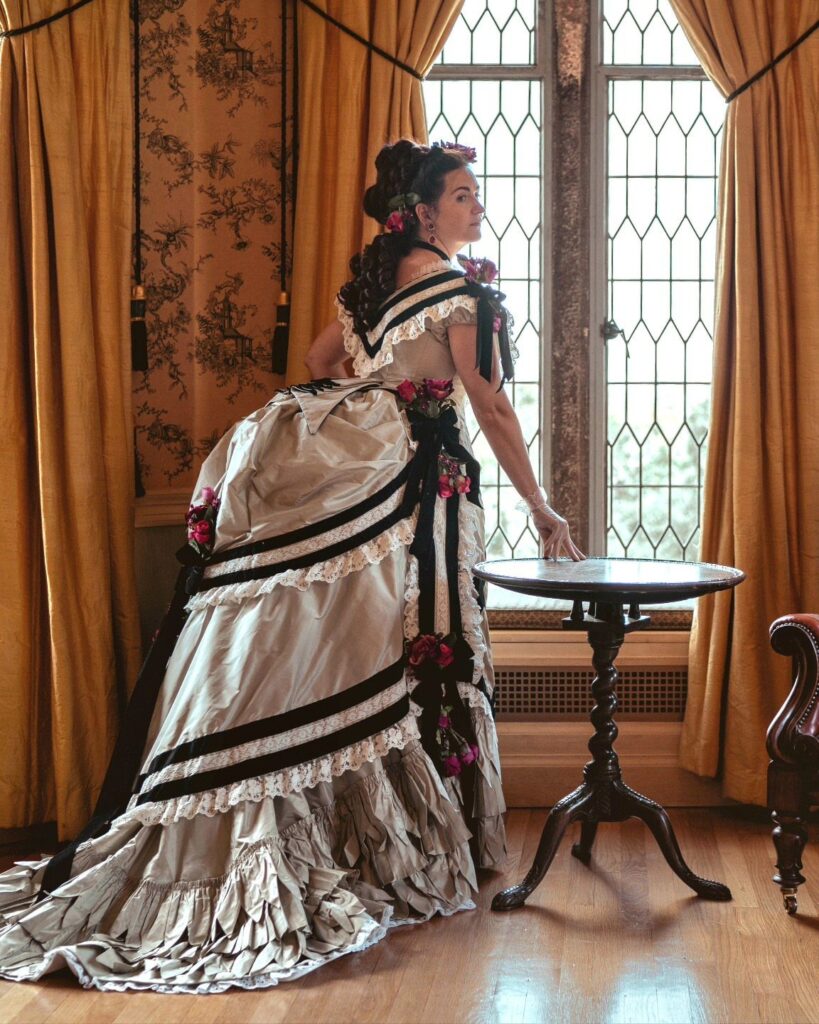
The right Victorian royal dress depends on where you’ll wear it, since a ball, a gothic-themed party, a garden-style photo shoot and a mourning scene each call for a different look.
The ideas run from a champagne ball gown with black ribbons to a black mourning dress with one pink flower, and from a lace parasol and gloves worn with a long dress you may already own to a navy cape gown with silver embroidery and a fur-trimmed collar.
For everyday wear, borrow a single feature from the characteristics section, such as the wide puffed sleeves, and keep the rest of the outfit plain. Only reenactments call for strict accuracy, so check the group’s era rules before you buy.
1. Victorian Ball Gowns
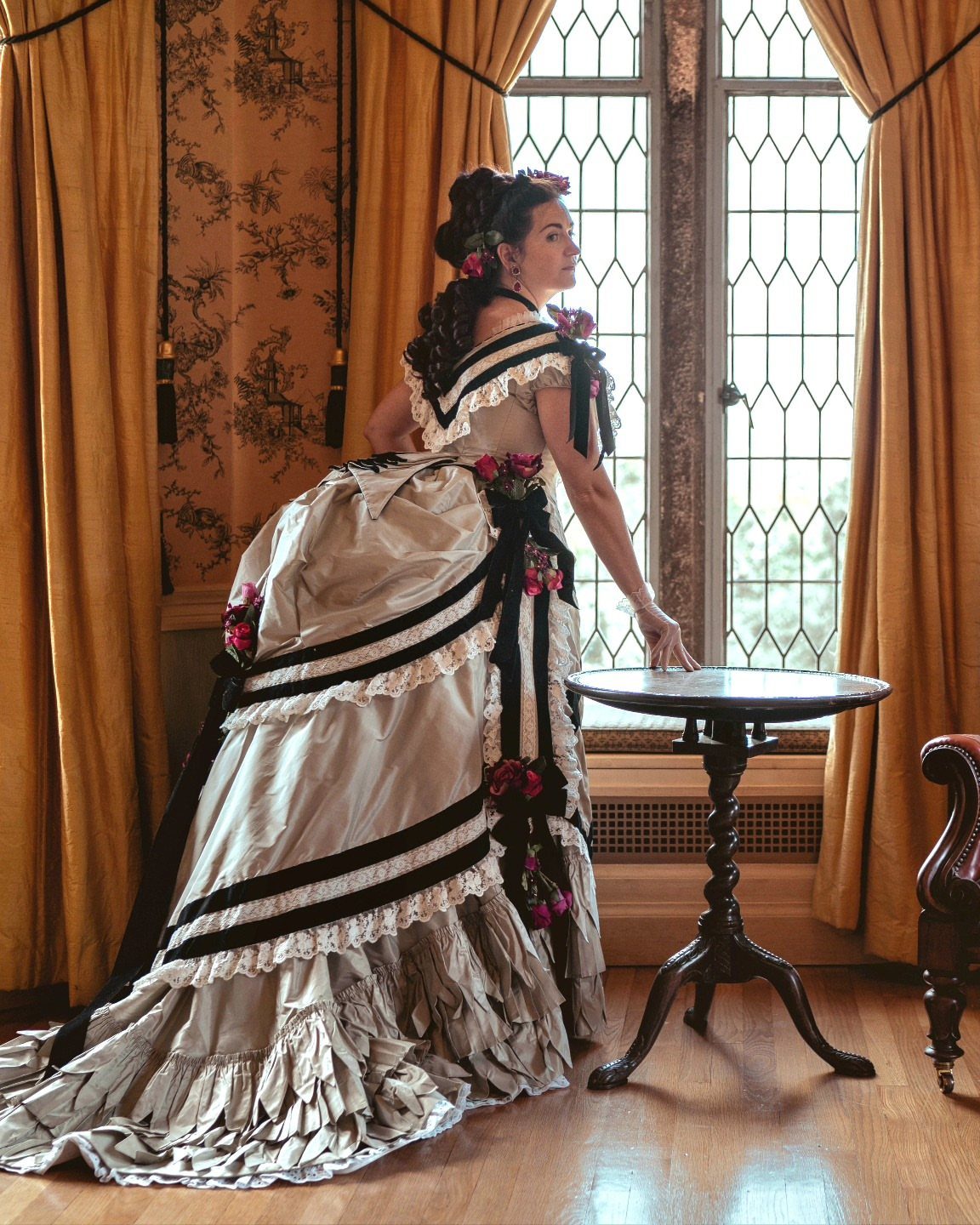
A full skirt in champagne reads as formal without shouting, and black ribbons keep it from looking bridal. Pink flowers add a soft accent, and I’d keep them to the bodice or waist so the skirt stays clean.
For a real-life version, wear it to a wedding or a gala, and skip a statement necklace. The neckline and ribbons already carry the detail.
Shop for fabric weight before anything else. A skirt that holds its shape looks expensive; a limp one looks like a costume.
2. Gothic Victorian Dresses
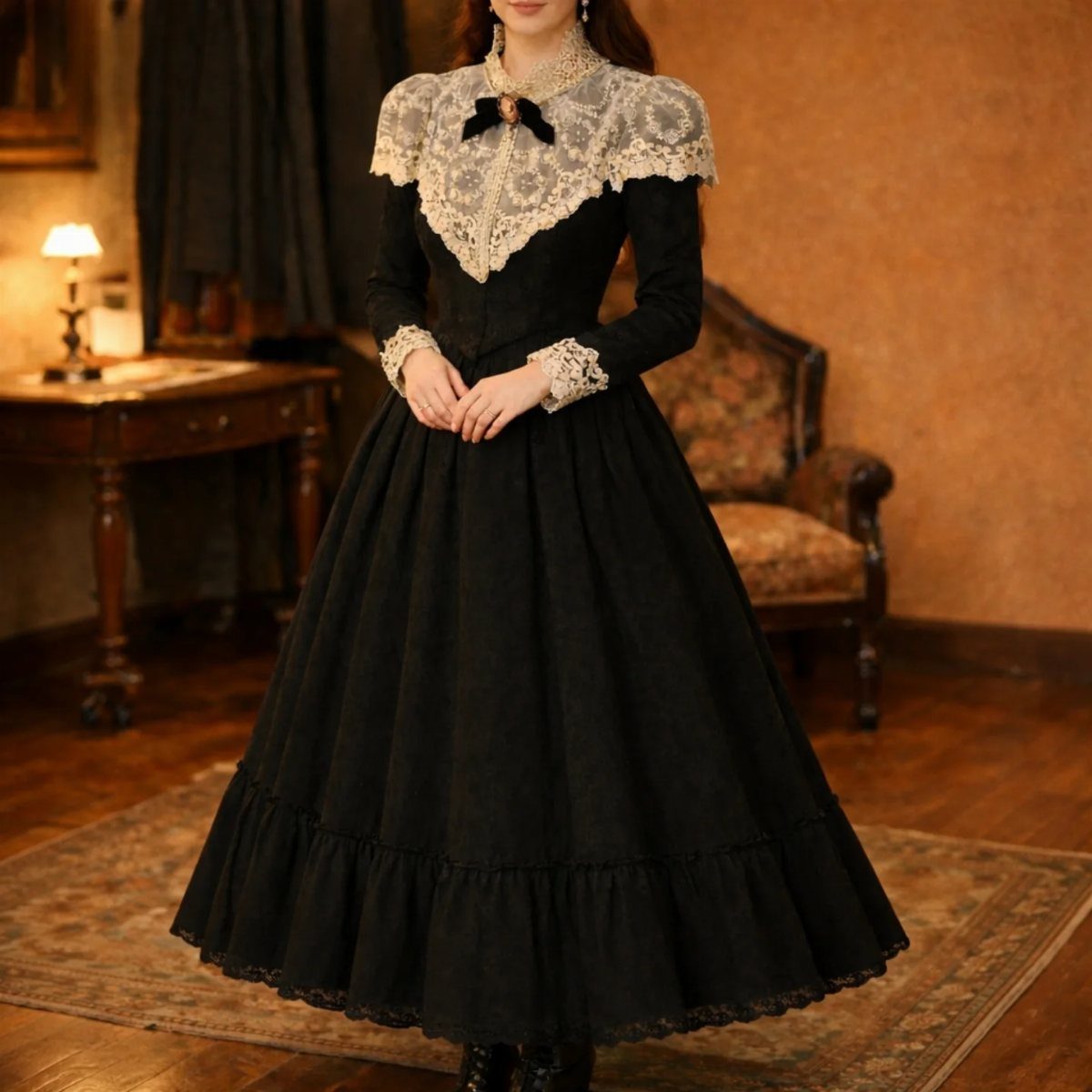
Black with a white lace collar and cuffs is the whole look: severe, covered, and softened only at the edges. Long sleeves do the dramatic work here, so the rest can stay plain.
Since the lace is the only light element, I’d choose the finest, flattest lace you can find. Heavy, stiff lace looks costume-like quickly.
Pair it with low boots and little jewelry. This one suits anyone who prefers dark, modest dressing over bright color.
3. Victorian Dresses with Lace Gloves and Parasols
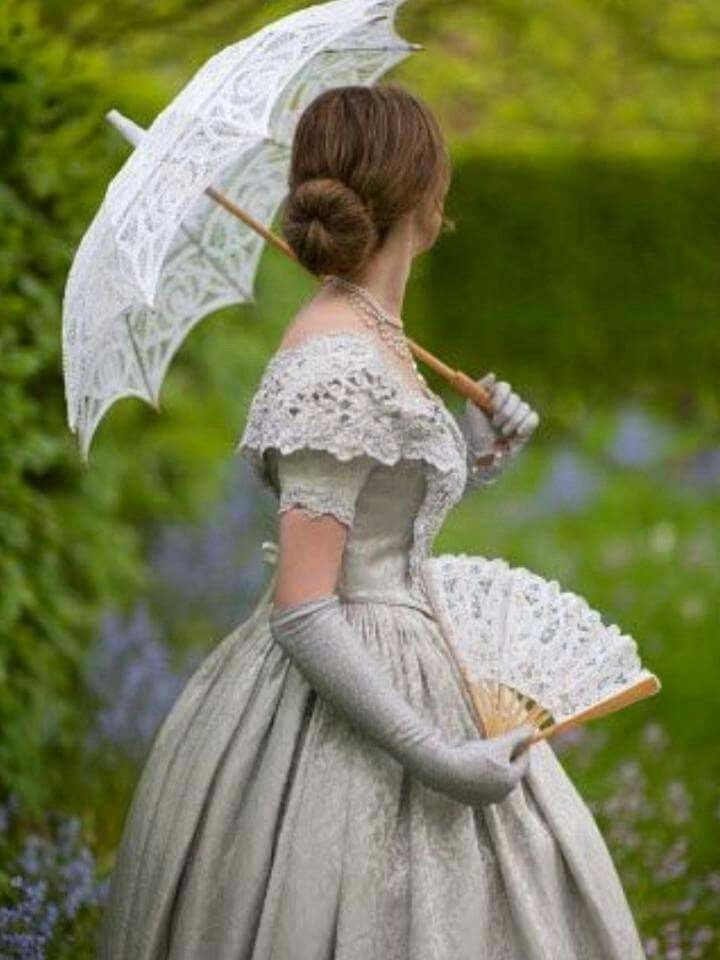
Silver gown, long gloves, white lace parasol and a lace fan: the accessories turn a pretty dress into a full scene. Matching the lace in the gloves, parasol and fan keeps the set cohesive.
I’d buy the accessories first, since they’re cheaper to get right than a gown. A white lace parasol also works with a simple long dress you already own.
A garden is the natural setting. Indoors, the parasol becomes a prop to carry loosely, so don’t overdo all three at once.
4. Royal Cape Gown with Fur Trim
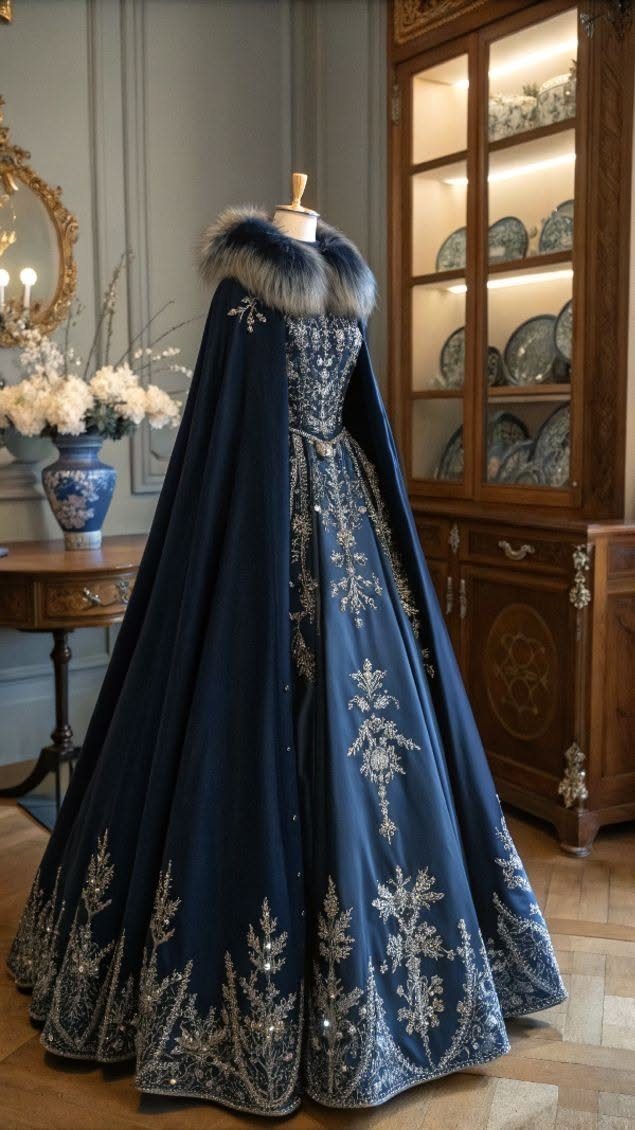
Navy with silver embroidery is a smarter color pairing than the usual black or red, and the fur-collared cape finishes it as true royal dressing. The cape is the piece to spend on.
If a full gown is too much, a navy dress with a fur-trimmed collar or cape gets you most of the effect. Faux fur is the practical choice for me: easier to care for and kinder to the budget.
Keep the embroidery in silver only. A second metallic would compete with it.
5. Victorian Mourning Dress
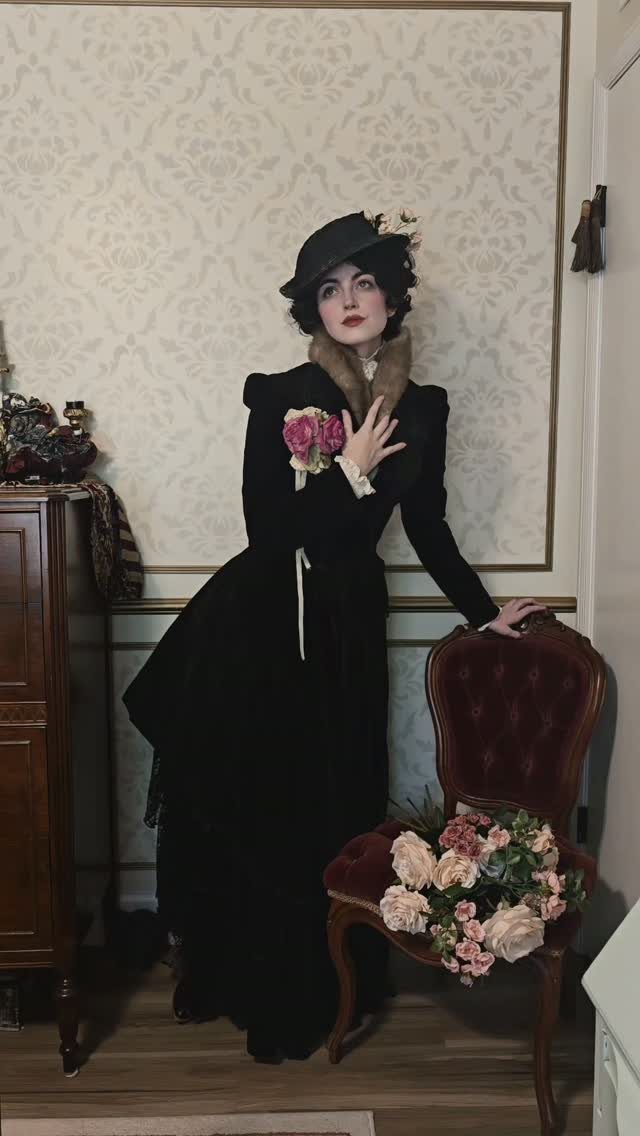
Black dress, black hat, and one pink flower: the contrast is the point. That single bloom keeps a mourning look from turning grim, and I like it better than adding any other color.
For wearing it now, choose matte black fabric over shiny, and let the hat do the work of formality. A hat that sits well matters more than a perfect dress.
It suits themed events and photo shoots best. For daily wear, borrow just the hat.
Victorian Fashion Characteristics
Wide puffed sleeves are the detail that reads as Victorian fastest, so if you want only one feature, start there. Lace and floral fabric come next, and the more elaborate the design, the more the dress leans toward costume.
For everyday wear, pick one of those three and keep the rest plain. A floral fabric with simple sleeves looks like a dress; floral, lace and big sleeves together look like a party.
One caution on dates: the soft, high-waisted Empire shape with light fabrics like lawn, muslin and batiste belongs to the earlier Regency era, not the Victorian one.
If you want a Victorian look, don’t buy a Regency dress and call it close.
Occasions for Victorian Dresses
Formal events, themed parties and historical reenactments each ask for something different, so decide which one you’re dressing for before you shop.
For a formal event, wear the dress as a dress: minimal accessories, modern shoes, and hair that looks current. For a themed party, you can add the extras, though one or two is plenty.
Reenactments are the only occasion where accuracy matters more than wearability. Check the group’s rules on era first, because a dress from the wrong decade will stand out more than a plain one.
If you’re unsure, the formal route is the safest: it also gives you a dress you can wear again.
Frequently Asked Questions
How to dress like you’re from the 1800s?
Pick one Victorian feature and keep everything else plain. Wide puffed sleeves read as Victorian fastest, with lace and floral fabric next.
Keep the sleeves plain on a floral dress and it reads as a dress; stack puffed sleeves, lace and print in one outfit and you’ve dressed for a costume party.
What makes a woman look wealthy?
Fabric weight and restraint do most of it. Structure is what reads as expensive: a skirt with body keeps its line, and a limp one drifts toward costume.
Keep the detail in one place, like ribbons on a champagne gown or silver embroidery on navy, and skip extra jewelry. A matte fabric and a hat that sits well also read as polished.
What type of dresses did Victorian women wear?
Puffed sleeves, lace trim and small floral prints are the 3 details I look for first when I want a dress to say Victorian.
Styles ranged from full-skirted ball gowns to black mourning dresses and fur-collared capes. Soft, high-waisted Empire dresses in lawn, muslin or batiste belong to the Regency period, which came before Victoria’s reign, so I leave them off a Victorian list.






