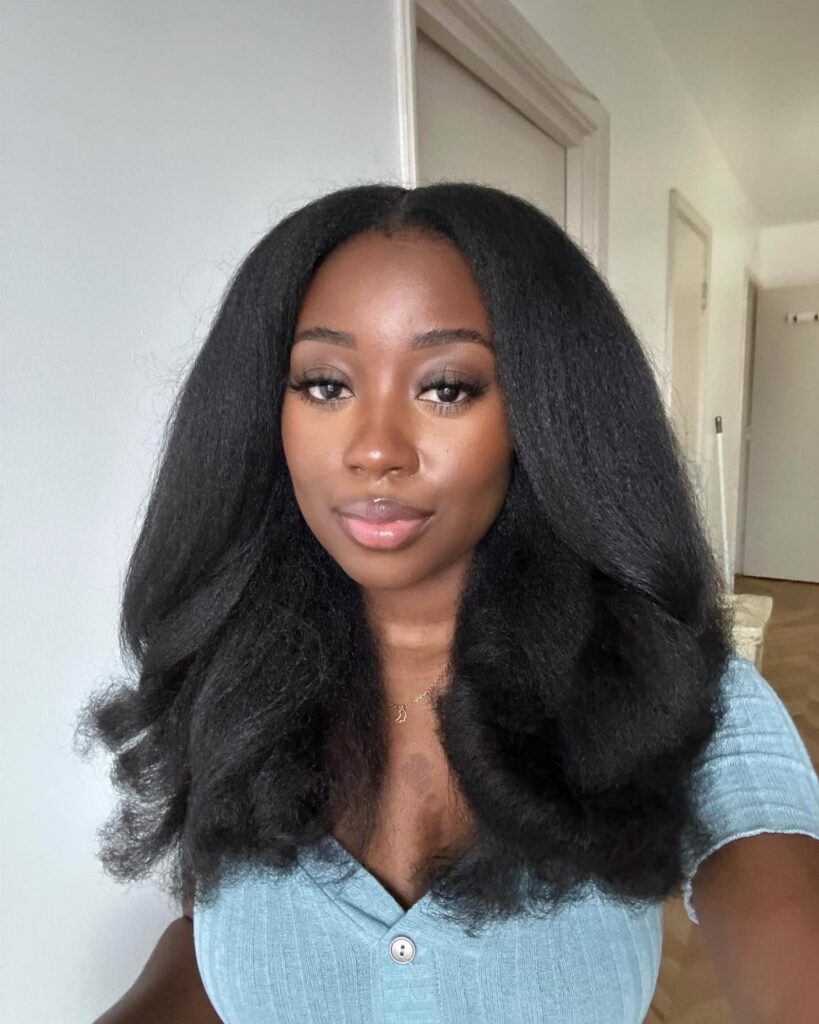
The styles here run from a Natural Mini Afro that needs only moisture and a gentle fluff to Faux Locs that stay wrapped for weeks, so the real divider is how much upkeep you will actually keep up with.
Cuts like the Pixie Cut and the Curly Bob Haircut need regular trims to hold their lines, while Twists and Bantu Knots need a moisturized scalp and very little handling.
1. Braided Protective Styles
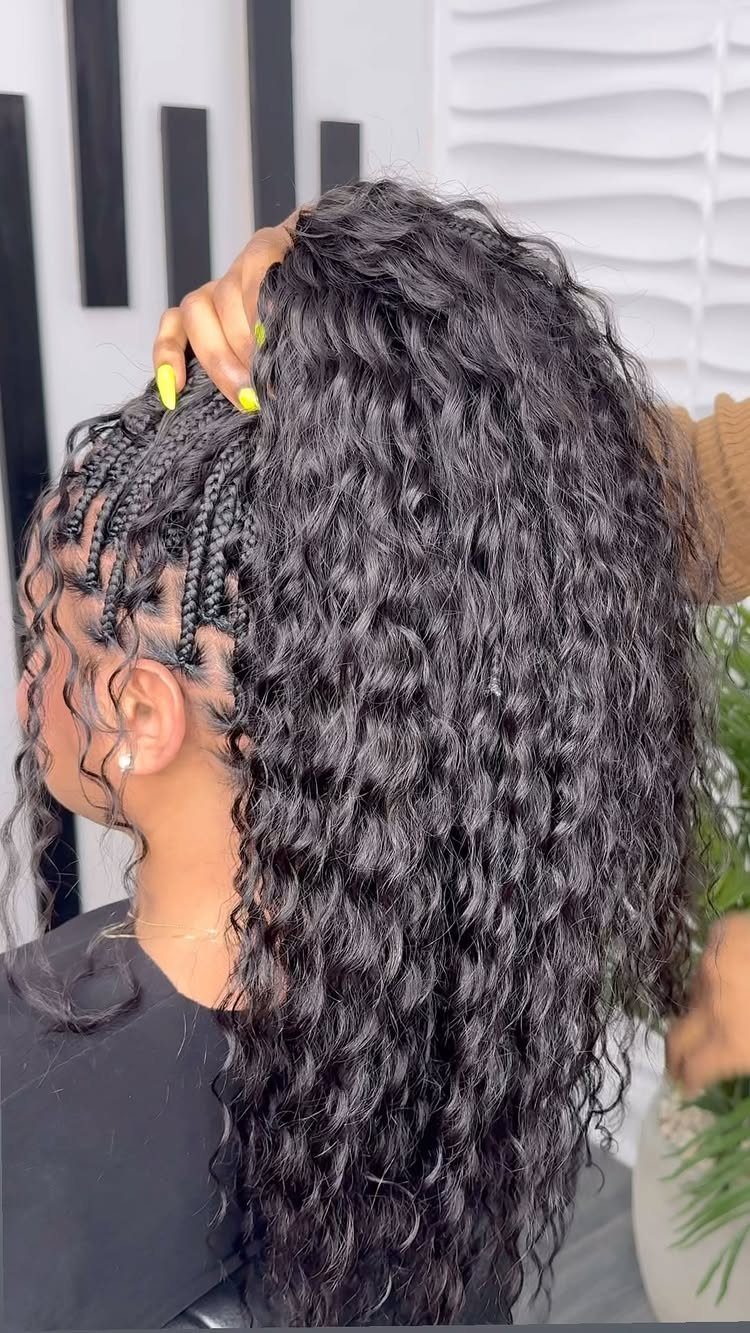
Small braids set along the side of the head, with the rest of the hair left long and curly, give you a protective style that doesn’t look locked down.
The braided sections tuck away the hair that tends to tangle most, while the loose length keeps the look soft.
I like this for anyone who wants a break from daily styling without committing to a full head of braids. Start with clean, moisturized hair, and keep the braids neat at the crown so the curls have room to fall.
2. Curly Bangs
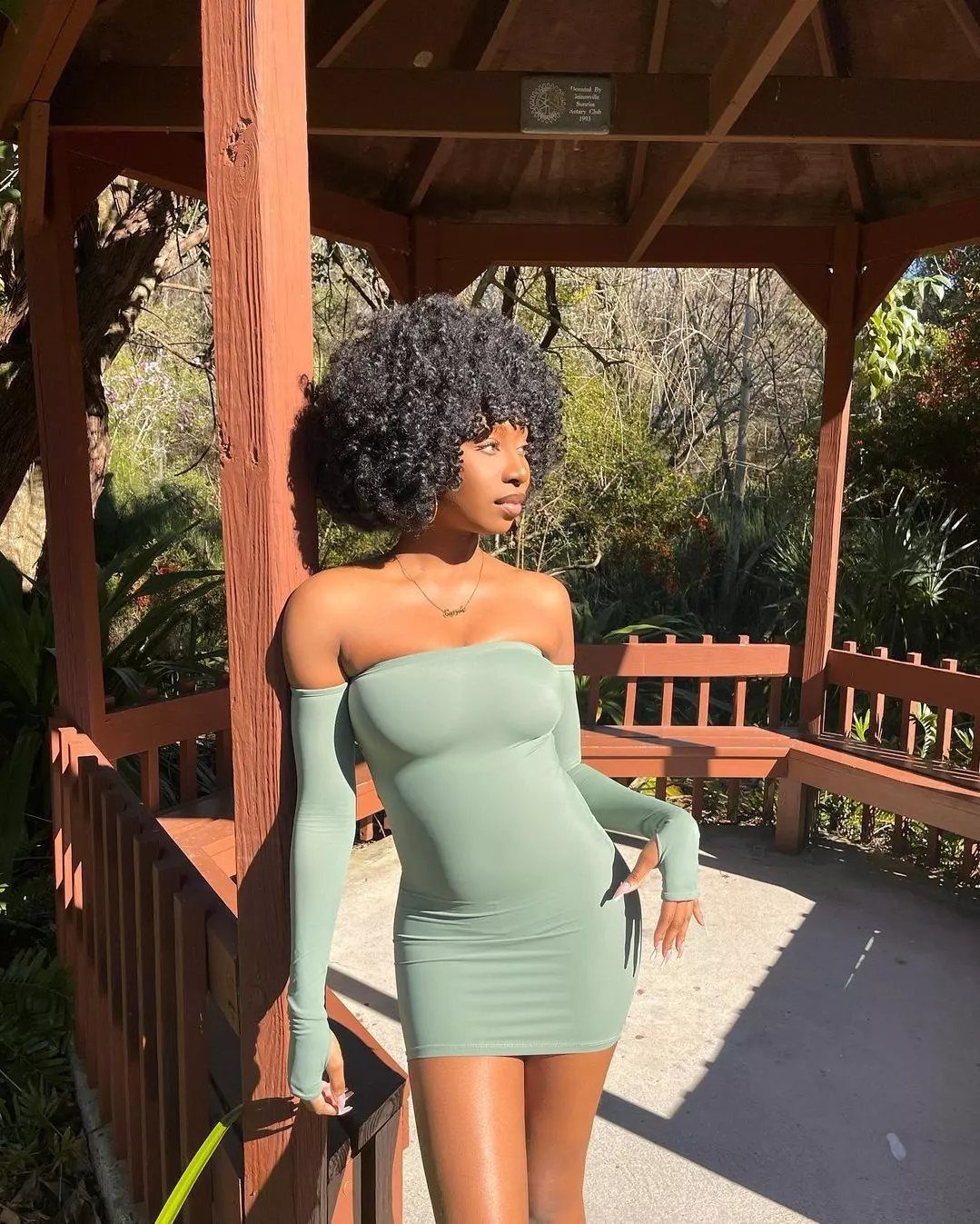
Bangs on a curly afro work because the curl itself becomes the frame for your face. Ask for them cut dry, so you can see where each curl actually lands before the scissors do.
Curls spring up once they dry, so a cut that looks right wet will end up shorter.
I’d start longer than you think you want and trim from there. Expect a little upkeep between full haircuts, since bangs lose their shape faster than the rest of the hair.
3. Pixie Cut
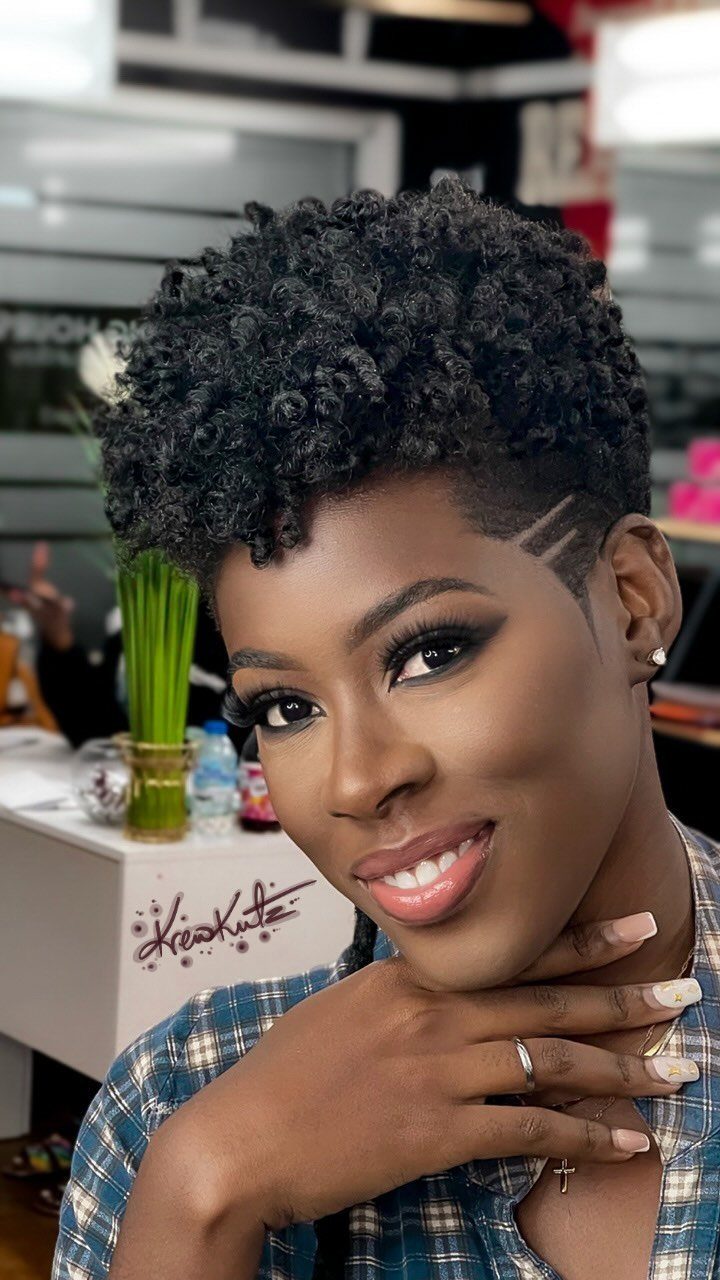
Short curls on top and clean shaved lines at the sides make a pixie cut that does a lot with very little hair. The design is the detail that makes it feel chosen rather than simply cropped.
For a reader who shops with quality in mind, this is a low-fuss option: no long routines, and nothing to hide behind.
I’d bring a reference photo to a stylist who knows textured hair, because shaved lines only look sharp when they are cut precisely. The trade-off is regular trims to keep those lines crisp.
4. The Curly Bob Haircut
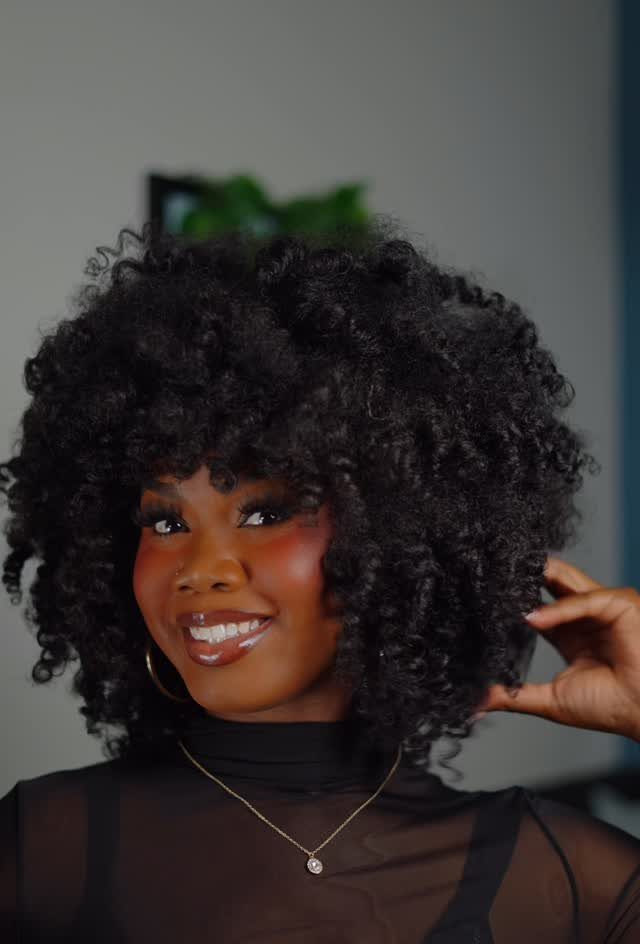
Volume is what separates a curly bob from a straight one. Cut around chin length, the curls stack into a full, rounded shape that frames the face and shows off the pattern.
Ask your stylist to shape it while the hair is dry, since curls shrink and each one sits differently.
A bob this full pairs well with a simple neckline, and I’d pick a statement necklace or earrings over anything fussy. Plan on occasional shaping to keep the outline balanced.
5. The Mohawk
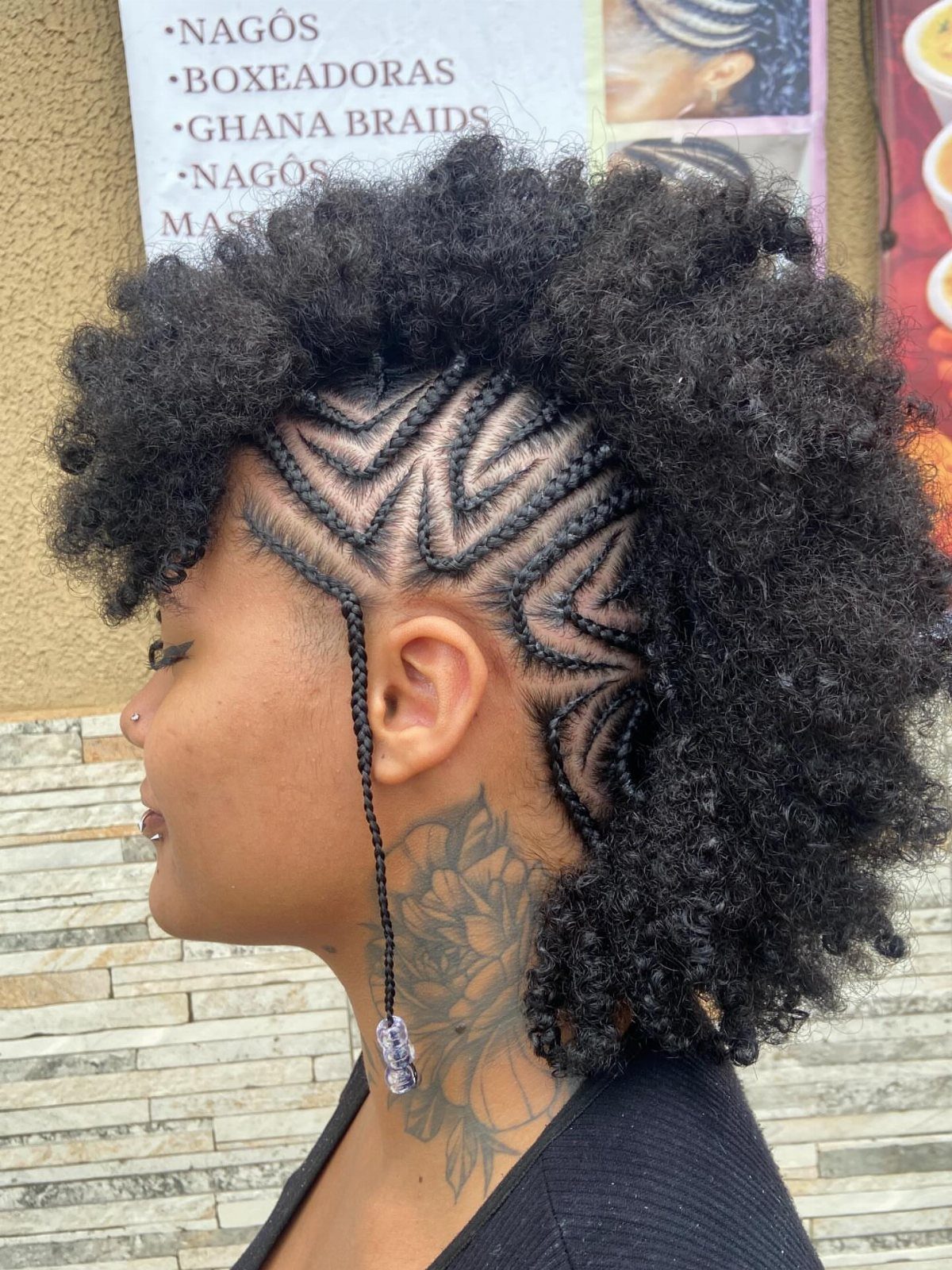
Cornrows along the sides that lead into a mohawk of loose curls give you two textures in one style: tight, graphic lines and a full afro on top. The geometric braiding is the part to spend time on.
I’d choose this if you want something bold without cutting anything off.
Braiding takes a skilled hand, so look for a braider who can show you past geometric work. Because the sides grow out first, they need tidying every couple of weeks, or the pattern blurs and the cut loses its sharpness.
6. Natural Mini Afro
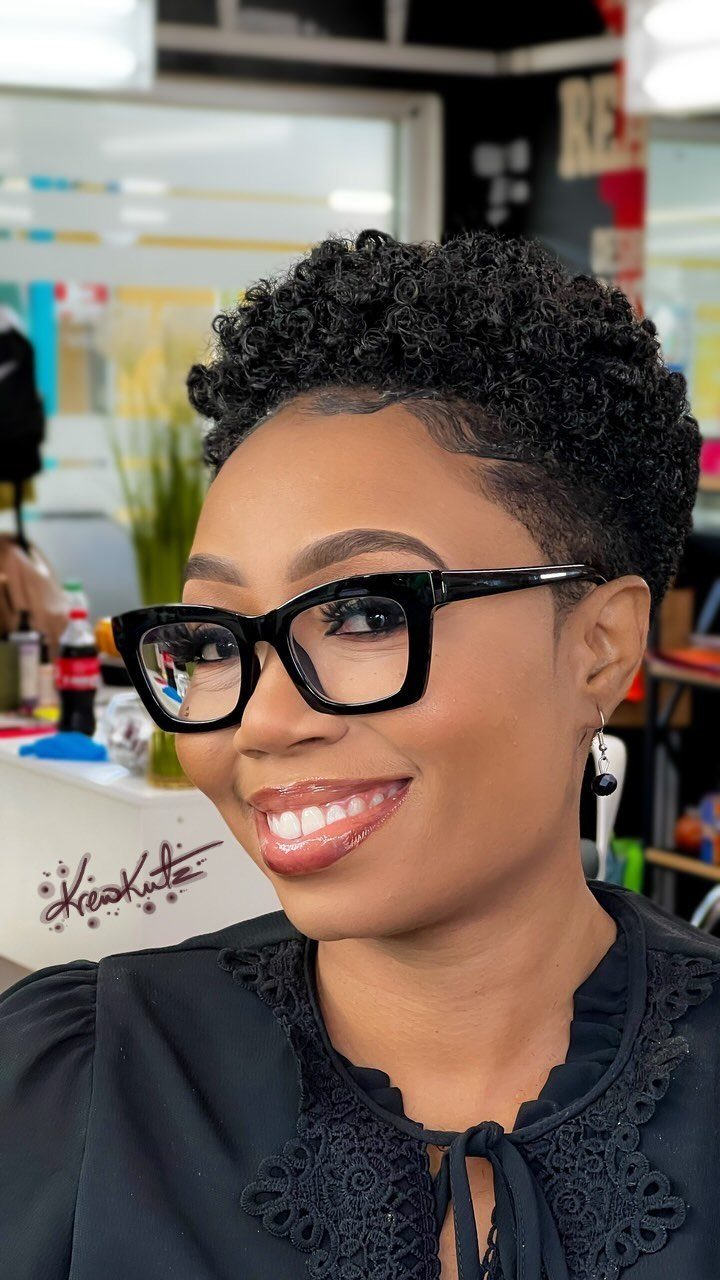
A mini afro is the shortest route to seeing your real curl pattern. Cut close, the coils sit in a compact, rounded shape that needs little more than moisture and a gentle fluff.
Glasses suit this look well, since the cut leaves the face fully open. I’d keep the shape even with regular trims from a stylist who works with natural texture.
Apply a leave-in conditioner to damp hair, then let it dry. It is a low-effort style, and the main cost is staying on top of the shape.
7. Afro Puff
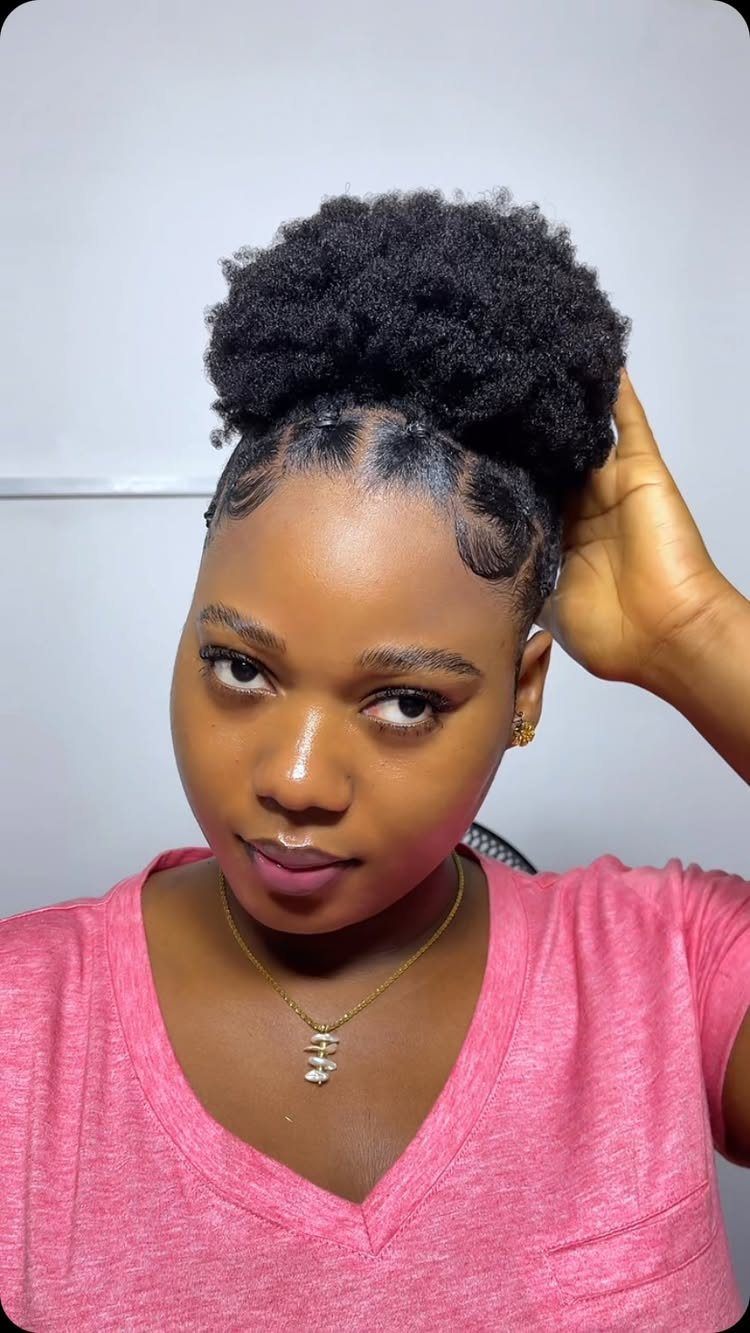
A high afro puff gathers your curls into one round shape on top, which makes it a quick style that still looks put together. It works for errands, work, or a dinner out, depending on what you wear with it.
I’d pick a soft scrunchie or a simple band that matches your hair, and keep the puff centered so the shape reads as deliberate.
A V-neck and a gold necklace leave the neckline open and let the puff do the talking.
8. Half Up Half Down Curls
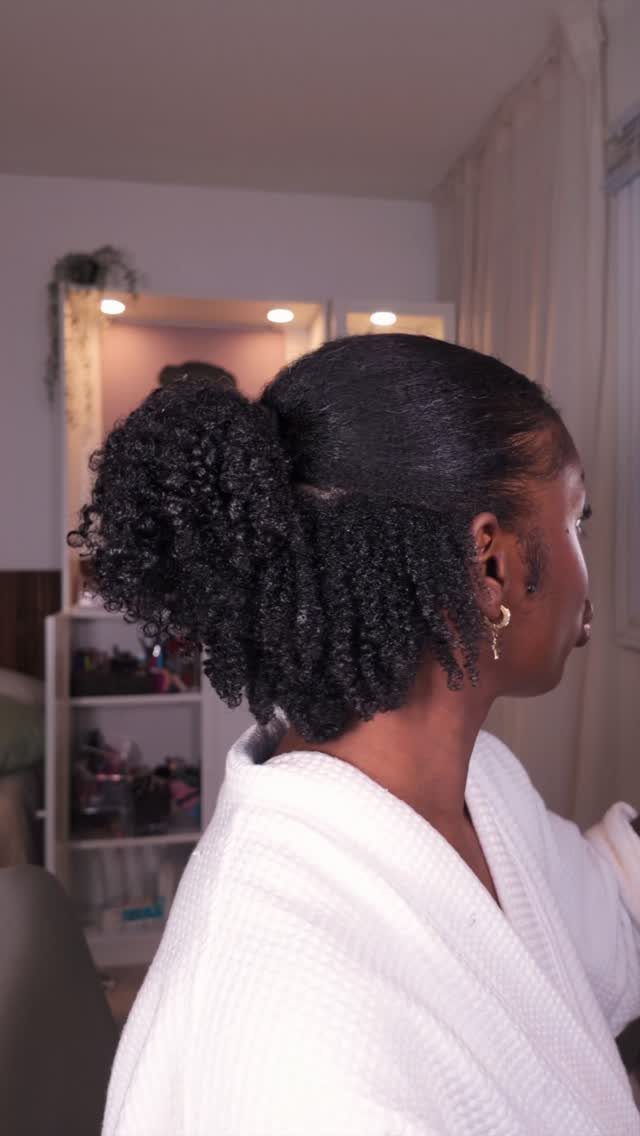
Half up, half down curls keep the length loose while pulling the top section away from your face. It’s a good middle ground if a full updo feels too plain and wearing everything down feels like too much.
Gather the top section into a ponytail at the crown, and leave the rest to fall naturally. I’d refresh the curls with a little water or leave-in conditioner beforehand so the pattern looks defined, not dry.
9. Sleek and Pulled Back Buns
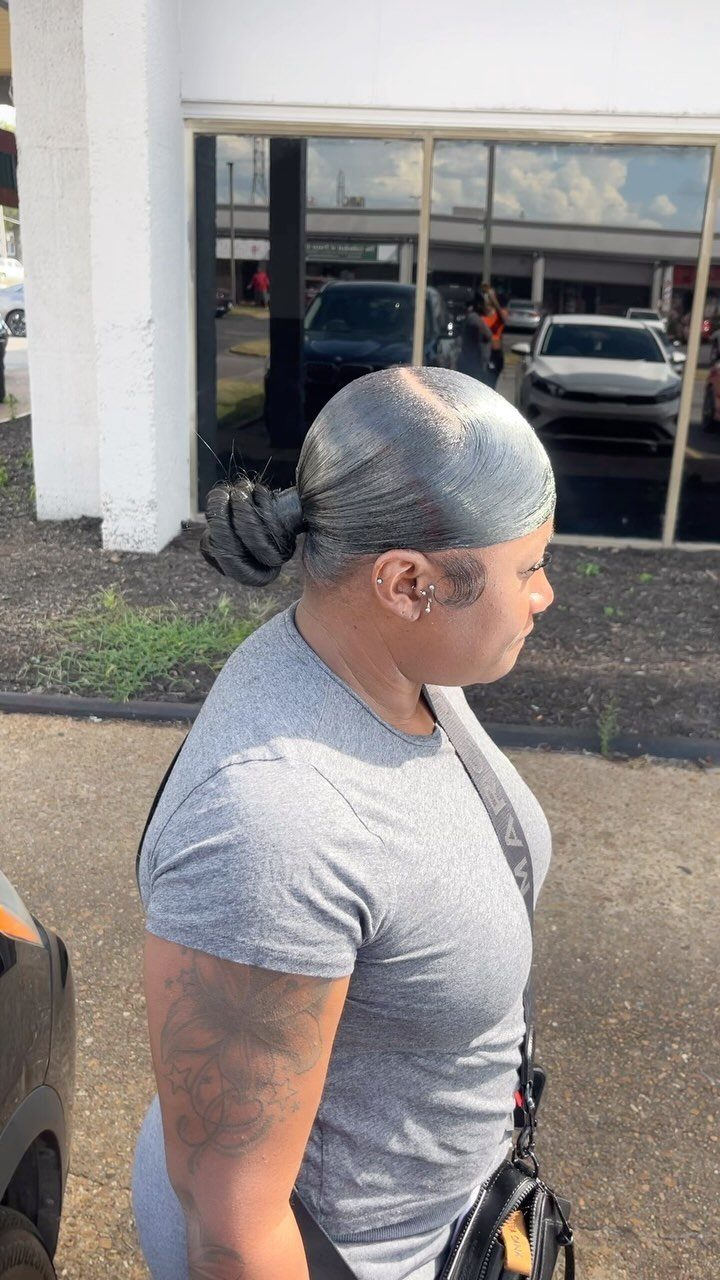
A sleek low bun is the tidiest way to wear natural texture, and it suits formal occasions better than almost any other style. Smooth edges and a bun set low at the nape give a clean, polished line.
Because the look depends on smoothness, I’d use a soft brush and a light styling gel, and avoid anything that leaves flakes. A plain tee works for daytime, but I’d pair it with simple earrings for evening.
10. Twists
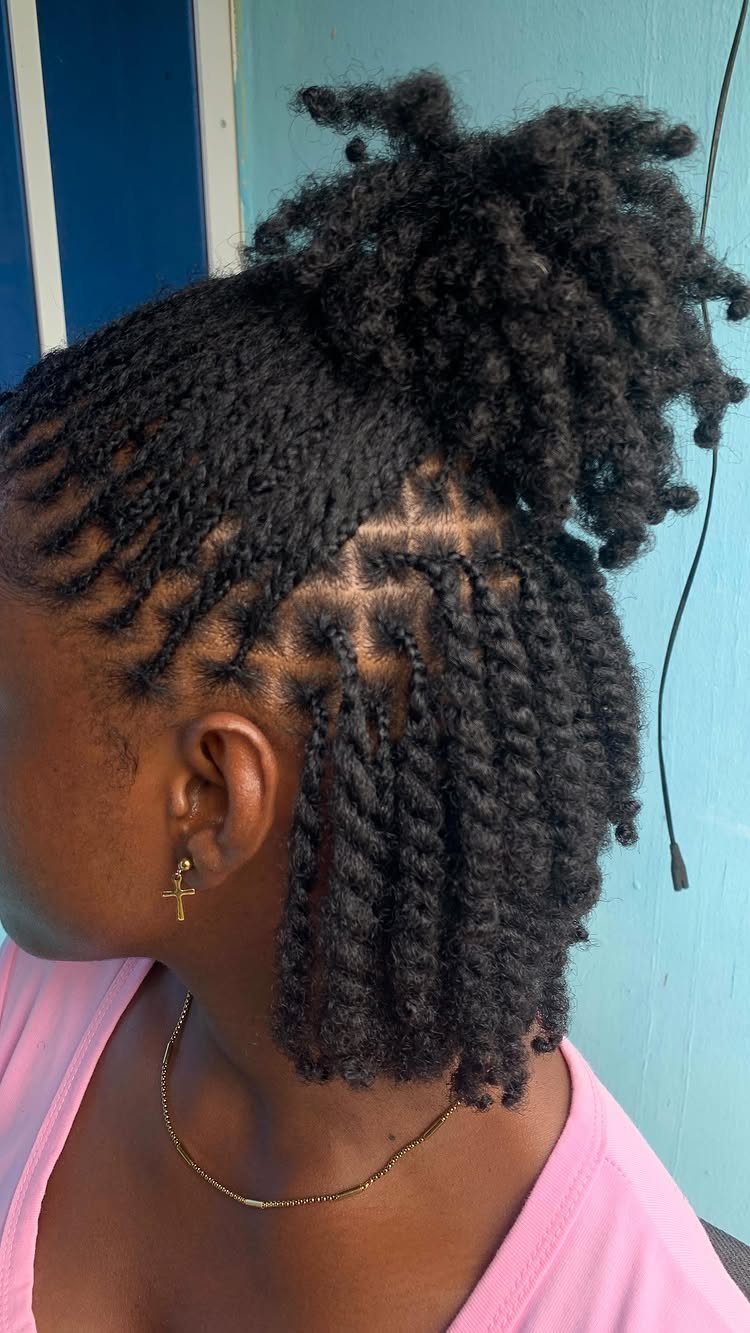
Twists give you a protective style with minimal tension, so your scalp isn’t pulled tight the way it can be with some braided looks. Gathered into a high bun, they stay off the neck and still look finished.
I like twists for anyone who wants a low-maintenance routine.
Pile them up loosely and let a few ends curl at the top for a softer shape. Keep the base moisturized, since dry roots are where twists start to look tired.
11. Finger Coils
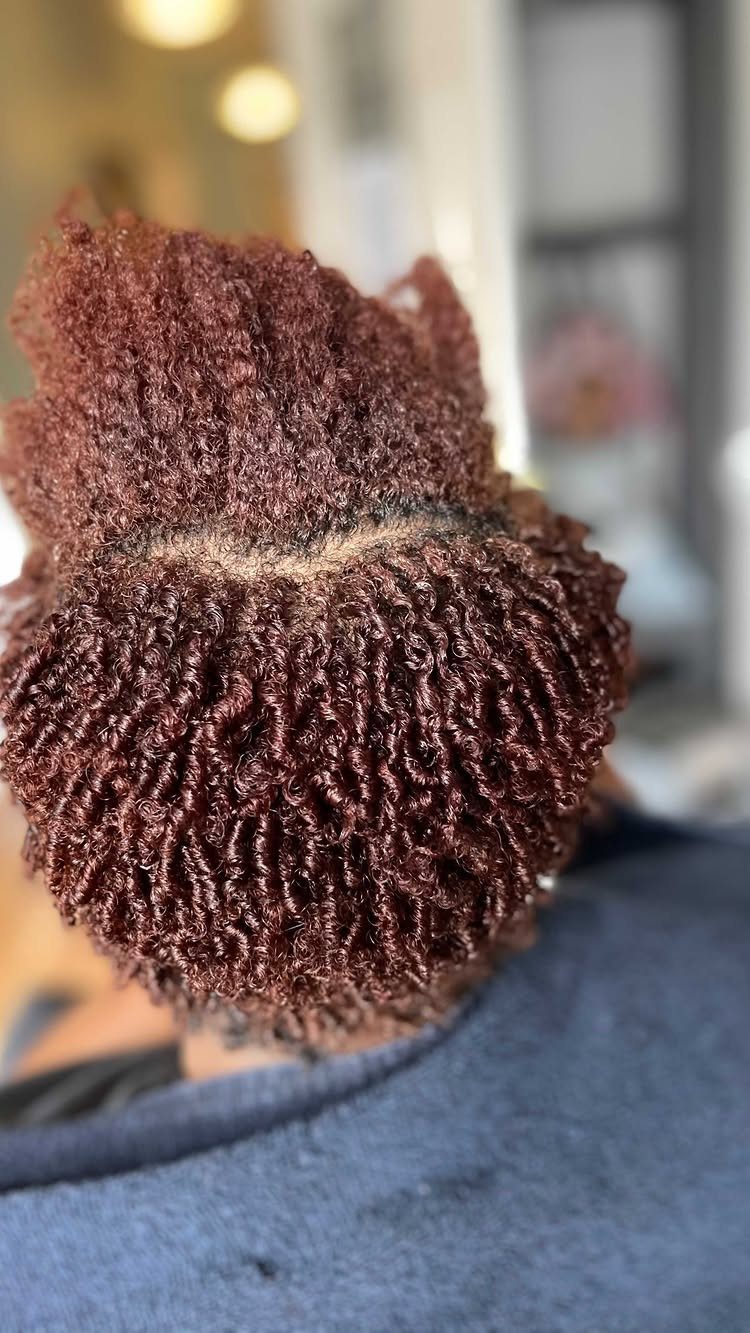
Finger coils turn each small section of hair into a defined, springy spiral, and from above the pattern looks almost like a design. The look depends on patience, because every coil is shaped one section at a time.
Work on damp, moisturized hair with a light gel, and keep each section about the same size so the coils sit evenly. Expect it to take a while, but the result is tidy and shows off your texture.
12. Faux Locs
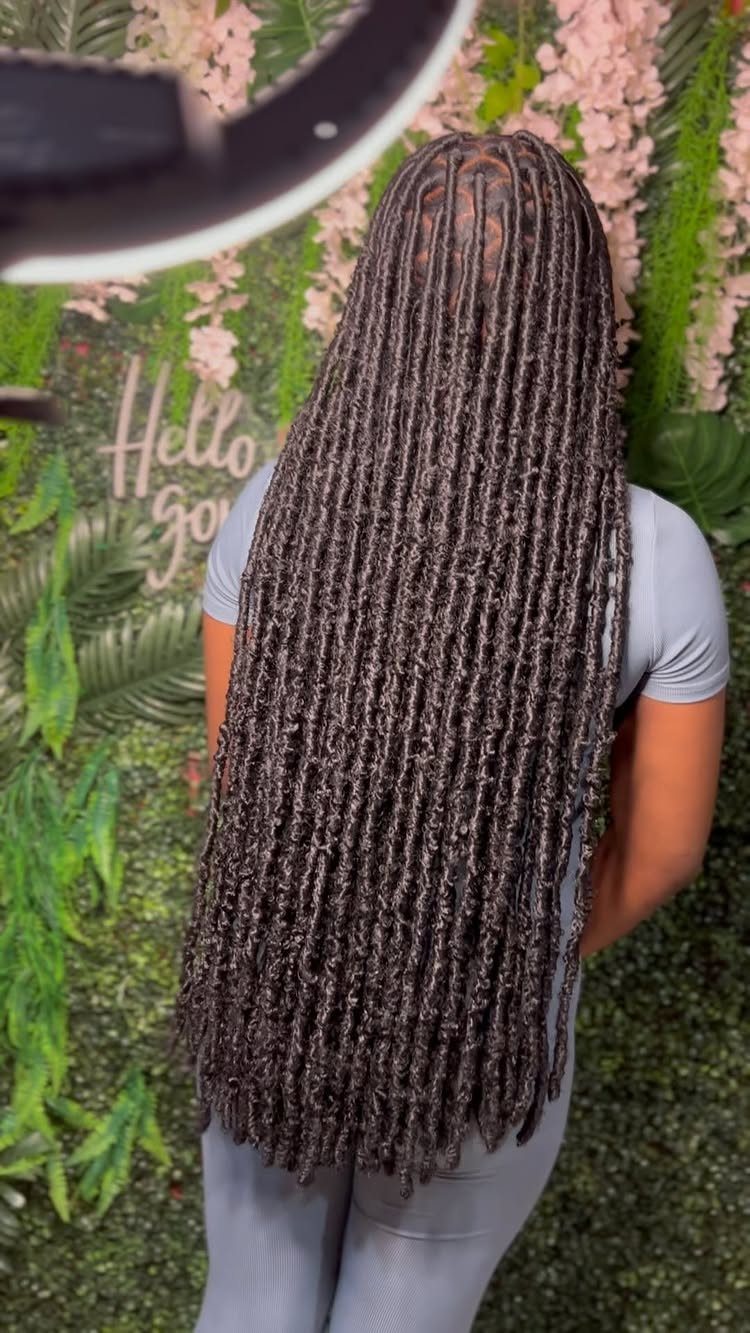
Faux locs give you the look of long locs without the lasting commitment, which is the main reason I’d choose them. They hang long and heavy, and they suit anyone who wants a dramatic change that can come out later.
Start with clean, moisturized hair, since it stays wrapped for weeks.
Ask your stylist how heavy the locs will be; very long ones can pull at the roots. Keep the scalp moisturized while you wear them.
13. Bantu Knots
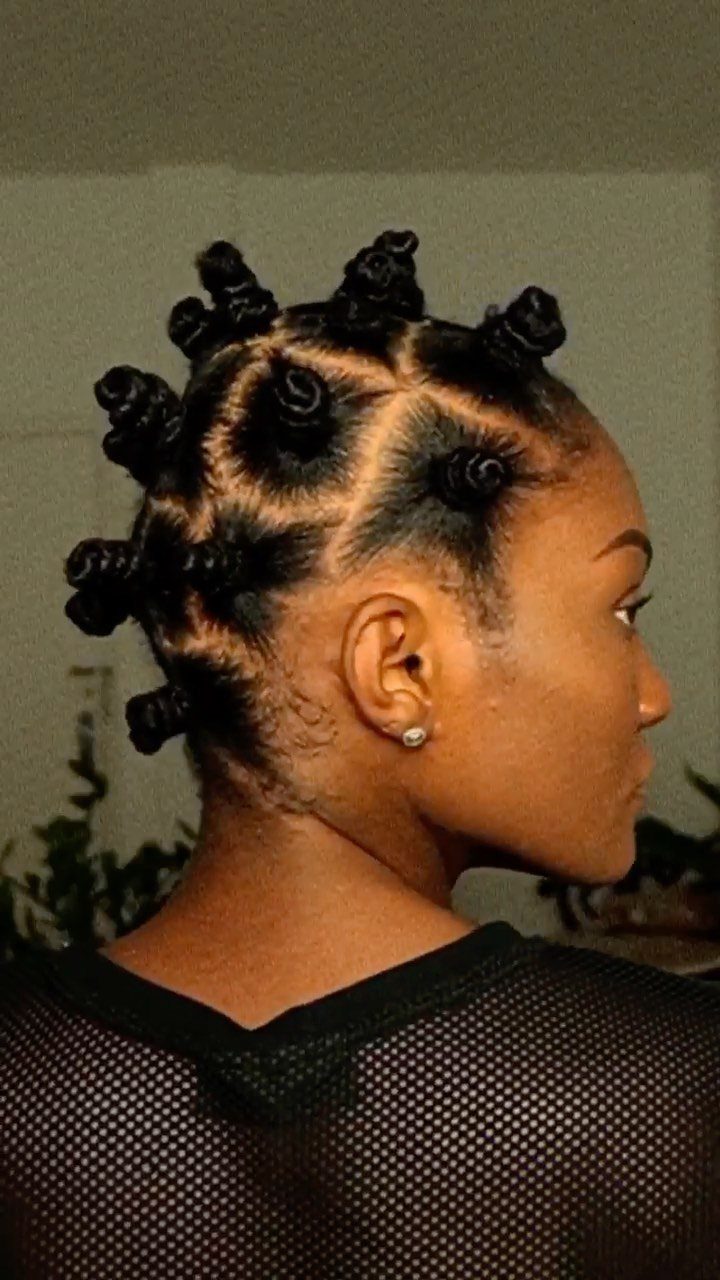
Small coiled knots set across the head make Bantu knots a protective style with real history behind it. Each section is twisted and wrapped into a tight, round knot that sits close to the scalp.
I’d choose this if you want a style that looks deliberate and keeps your ends tucked away.
Part the sections evenly so the knots sit in a neat pattern, and start on clean, moisturized hair. A simple top, like the black mesh one here, lets the knots be the focus.
Protective Hairstyles
With the ends tucked away, your hair also stays out of the way of pollution and other environmental damage.
A scalp massage of roughly 4 times a week, done while the style stays in, is the habit I’d pick if length is what you’re after.
Choose a style that fits how you live, because a protective style only protects if you leave it alone. Reaching in to rework it every day brings back the manipulation you were trying to avoid.
Hair Care Tips for Afro Hair
Afro hair has a curl pattern that keeps natural oils from traveling evenly down the strand, so the ends are usually the driest part. Moisture is the first job, and it matters even more when the hair is protected.
An oil helps here. When strands start to feel dry, a light layer of oil or butter brings back some moisture and shine, and it keeps the scalp in good shape for growth while the style is in.
Use a small amount and work it in section by section so it doesn’t weigh the hair down.
Jumbo twists wrap the afro texture in a thick, protected shape, so the hair spends less time exposed to wind, heat, and daily wear. Accessories can dress them up, and they cost your hair nothing.
Cultural Significance of Afro Hair
Through the 1960s the Afro became a statement of Black pride, power, and political resistance, and it is the decade most people tie to the style.
It first caught on with performers, artists, activists, young people, and nationalists, and it tied wearers to their African ancestry and to Black people across the diaspora.
Angela Davis, a UCLA professor connected to the Black Panther Party, made the Afro a political statement. Her hair was her most recognizable feature, and it appeared in her "Wanted" ad.
Knowing this history changes how I wear the style. It is more than a cut, and I’d treat it with the same care it earned.
Frequently Asked Questions
Is afro hair attractive?
Yes, and the range of looks is a big reason. A mini afro shows your real curl pattern, a puff looks polished, and a sleek low bun suits formal occasions.
The history matters too: during the 1960s, the Afro stood for Black pride and political resistance, and that meaning still travels with the style.
Can you give me a list of afro hairstyles?
Good options include a natural mini afro, an afro puff, a curly bob, curly bangs, a pixie cut, and a mohawk with center cornrows.
Protective choices include twists, Bantu knots, finger coils, faux locs, and braids set along the side. For something dressier, try half up half down curls or a sleek low bun.
What are some natural afro hairstyles for black women?
A mini afro, an afro puff, twists, Bantu knots, and finger coils all keep your natural texture front and center.
The mini afro is the easiest: cut close, it needs only a leave-in conditioner on damp hair and a gentle fluff. Twists and Bantu knots add a protective option, since they keep your ends tucked away.
How do I keep afro hair moisturized?
Moisture comes first, since tight curls slow the path of natural oils from root to tip and leave the ends the driest part of the head.
When strands feel dry, work a small amount of light oil or butter in section by section. Too much weighs the hair down.
Do protective styles help afro hair grow?
They can, mainly because tucking the ends away shields hair from wind, heat, pollution, and daily wear. If length is what you’re after, I’d add a scalp massage roughly 4 times a week while the style stays in.
Leave the style alone once it’s in, because redoing it every day brings back the handling it was meant to spare your hair.






