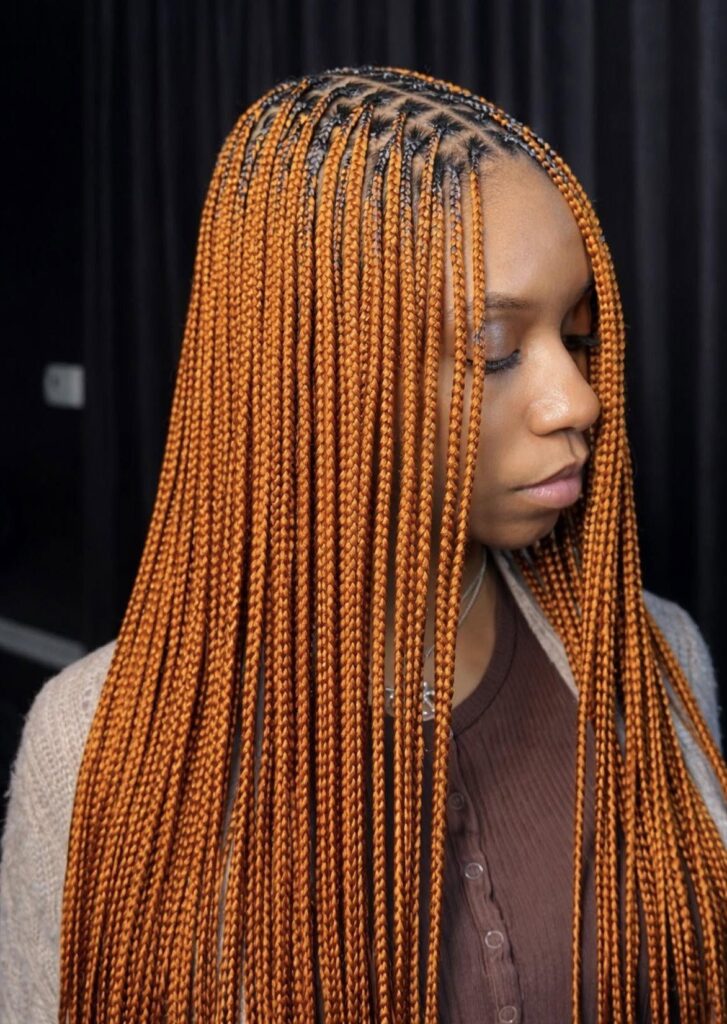
The list runs from a rope braid that a beginner can do alone in a few minutes to cornrows and stitch braids that depend on straight, even partings, and wear time stretches from a few days to 6–8 weeks for box braids and knotless braids.
Upkeep decides which style is yours: how much care you will realistically give, plus your hair length, hairline and the week ahead, sets the limits before looks do, and the sections on choosing a style and maintaining braids cover that.
1. Cornrows
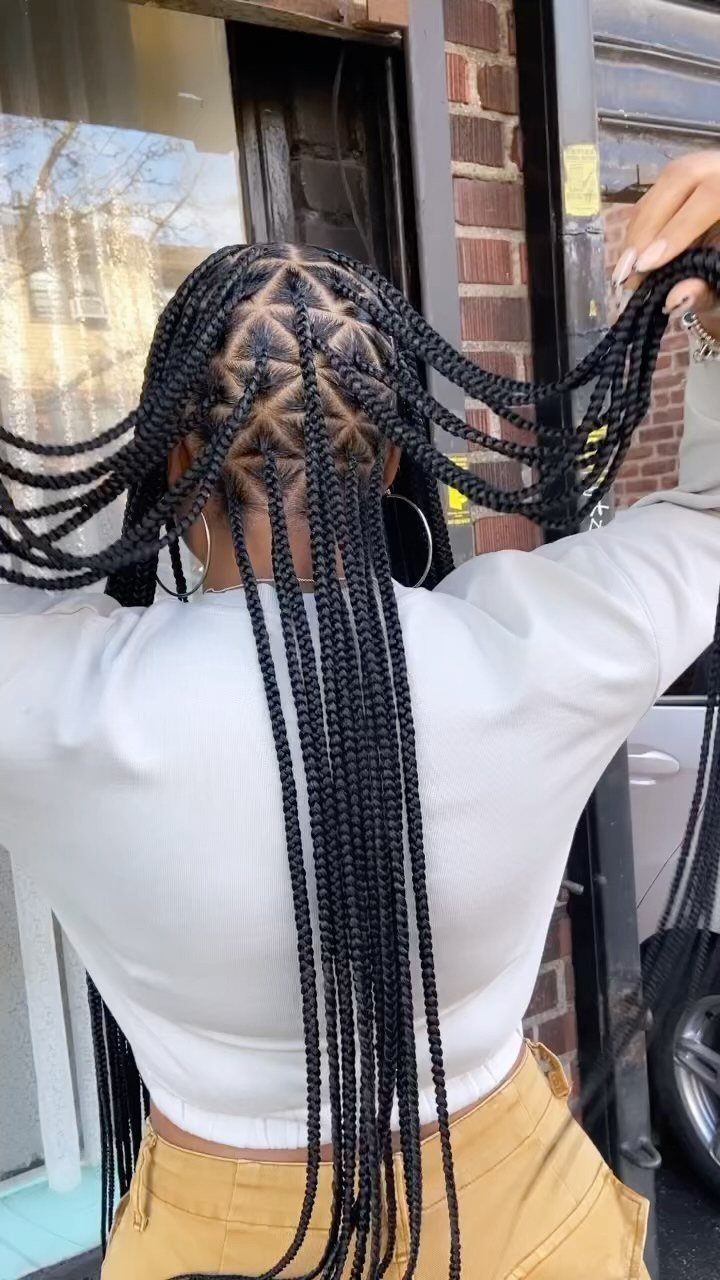
Cornrows lie flat to the head in neat rows, which gives the style a clean, graphic line before any length is added.
Here the rows run down the back and then release into long hanging braids, so the flat section reads as structure and the loose ends as movement.
This version suits a person who likes a defined pattern, since the rows do most of the styling work. Pair it with a simple top, as above, and let the braiding do the work.
2. Braided Ponytail
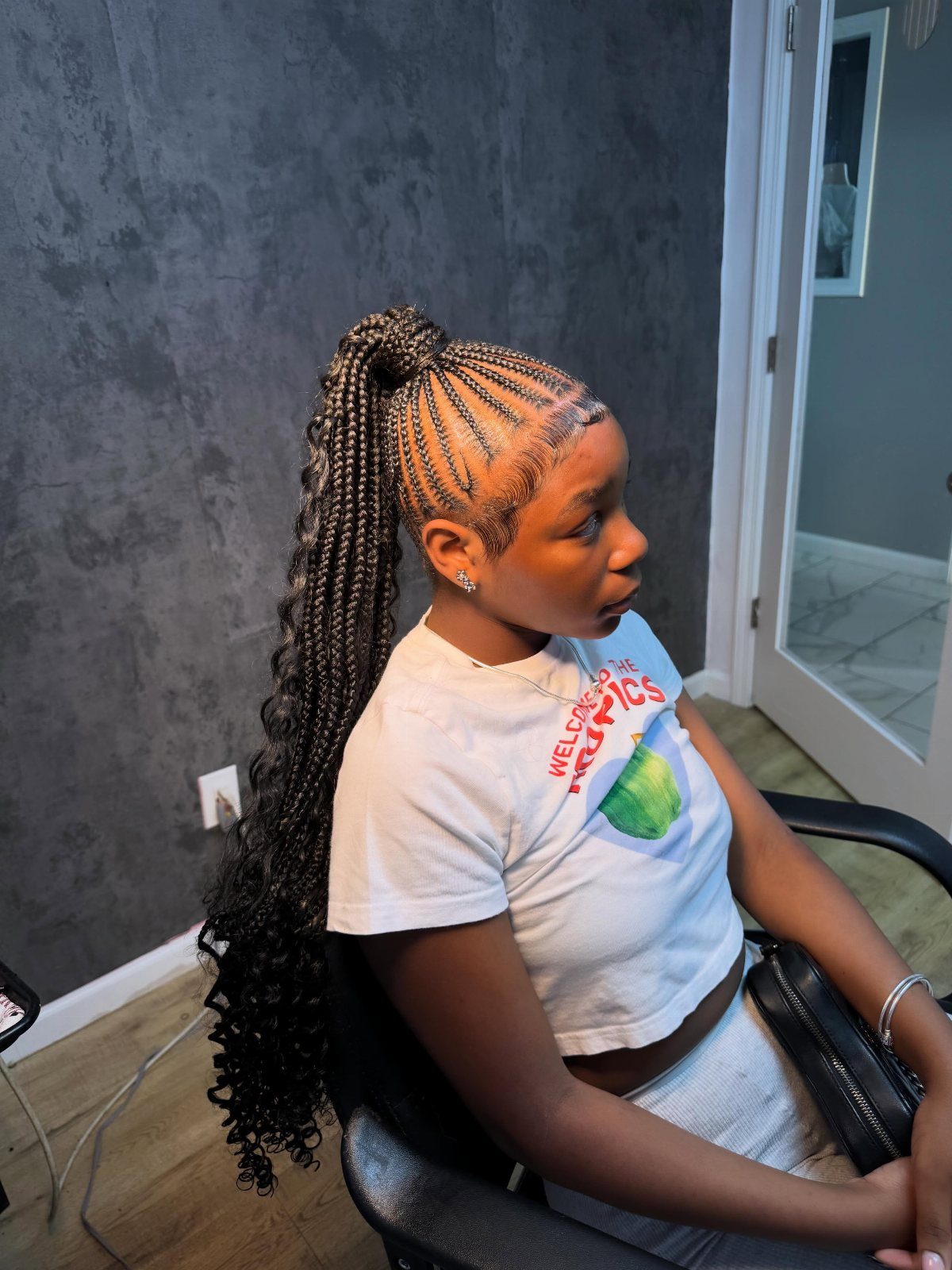
A ponytail is the easiest style to dress up with braids, and a high one gets the most from them.
Start with cornrows that lead into a ponytail, then let the length fall as one long braid; the flat rows keep the top neat while the braid adds weight at the back.
Curly ends soften the look and keep it playful. I’d choose this when you want hair off your neck but still want it to look planned, whether with a T-shirt or something dressier.
3. Knotless Braids
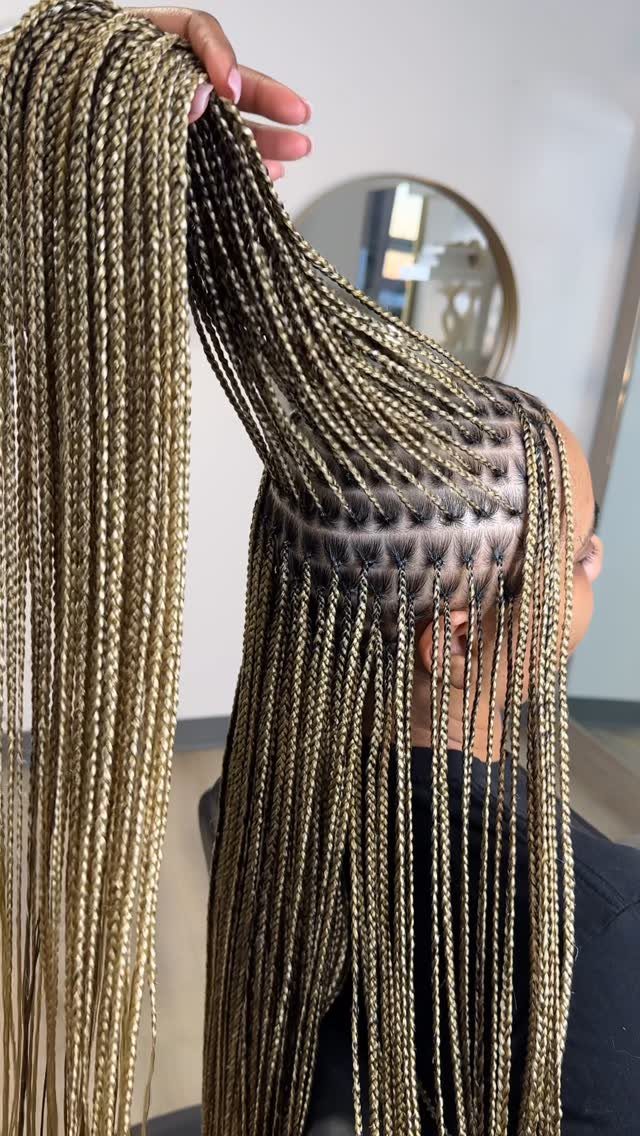
Knotless braids begin without a knot at the root, so the braid looks like it grows straight from the scalp. That flat, natural start is what I look for first.
Honey blonde mixed with brown, as seen here, adds dimension along the length. Ask your braider for neat parting, since clean scalp lines are what make the style look polished from the first day.
4. Braided Bun
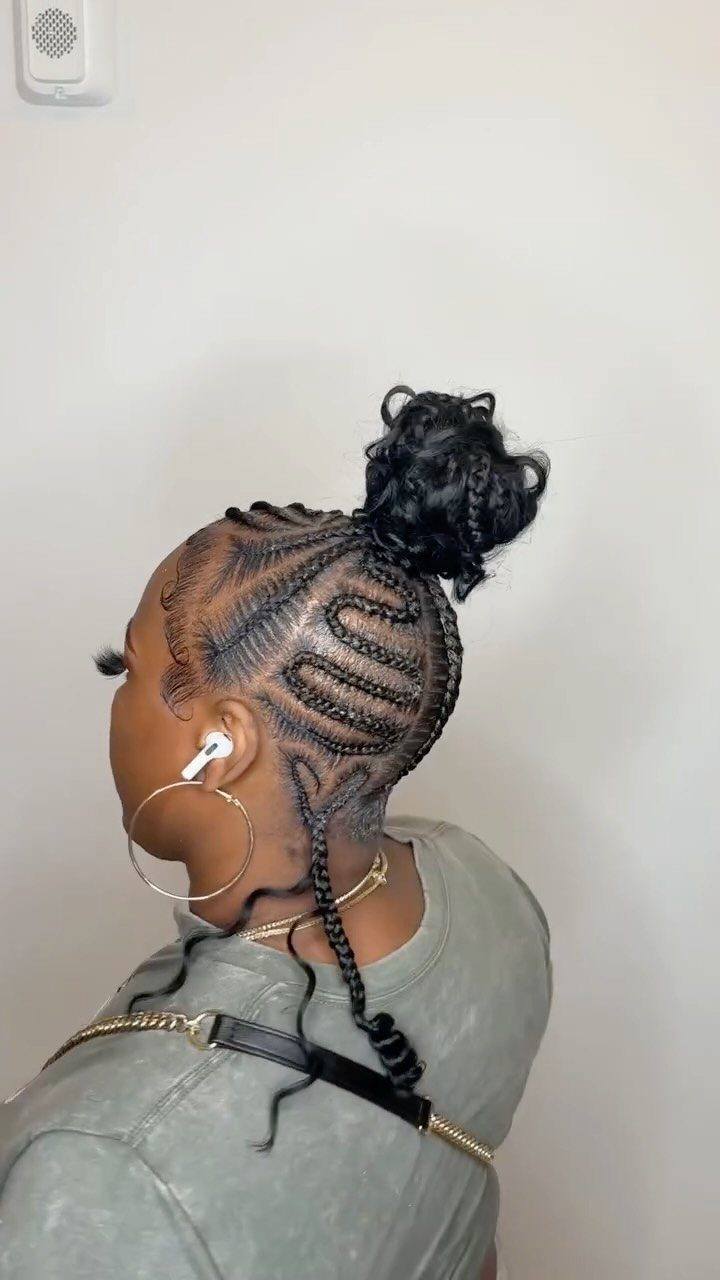
Pull braids up and wind them into a bun, and you get an updo with built-in texture. Curved cornrows leading into a high bun, like this one, give the style a sculpted shape.
I like how it frames gold hoops and a neckline, since nothing hides your face or shoulders. It suits dressed-up evenings and workdays alike.
5. Box Braids
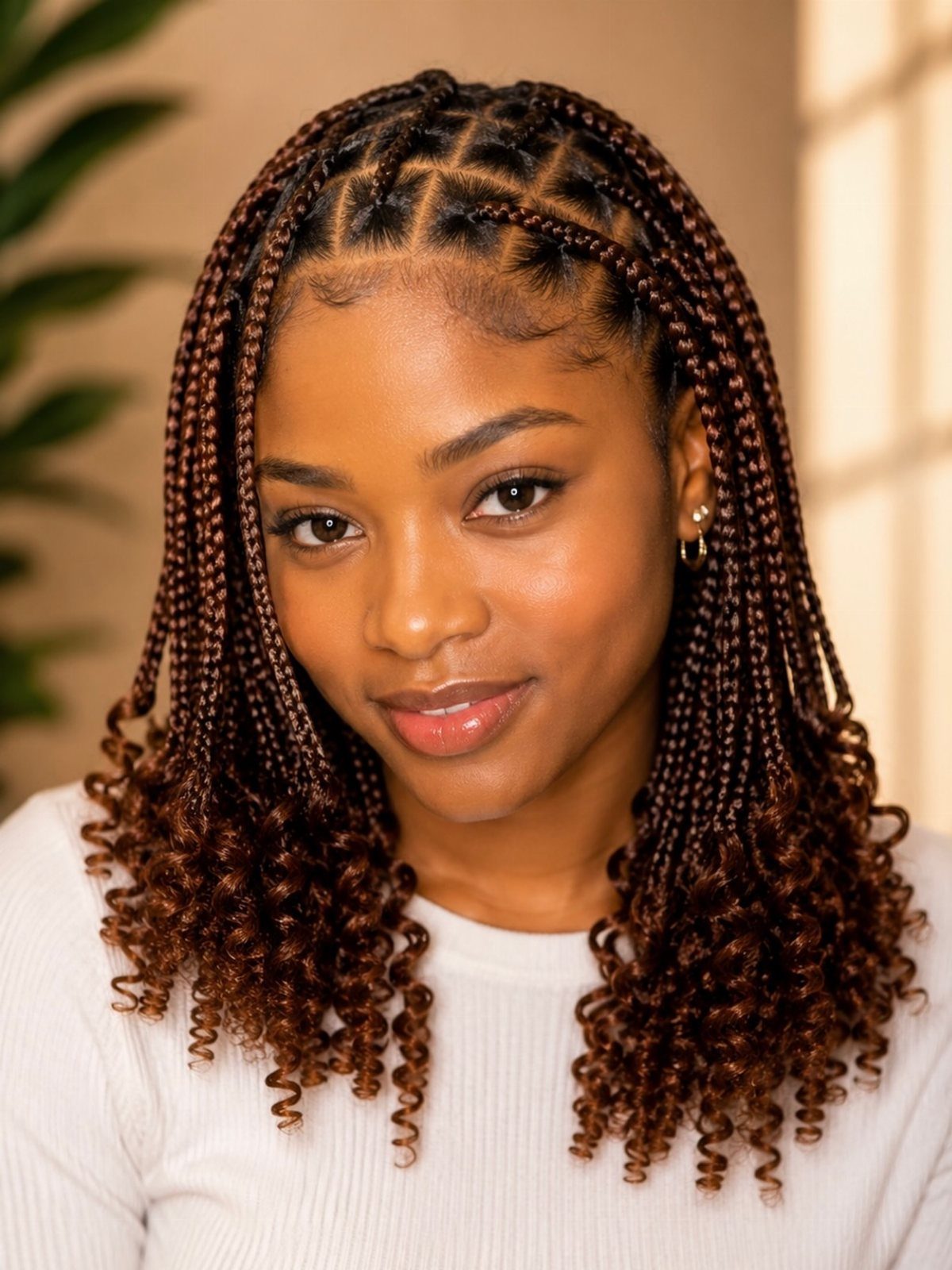
Box braids are individual plaits, each one started from a square section of scalp. The square parting is the signature, and it should look tidy and even.
Curly ends give box braids a softer edge than blunt tips, and they hold the look longer when the braids start to loosen.
I’d pick brown for an everyday shade that works with nearly any outfit, and keep the parts uniform for the cleanest result.
6. Goddess Braids
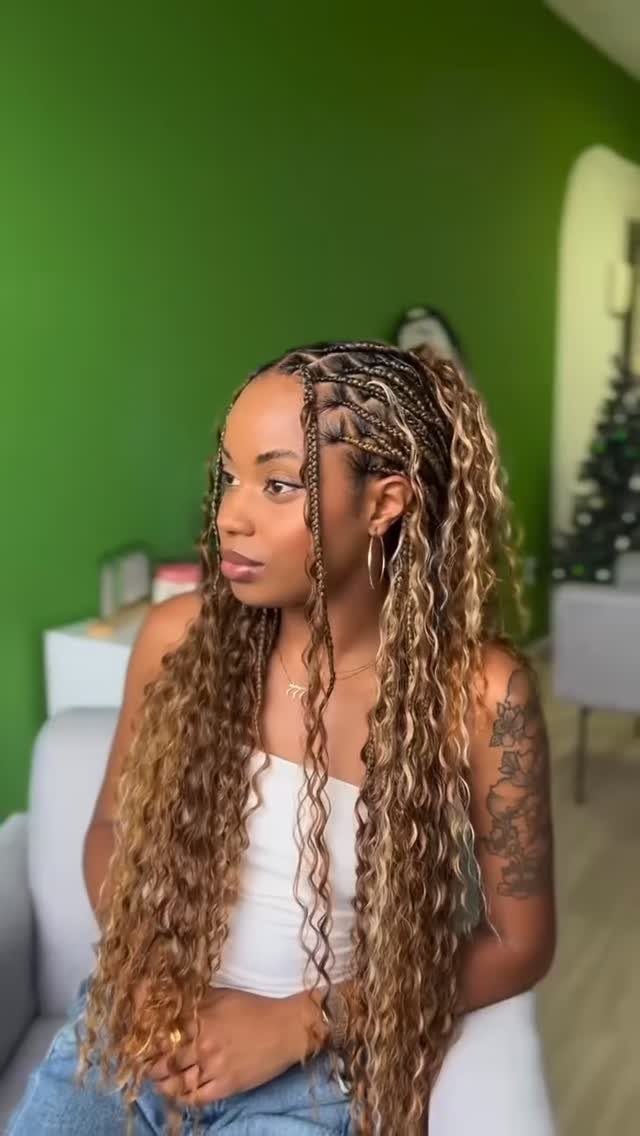
Goddess braids are chunky and large, and curls tucked into the ends give them a romantic finish. Fewer, thicker braids mean the style reads bold from a distance.
Blonde tips against darker roots, as here, add a pop without recoloring all of the hair. This look goes well with simple basics like a white top and jeans, because the hair is the statement.
7. Boho Braids
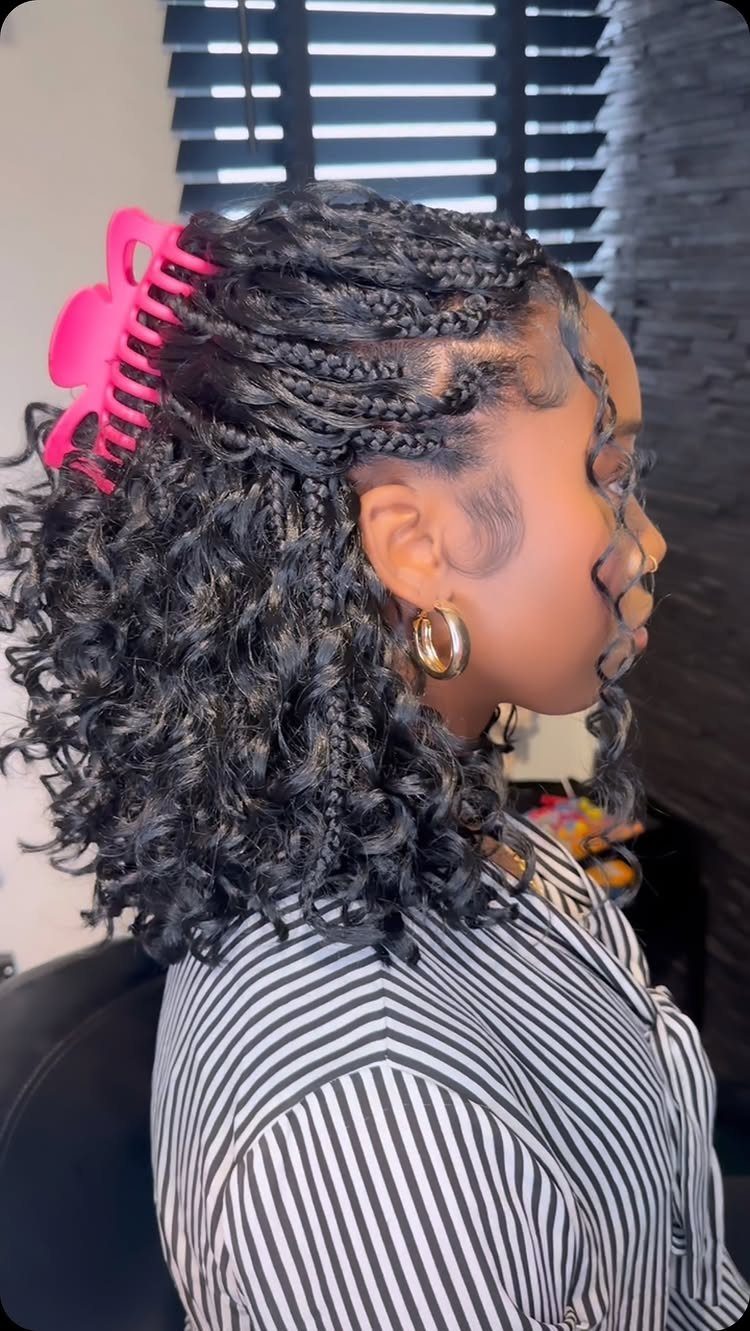
Loose, wavy strands left hanging out of the braid are what separate boho braids from a tight, uniform set. That unraveled texture gives the style a carefree feel.
Curly ends, as here, add to the relaxed look.
A claw clip is an easy extra: it pins up the front sections and keeps the length off your face. I’d pair it with a simple striped top and let the hair carry the casual mood.
According to Charles, boho and knotless box braids with added pieces of curly hair are some of the most popular hairstyles of the year.
8. Fulani Braids
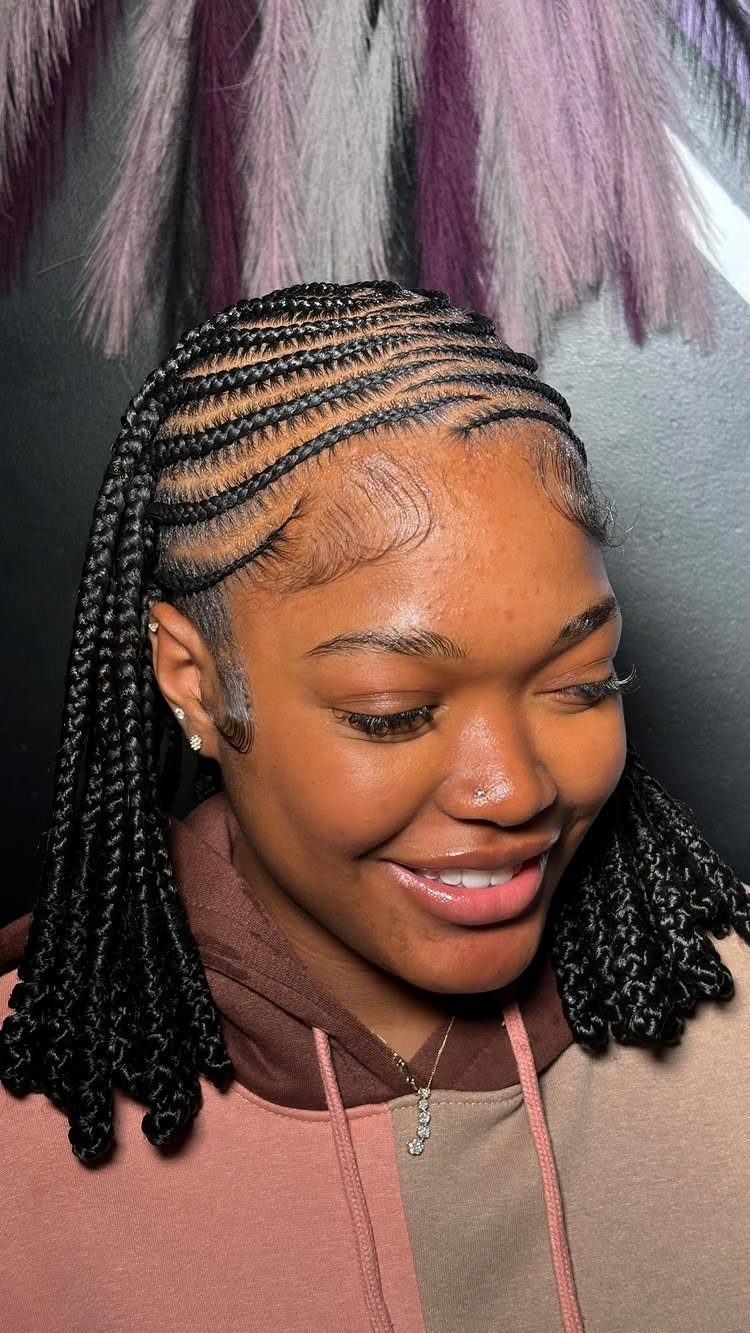
Cornrows on top and box plaits below: Fulani braids join the sleek, flat look of one with the volume of the other. The result has both a neat crown and swinging length.
I like it for anyone who wants structure near the face without giving up fullness.
A necklace and a casual hoodie suit it well, since the braid pattern is already detailed. Keep the top rows tidy so the style reads crisp.
9. French Curl Braids
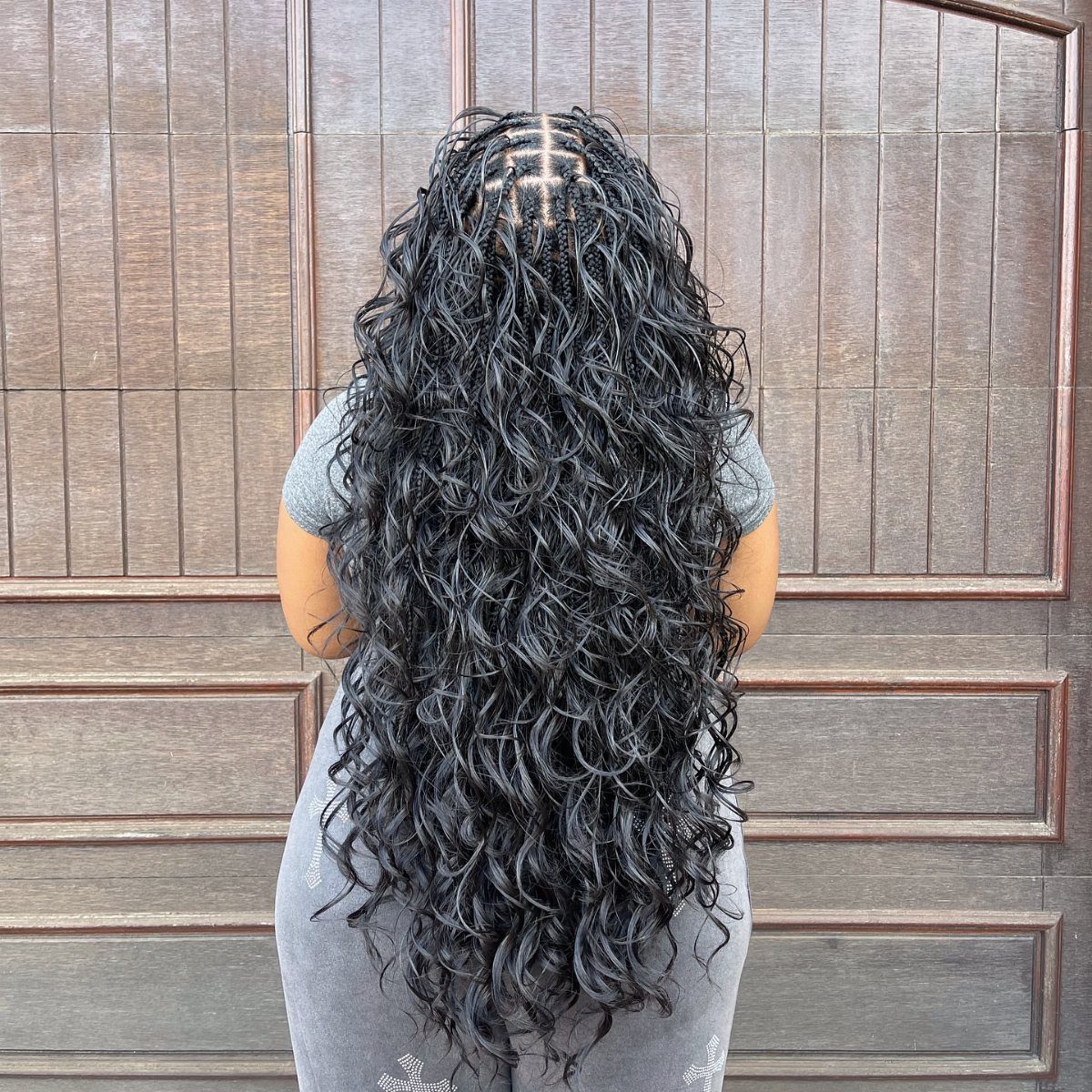
French curl braids end in loose, spiraled curls, which turns a long braid into something softer and more playful.
A geometric part pattern at the scalp gives the style a graphic start, so ask your braider to map it before the curls begin.
Coco Gauff, a Carol’s Daughter brand ambassador, wears braided looks both on and off the court, which shows how easily the style moves between sport and everyday wear.
I’d keep the parting crisp, since the scalp pattern is what makes this version stand out.
10. Dutch Braid
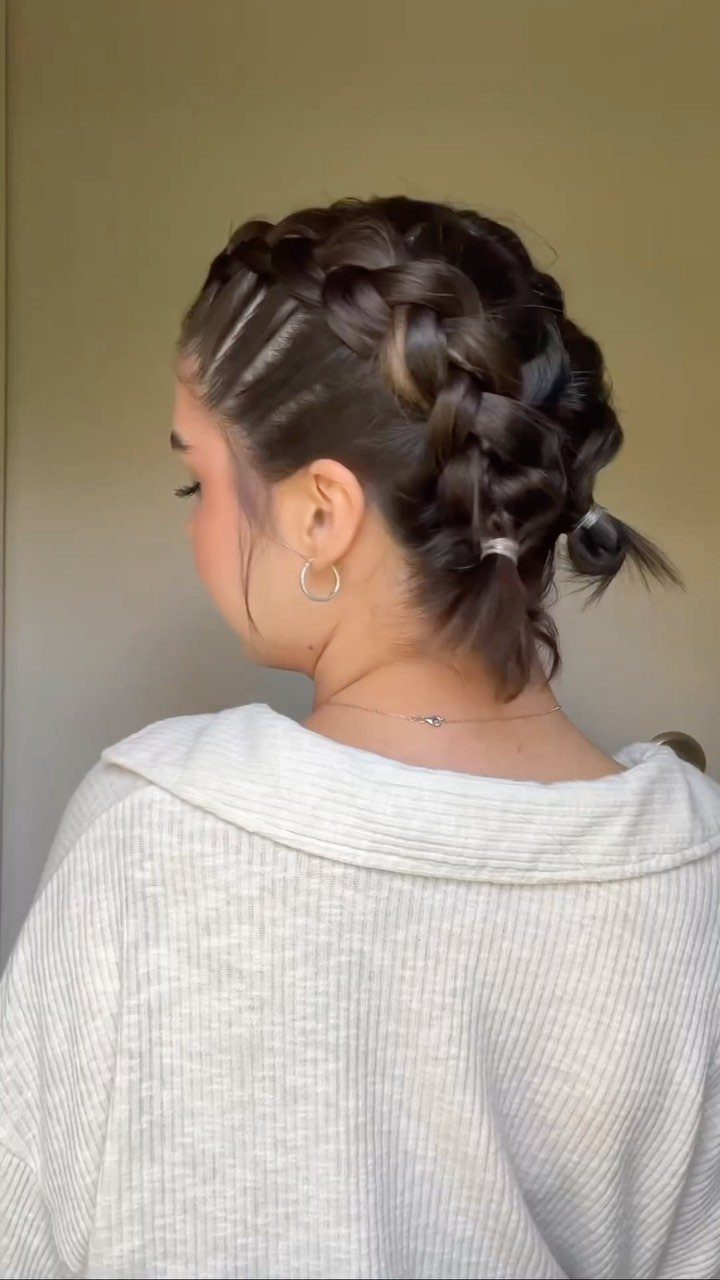
Work a Dutch braid by crossing each strand under the others instead of over, the reverse of a French braid, and the braid ends up raised on top of the hair.
Because the braid sits raised, it reads as thick and full all the way down the back.
Pull each section a little looser at the edges if you want more fullness. A ribbed knit sweater pairs well with it, since the braid’s texture and the fabric’s texture echo each other.
11. Rope Braid
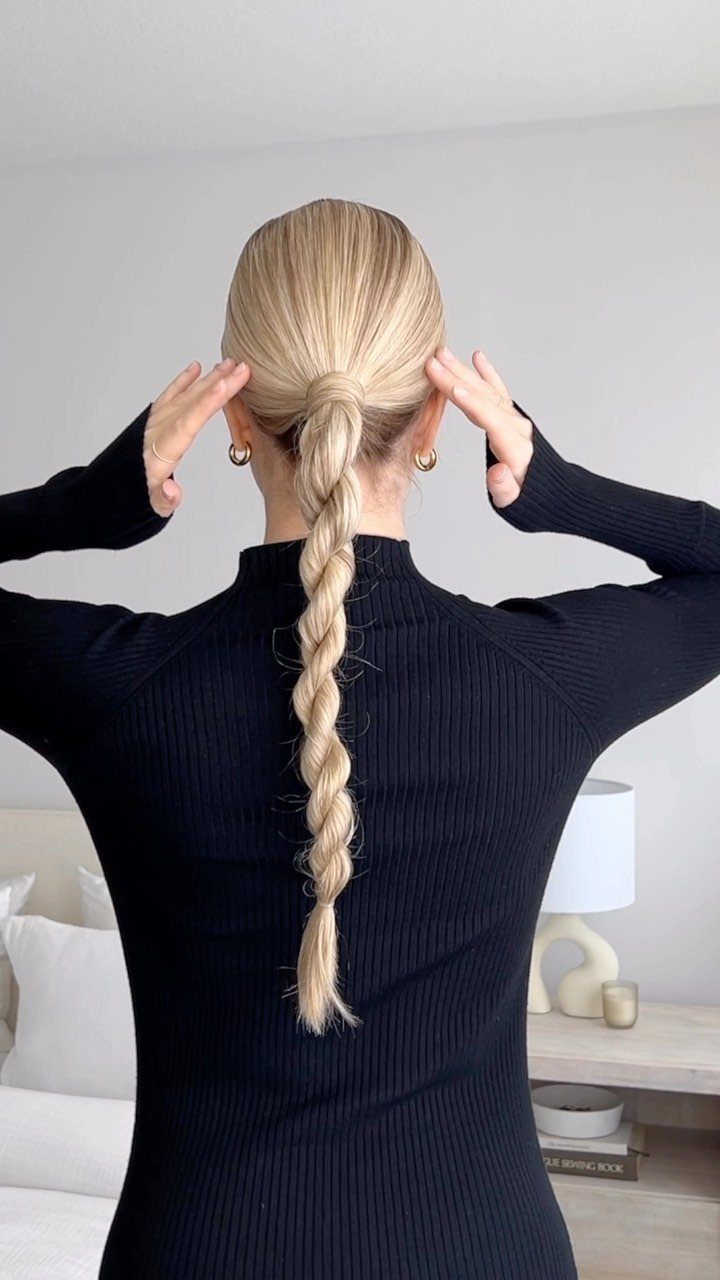
2 strands twisted around each other make a rope braid, and the finish looks like twisted cord. A rope braid takes less skill than a three-strand plait, so it’s a good place for beginners to start.
Twist each strand in one direction, then wrap the pair the opposite way so the rope holds.
As a ponytail on blonde hair, it shows off the twist clearly. It looks especially good with a fitted black dress.
12. Stitch Braids
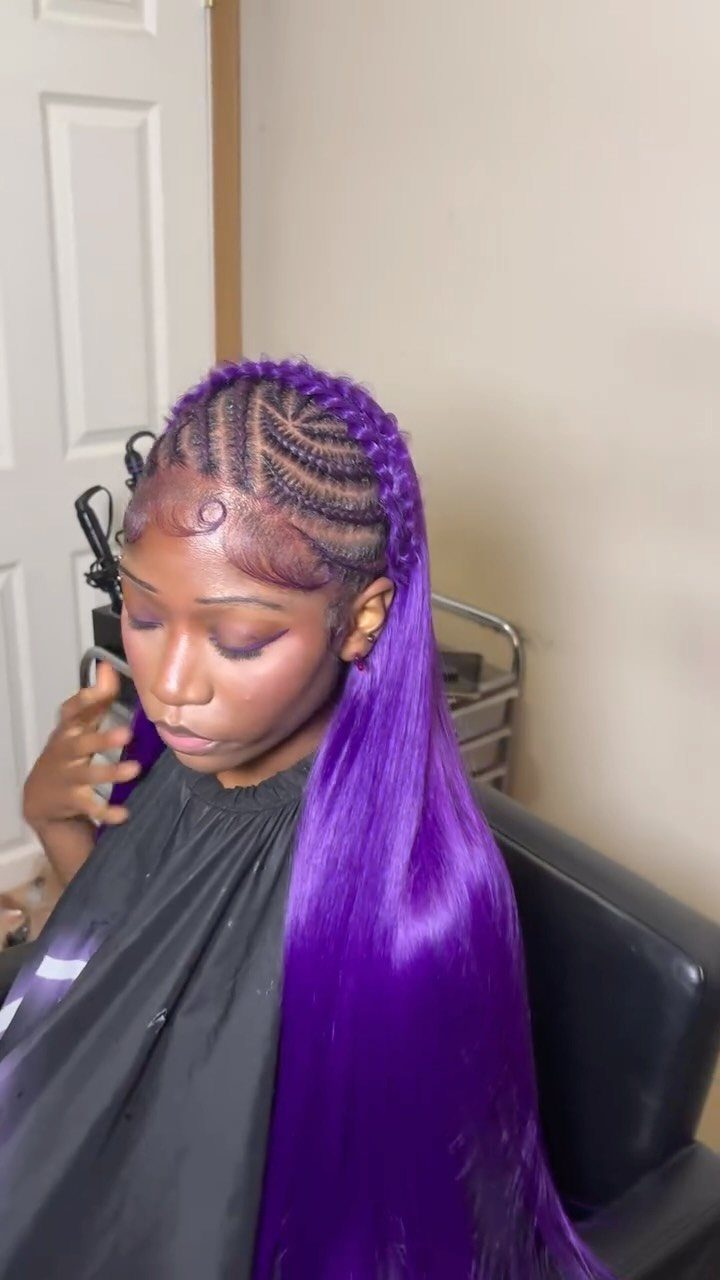
Stitch braids are cornrow-style rows with a stitched look, made by sectioning precisely so each line looks sewn into the scalp. Everything depends on straight, even partings.
Stitch braids can be wrapped into a crown, and that placement frames the face well. Bright color makes the lines easy to see, but I’d pick a shade close to your natural hair if you want a quieter version.
Choose a braider with a reputation for clean, crisp parting, since the parts are what make stitch braids look sharp.
13. Jumbo Braids
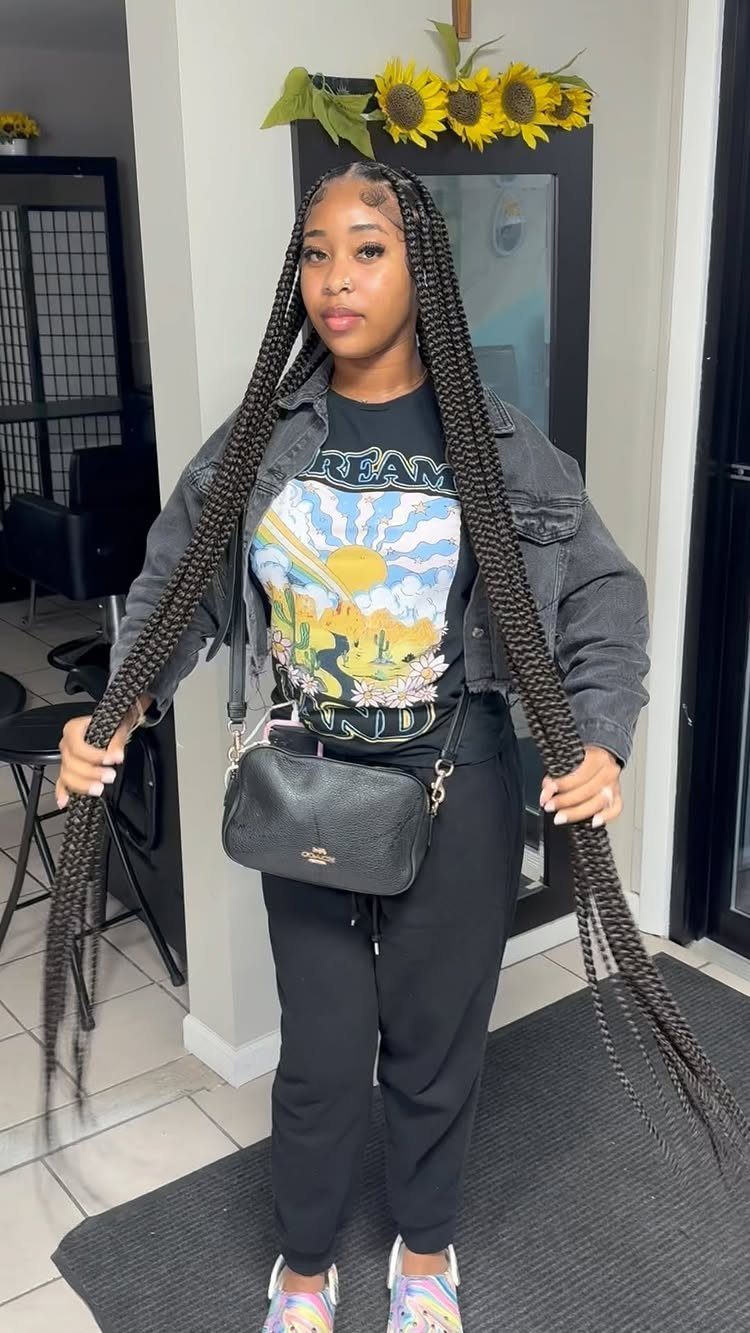
Jumbo braids are fewer and thicker than standard sets, so each one carries real weight and the whole style reads bold from across a room. Long, thick black braids like these hang as heavy ropes rather than a fine curtain.
A denim jacket and graphic tee keep the outfit relaxed, since the hair already makes the statement. I’d choose this when you want a big look from fewer, simpler pieces.
14. Braided Bob
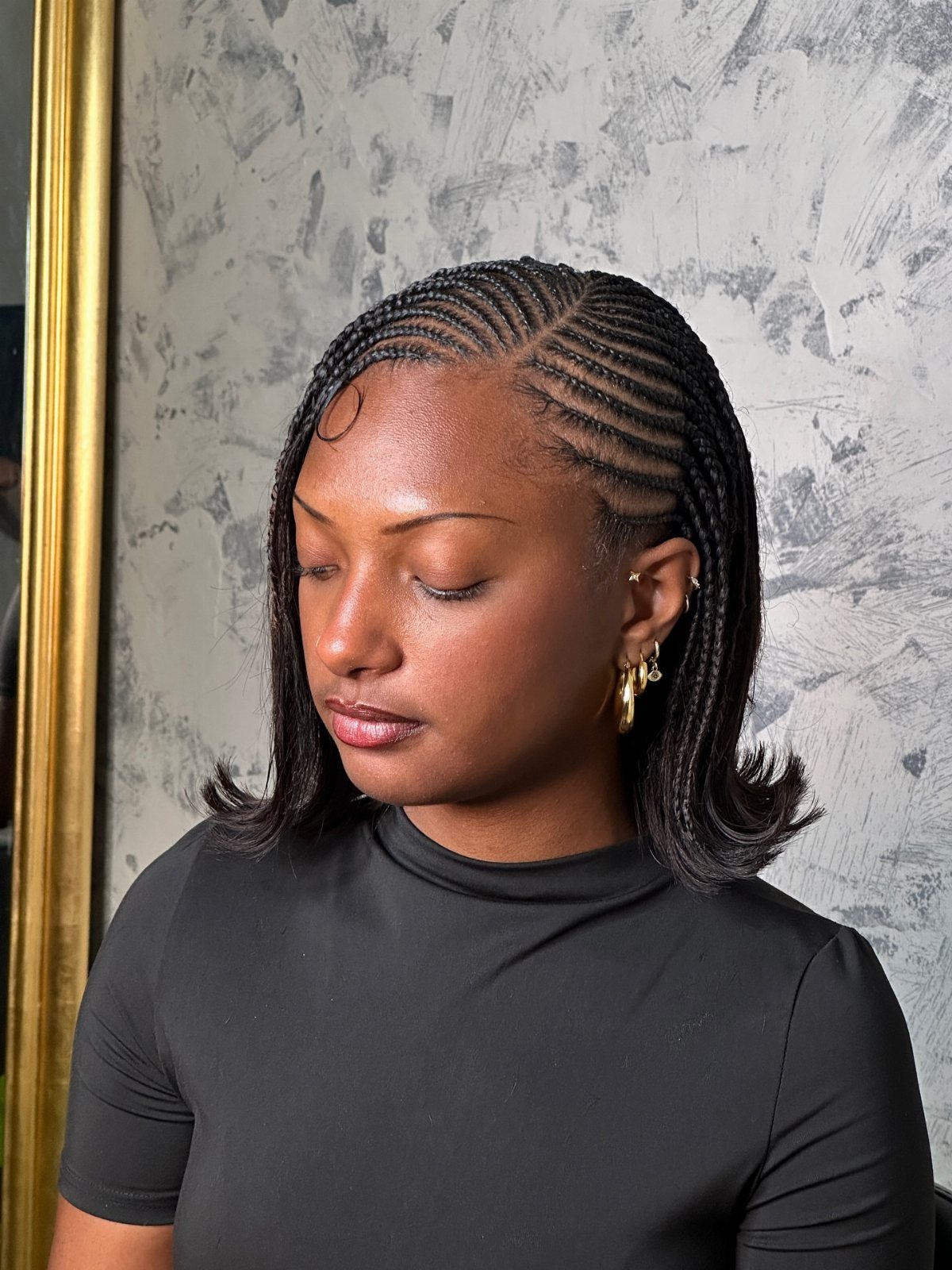
A bob cut short and swept with cornrows gives you braids without the length, which is the easiest way to keep the style light on your neck.
Cornrows at the top that finish in curled ends, as here, add a soft edge to a sharp shape.
Gold earrings and a solid dark top suit it, because a bob puts the jawline and ears on display. I’d pick this for a polished workday look that needs no styling in the morning.
15. Ghana Braids
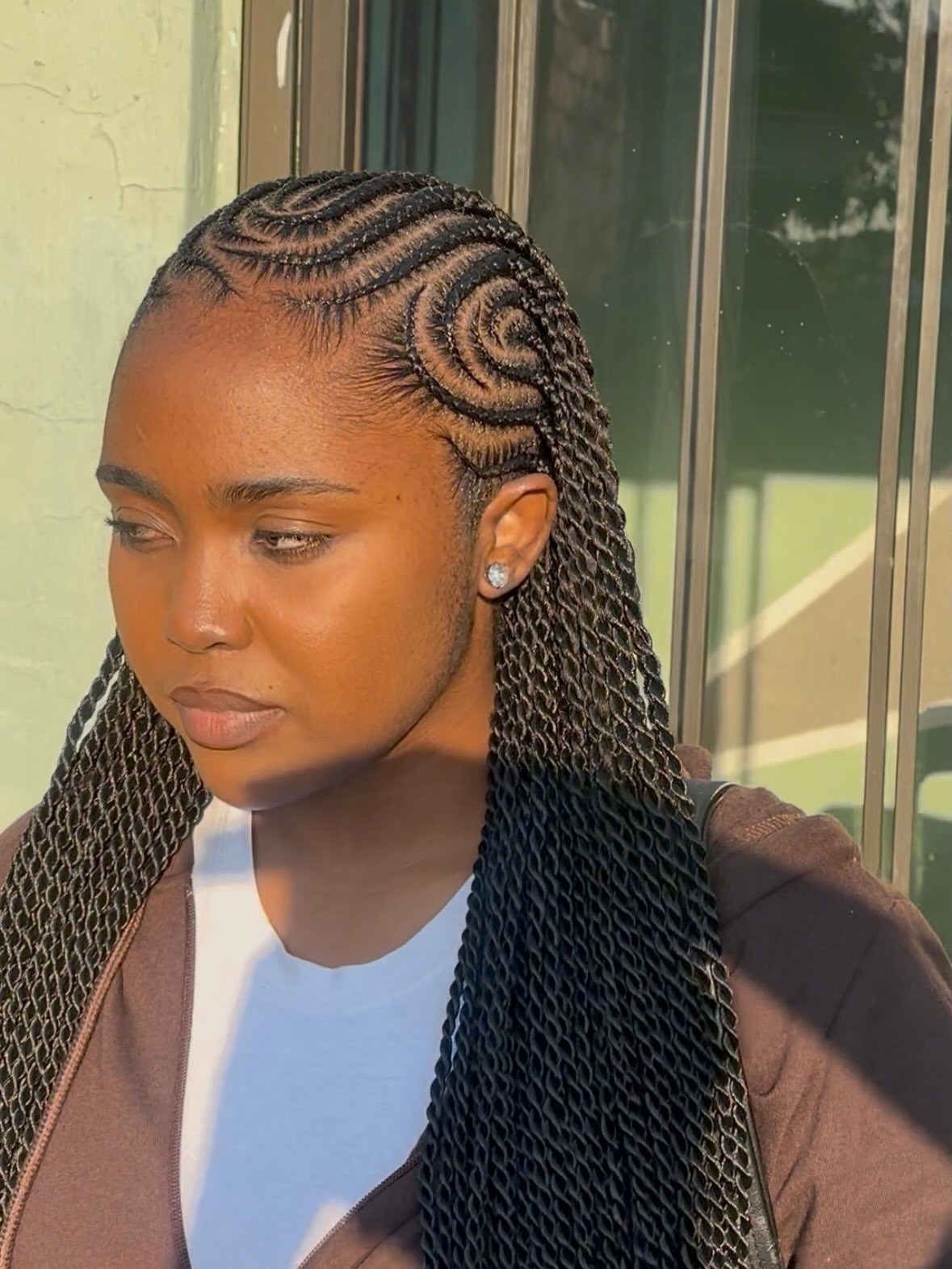
Ghana braids are cornrows that run from medium to jumbo in thickness, and curved rows that sweep back before turning into long hanging braids give the style its shape, so ask your stylist for that pattern by name.
Thicker rows make a bolder pattern, while medium ones look finer and more detailed.
Choose the width based on how much of the scalp design you want to show. A white tee and a brown jacket keep the outfit quiet, so the curves of the rows stay the focus.
16. Feed-In Braids
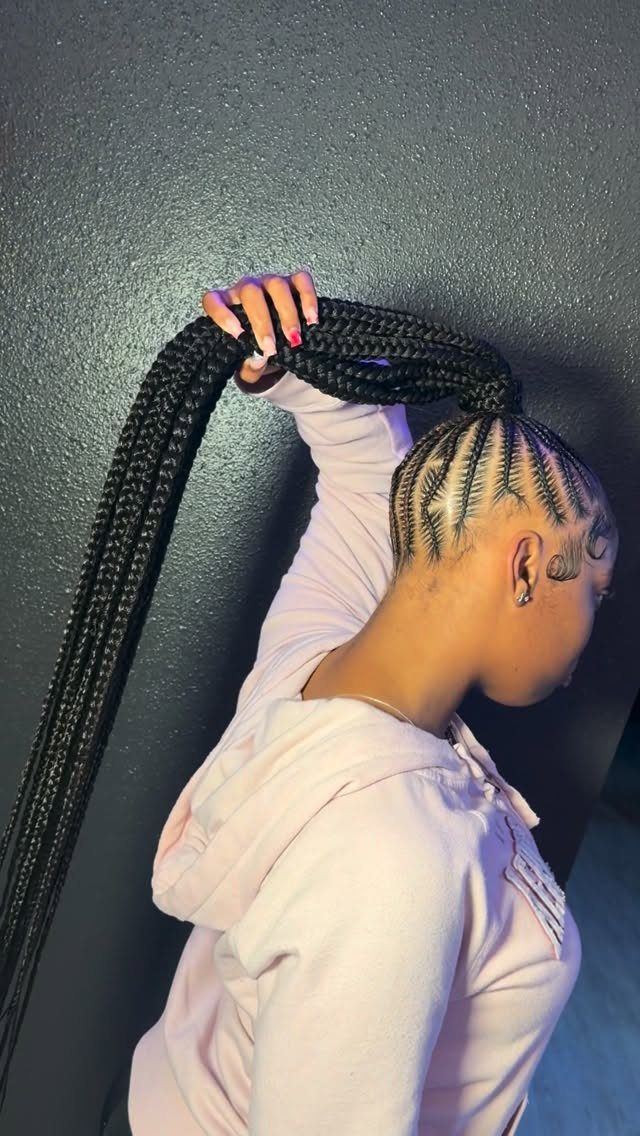
Feed-in braids add extension hair a little at a time as the braid travels down, so the rows start slim at the hairline and thicken naturally.
That gradual build is why the style looks like your own hair and not a clamped-on attachment.
Pulled into a high ponytail, as here, the rows lead cleanly into one long braid.
A casual hoodie suits it well. Ask your braider to taper the hairline end for the most natural start.
17. Triangle Box Braids
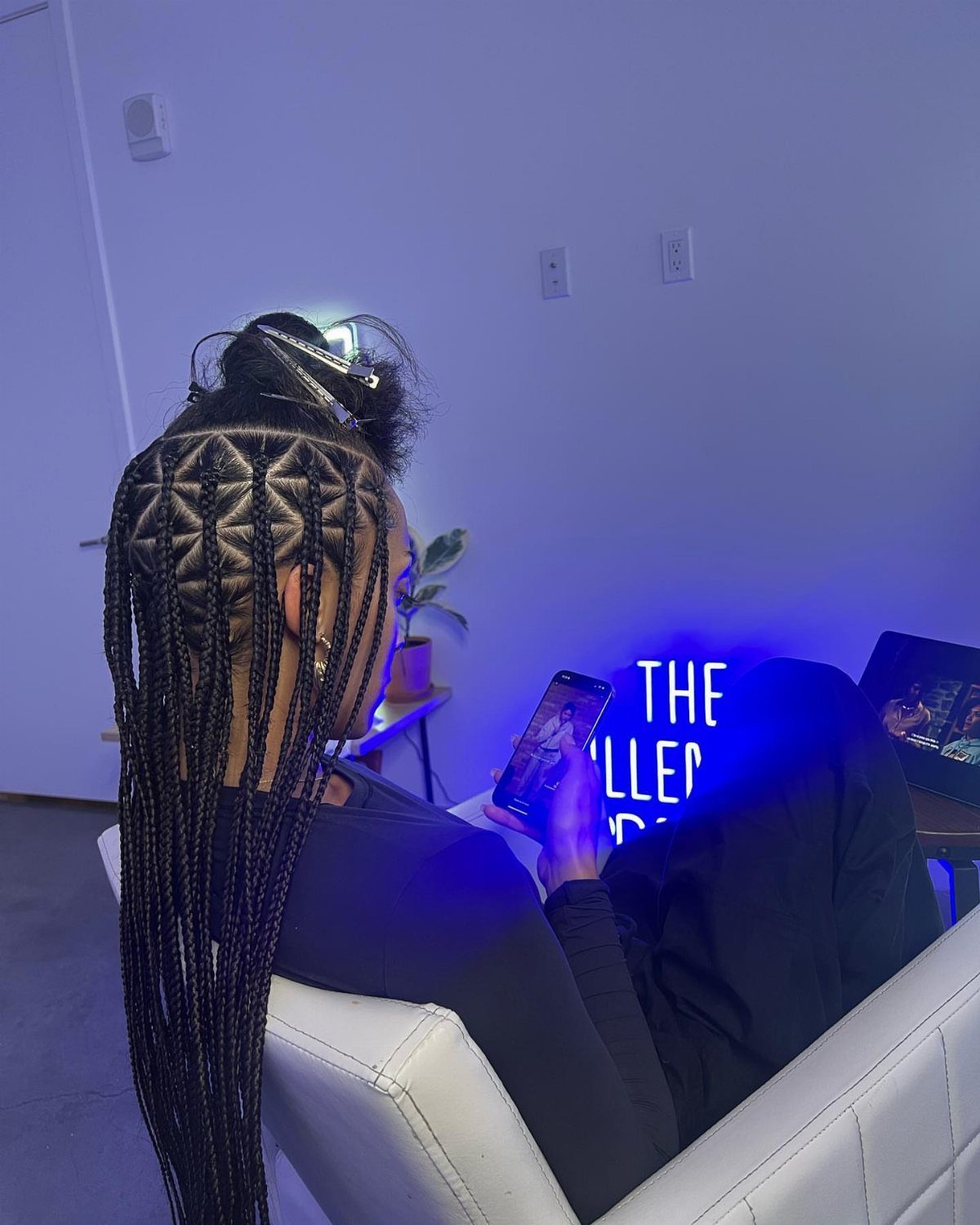
Triangle box braids are parted in triangular sections instead of squares, which gives the scalp a different, more angular pattern. Because the base shape changes, the braids sit a little differently at the root from classic box braids.
I’d pick this if square parts feel too familiar and you want a small twist on a staple. Ask your braider to keep each triangle the same size, since even sections are what make the pattern look intentional.
18. Viking Braid
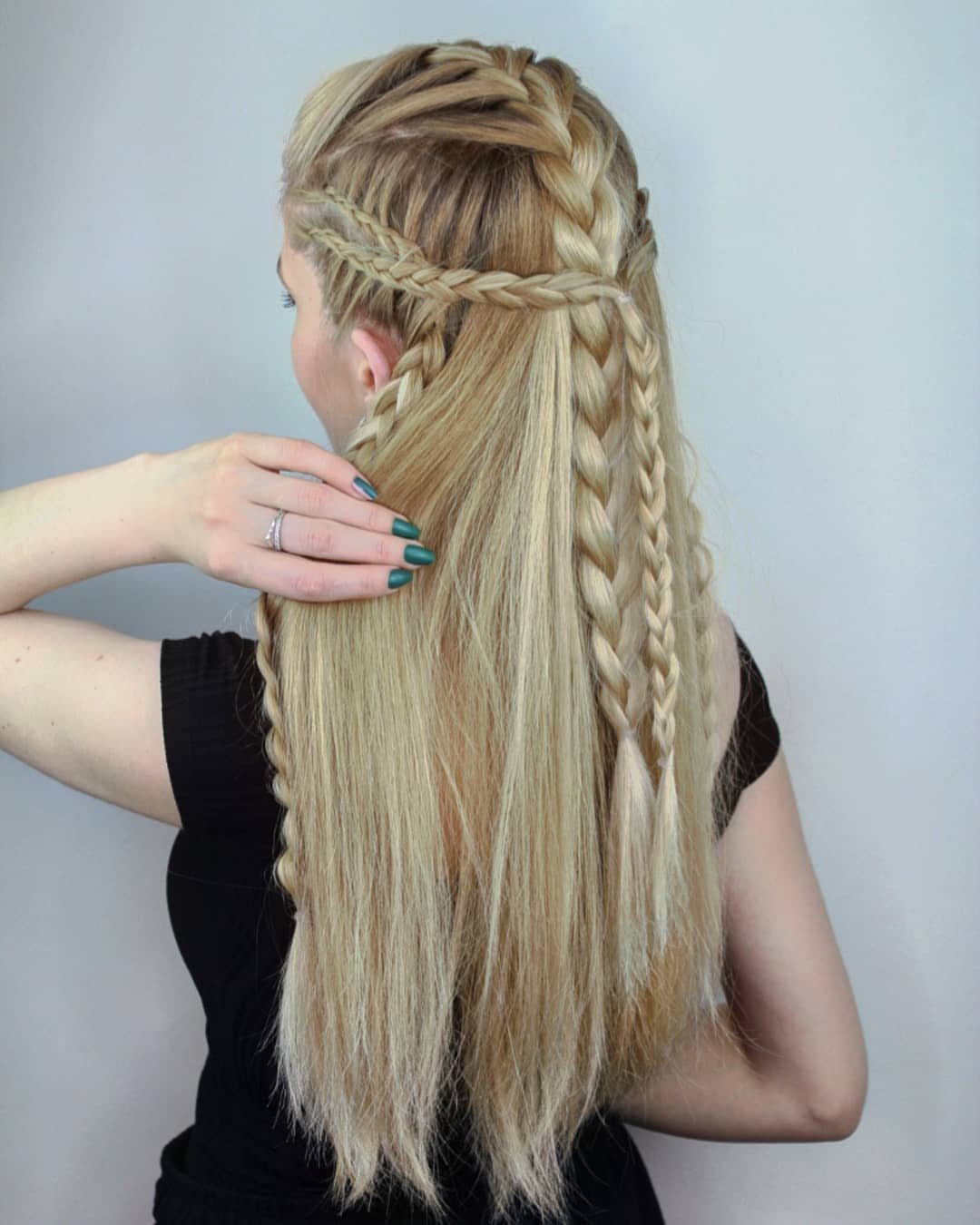
Viking braids pile several braids into one look: a crown braid, side braids and long loose hair behind. The inspiration is Norse warrior styling, and the layering is what gives it a dramatic, storybook feel.
On long blonde hair, the separate braids stay easy to see.
I’d keep clothes plain, with a simple knit or a basic top, so the braiding is the only detail. Smaller side braids can be added or skipped depending on how elaborate you want it.
19. Gypsy Braids
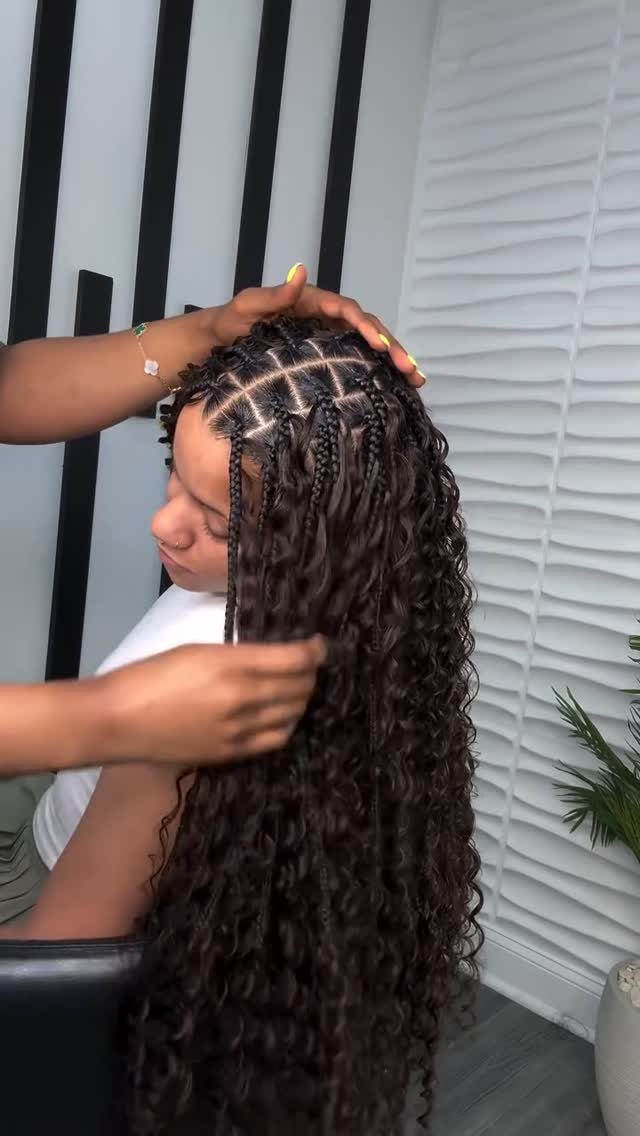
Gypsy braids pair long braids with curly, loose ends, so the length comes with built-in volume and texture.
That fullness is what I’d choose them for, since the curls make the hair look thick even when the braids themselves are slim.
Dark hair shows the curl pattern clearly. Keep the outfit simple and the neckline open so the curls have room to fall.
20. Peekaboo Braids
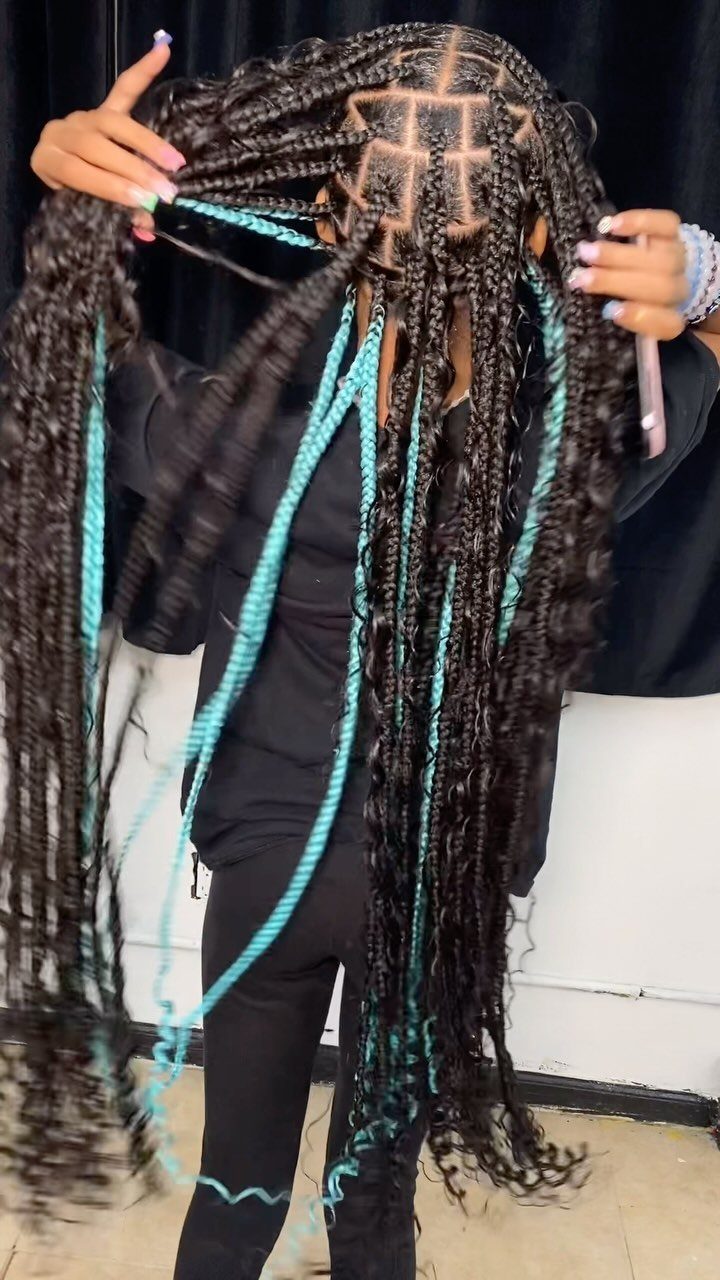
Peekaboo braids hide a second color inside a dark set, so the bright strands only flash as the hair moves. Turquoise against black, as here, makes the contrast easy to see.
Color shows up in just a few strands here, so a full head of dye never has to happen.
Ask your braider to weave the bright strands through evenly, and pick a shade you’d be happy to wear for the whole life of the style.
21. Half-Up Braided Hairstyle
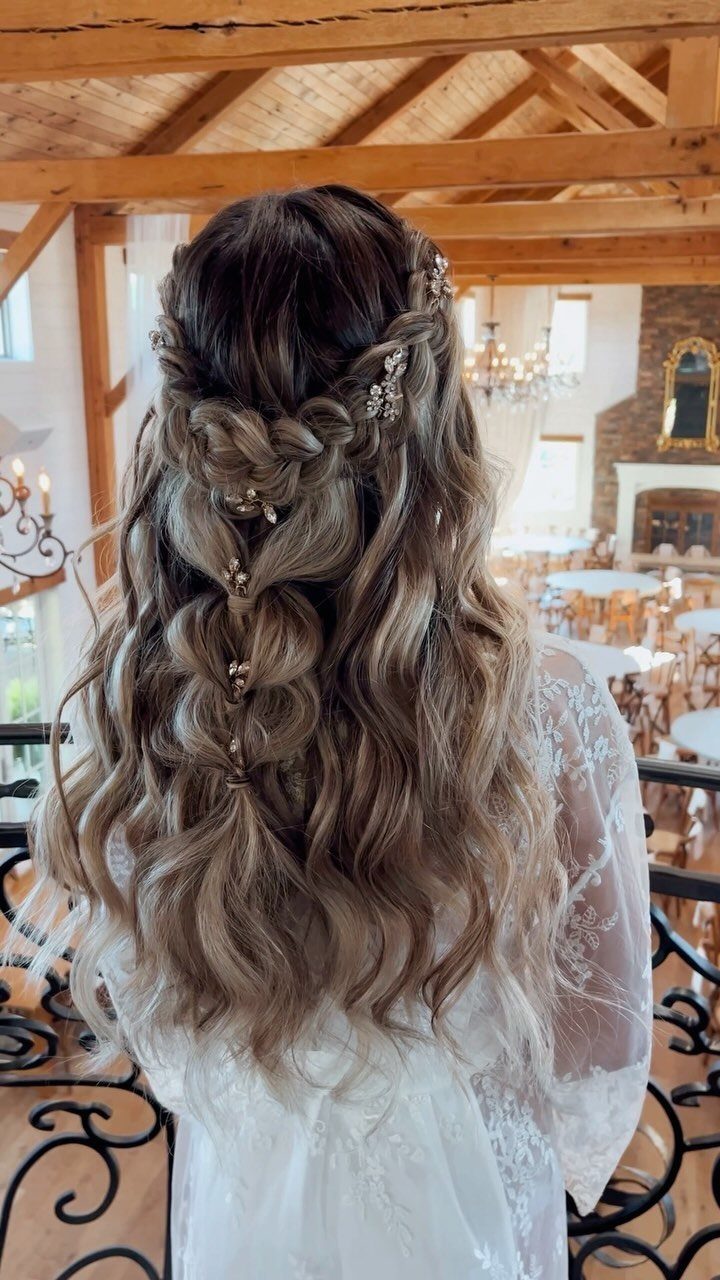
Take the top sections of your hair, braid them, and pin them at the back; the rest stays loose and wavy. Decorative pins turn a plain half-up into something romantic.
Wavy hair gives the braid extra texture, so don’t smooth it flat. A lace dress, as here, suits the soft mood, though I’d wear the same style with a simple knit for a casual day.
22. Thick Loose Plait
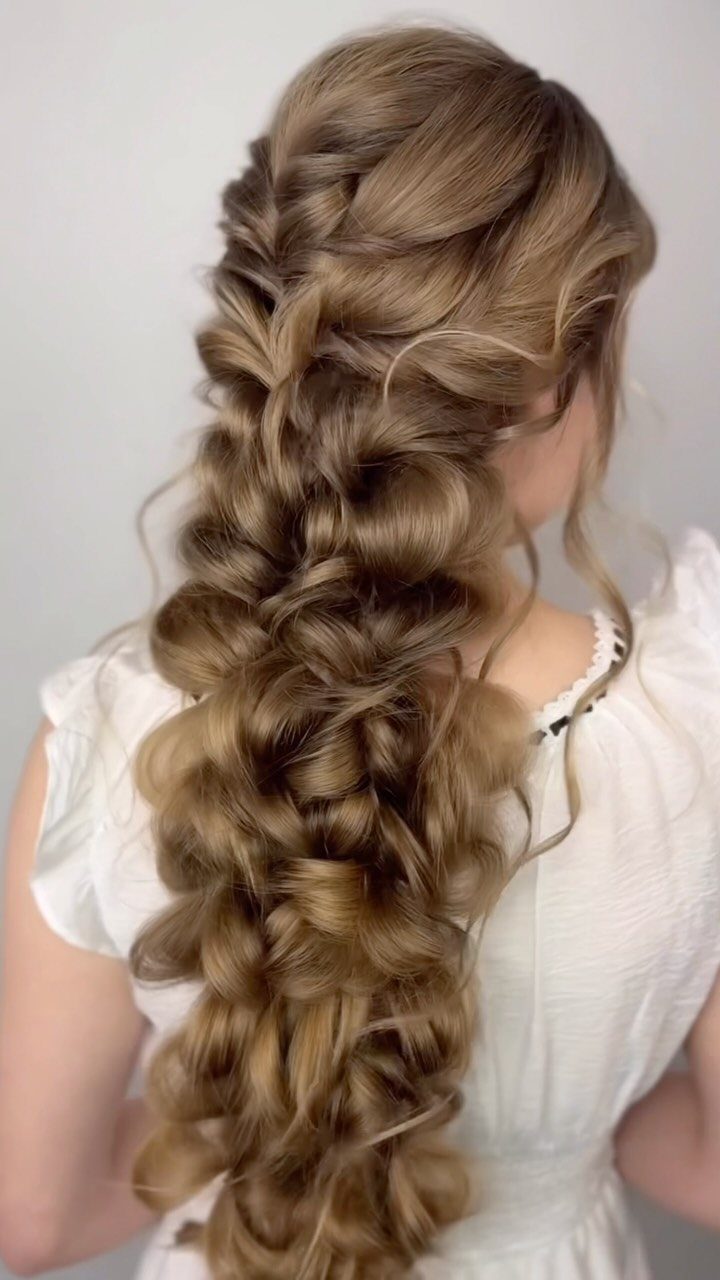
A thick plait works because of its width: braid loosely, then tug the edges outward until it looks full. Tight braiding makes it thin.
Long hair in a soft honey-blonde shows each crossing clearly, and a white top keeps the focus on the hair.
I’d choose this for days when you want something quick that still looks deliberate. Secure the end with a plain elastic and leave it alone.
23. Twisted Braid Pigtails
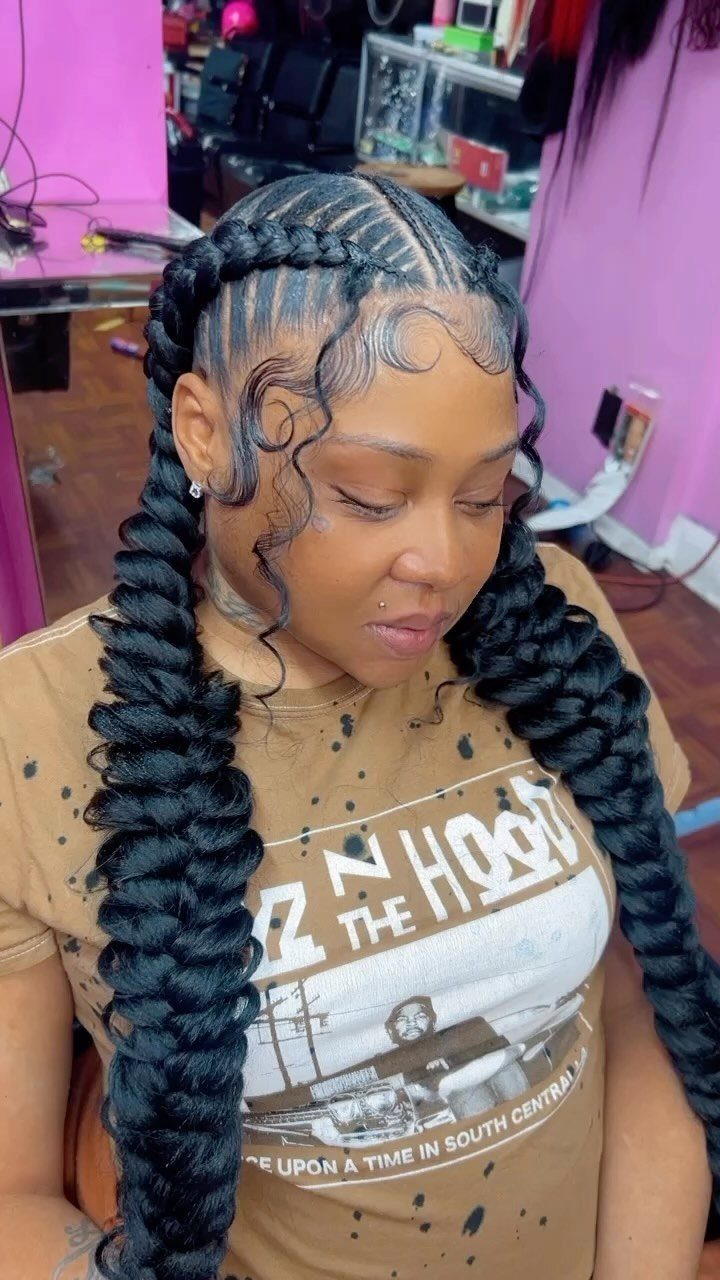
Rope-twist braids split into 2 high pigtails give a long, heavy style a playful shape. The pigtails sit up at the crown, so the length swings forward and back with you.
The maker of this set loved the "mermaid effect" in the twists.
Neatly styled edges frame the face, and a graphic tee keeps the look casual. I’d part straight down the middle so the pigtails match.
24. Horizontal Waterfall Braid
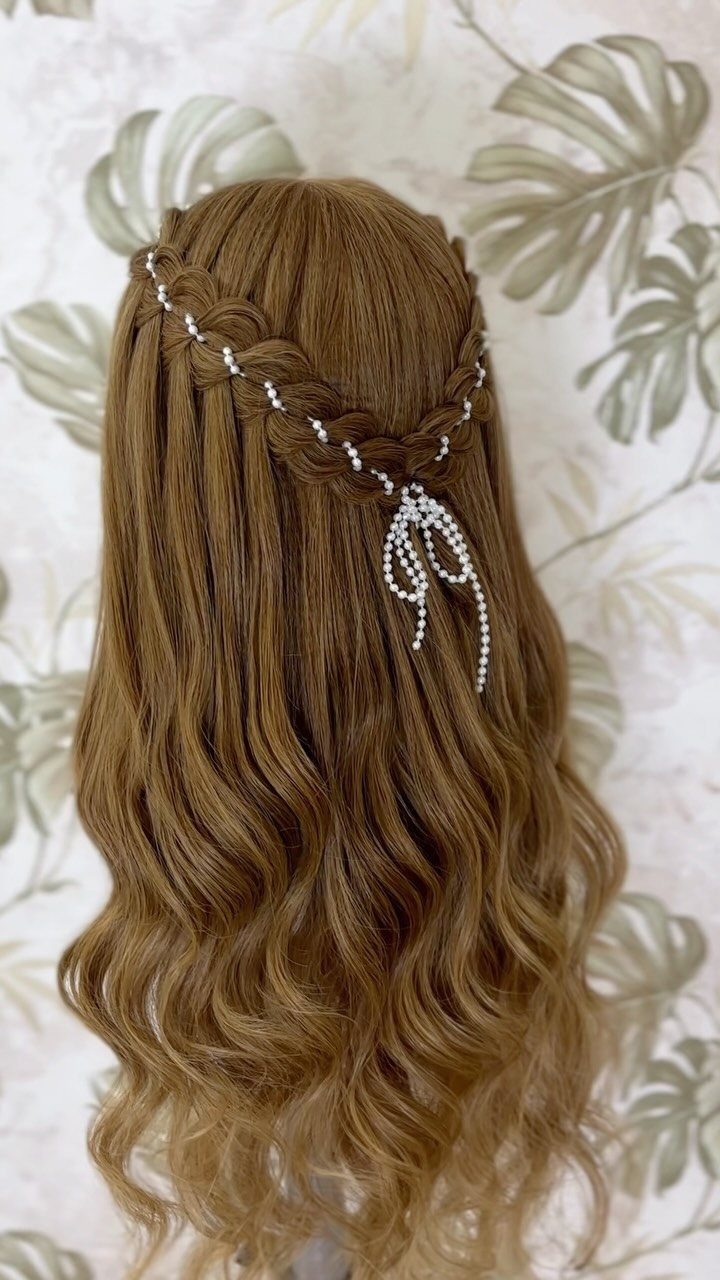
A horizontal waterfall braid runs sideways across the back of the head, with sections dropping out of it so wavy hair falls below the braid. It works as an accent rather than a full style.
Pearls tucked along the braid add a bridal softness, and light brown waves show them off well. I’d pin the pearls in after braiding, spacing them evenly, and keep the rest of the hair loose.
25. Braided Halo Half-Updo
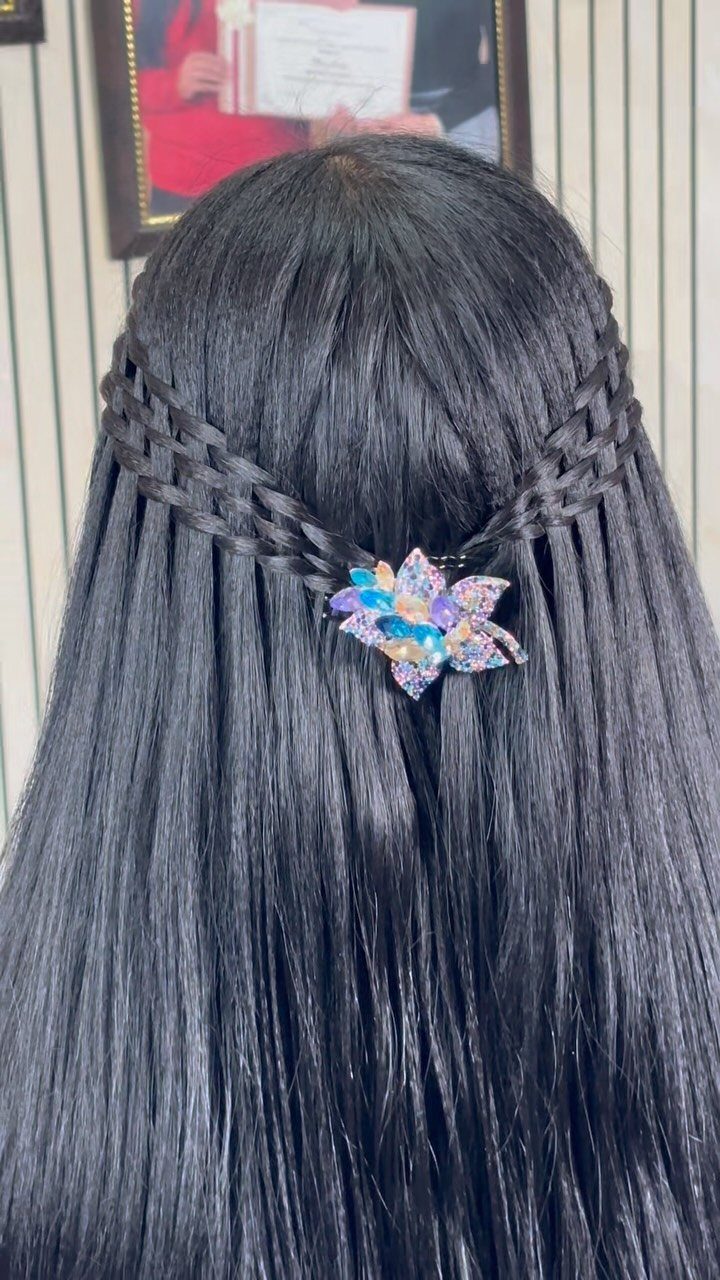
A thin braid wrapped around the back of the head like a crown turns plain straight hair into a finished style. On long, straight black hair, the fine braid reads as a clean line against the smooth lengths.
Keep the braid slim and tight so it stays a detail, and pin the ends out of sight under the loose hair. A jeweled floral clip, as here, covers the join and adds the only sparkle the look needs.
I’d wear it with a simple solid top, since the back of the head is the focal point. Leave the rest of the hair loose and smooth.
How to Maintain Braids
Start with clean hair. Washing before the appointment helps the set last, and it means you won’t be taking the braids out after 2 weeks.
Tension matters just as much.
A braider’s tension matters more than almost anything else: too loose and the style frizzes and slips within a couple of weeks, too tight and you risk tension alopecia, so I’d book someone who can show you how they work at the hairline.
At night, tie everything down in a silk or satin wrap. A cotton pillowcase creates friction, and friction means frizz.
A light scalp oil, worked in every 3–4 days, keeps the skin from getting dry and itchy under the braids. Braid spray, pomade and edge control gel help keep the style neat between washes.
To wash, dilute shampoo with water and apply it to the scalp. Massage gently, then rinse without rough handling.
Smooth a lightweight conditioner over the lengths afterward, then press the water out with a towel; rubbing roughs up the braid and invites frizz. A small amount of leave-in on the scalp and lengths finishes it.
Choosing the Right Braid Style
Pick for the health of your hair first and the look second. Pick a style that traps moisture and leaves the hairline alone, since edges are the first place strain shows up.
If you can’t picture a style on your own face, preview it before you commit.
A 360° video preview made from a selfie takes about 10 seconds with an app like HairHunt, and it narrows the options without guesswork. A face-shape quiz can do similar work if you’re unsure where to begin.
Then match the style to your week. Think about how long your hair is, how much upkeep you’ll realistically do, and what the occasion calls for, whether that’s a workday or a special event.
Braid Longevity Tips
How long braids last depends mostly on how they’re maintained and handled. Installation sets the starting point; your daily habits decide the rest.
Box braids and knotless braids tend to last longest, because the braid starts at the root and runs the full length to the ends.
With proper care, the only change you’ll see is new growth, and they can stay in for 6–8 weeks.
Small parts are the reason. They keep regrowth from looking fuzzy, which is where jumbo sets tend to lose out.
Hair texture changes the math.
Finer, silkier hair may hold knotless braids for only about 4 weeks, so plan your appointment around that. Smaller, thinner braids hold up longer than chunky ones too.
Frequently Asked Questions
What are different types of braids?
Cornrows, box braids, knotless braids and French or Dutch braids are the ones I’d name first.
3 protective styles get mixed up most often: cornrows sit flat to the scalp in tight rows, box braids are separate plaits built from square parts, and knotless braids skip the starting knot so the root looks like natural growth.
With a Dutch braid, each strand goes under its neighbor rather than over, so the braid stands up on top of the head like a raised rope.
What are the braid trends for 2026?
Knotless braids, boho braids and detailed cornrow designs lead the trends.
Boho and knotless sets with curly pieces added are popular, and side-swept cornrows known as lemonade braids keep their following. Designed cornrow patterns, like the ones Coco Gauff wears, get extra attention during Fashion Month.






