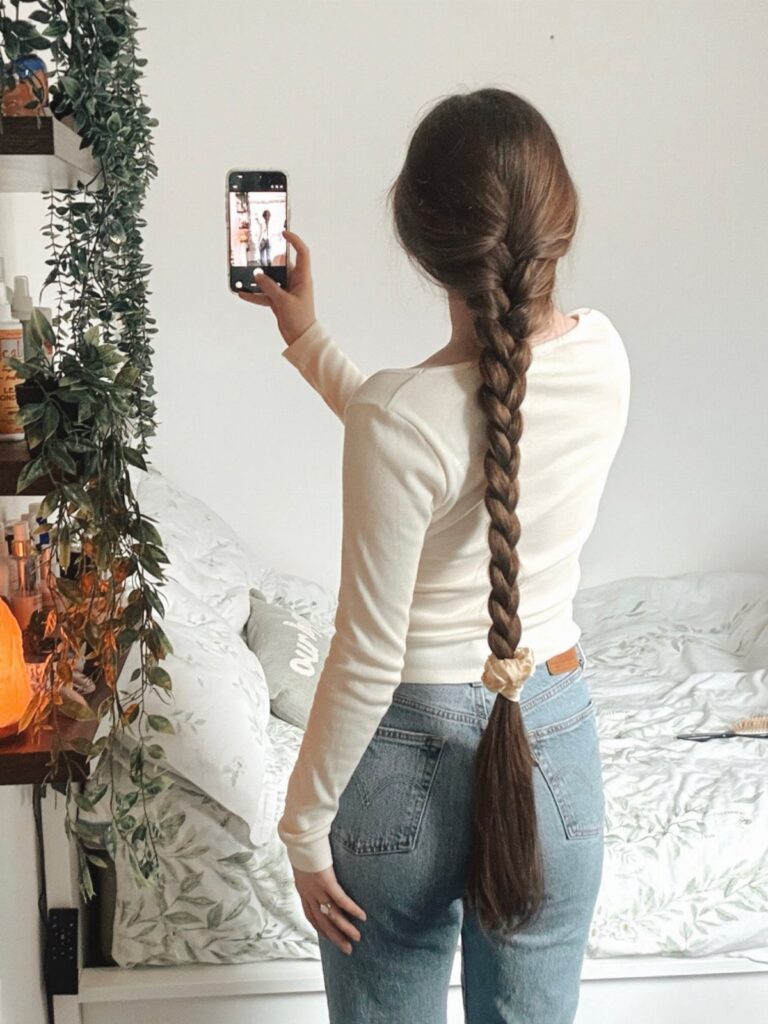
The styles here run from a Classic Long Braid that takes one small elastic and 3 even sections to a Slicked Back Ponytail where you check the crown for ridges with your fingers.
Your hair’s texture on the day decides which one is yours: day-old, slightly textured hair holds a Fishtail Braid or a Messy Bun, while freshly washed, smooth hair suits the Slicked Back Ponytail and slips out of anything that relies on grip.
Straight hair shows every bump, so it gets the Slicked Back Ponytail, and hair with some grit gets the braids.
1. Fishtail Braid
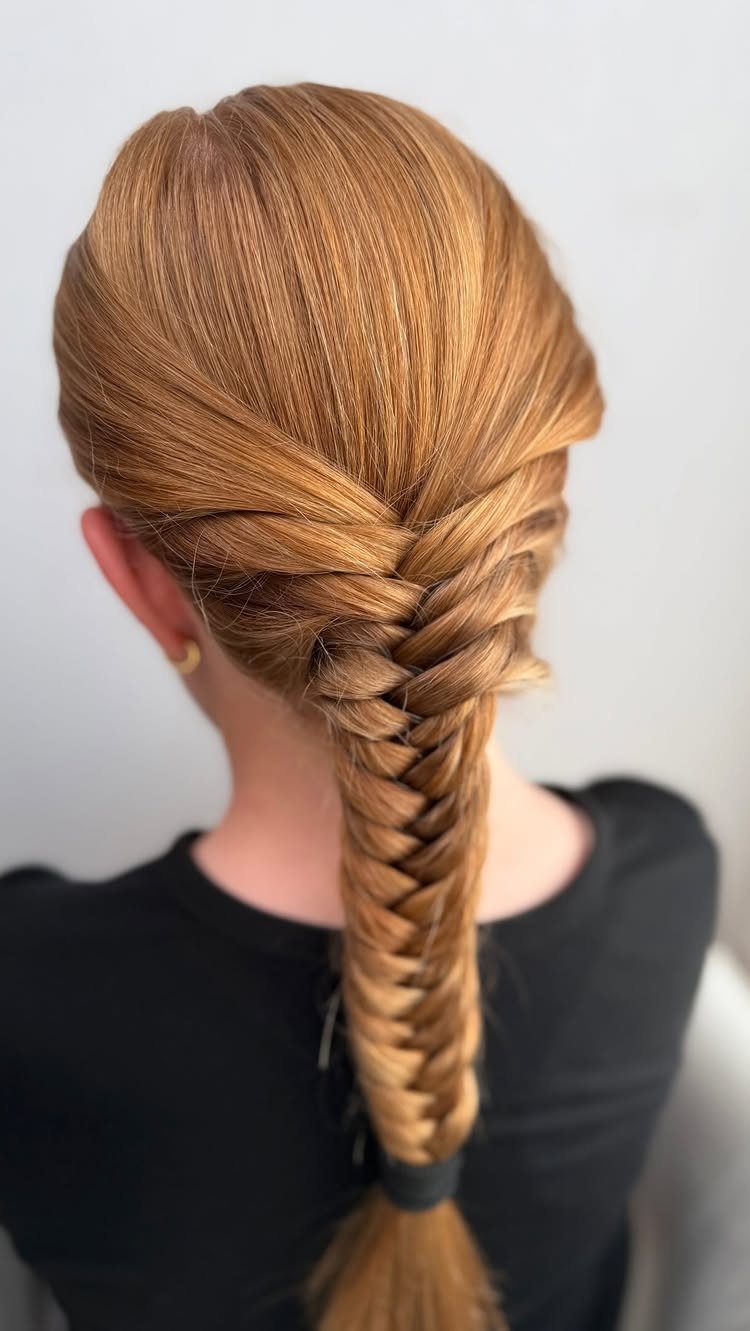
A fishtail looks far more complicated than it is, and once your hands learn the cross-over rhythm it goes quickly.
Split the hair into 2 equal sections, then pass a thin strand from the outside of one section over to the inside of the other, and alternate.
Thin strands give the tight, detailed weave. Thicker ones read looser and chunkier, which I like less on long hair.
Work on slightly textured, day-old hair if you can. Freshly washed hair slips out of the pattern.
2. Dutch Braid
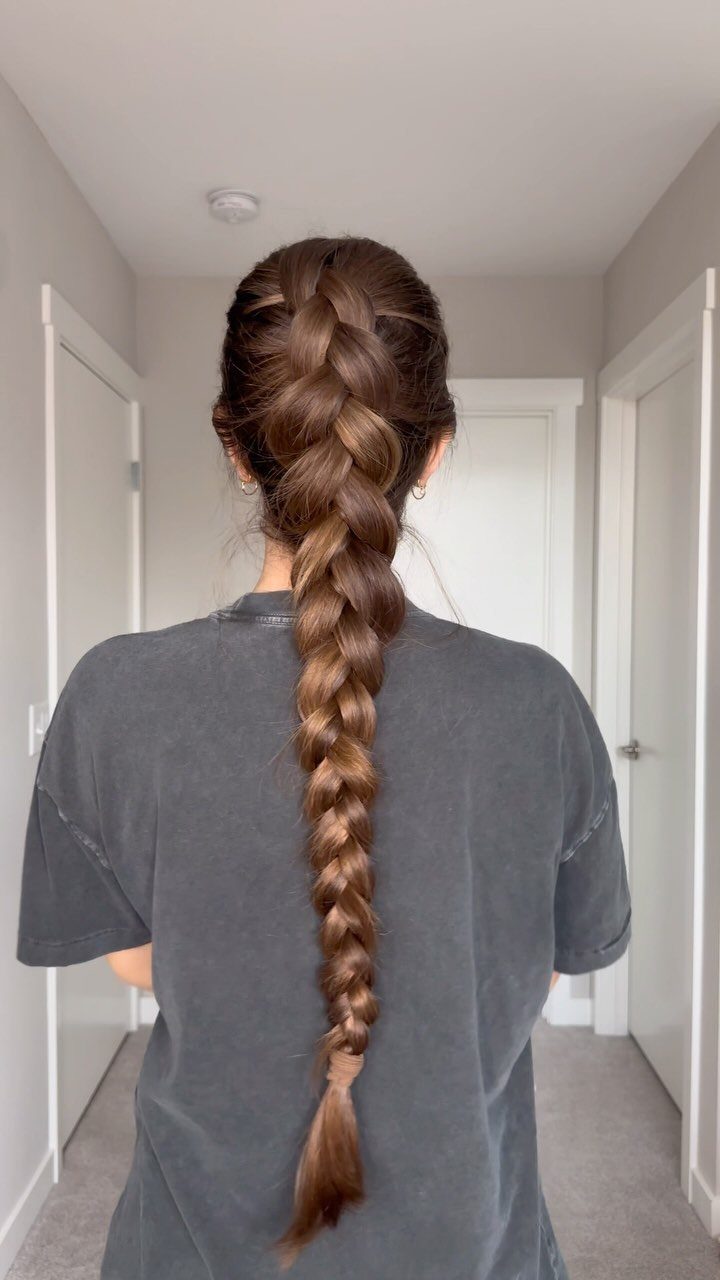
Because the strands cross under instead of over, a Dutch braid sits on top of the head and looks raised, almost like a rope laid along the back. That lift is why it stands out so clearly on long hair.
Start at the crown with 3 sections, and keep crossing each outer section under the middle one.
Pull gently at the edges once it’s tied off to make the braid look thicker. I’d choose this over a standard braid for anyone who wants more shape from the same minutes.
3. Messy Bun
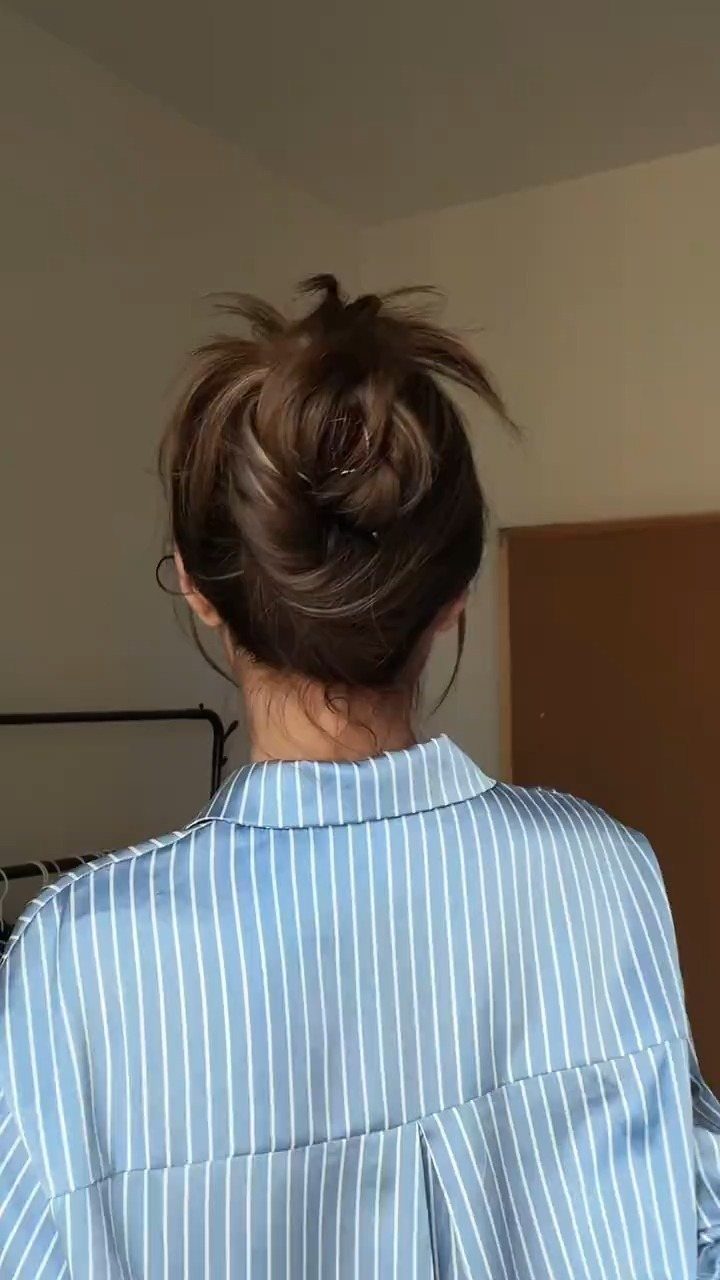
Messy buns fail when the hair is too clean and too smooth. Slippery strands slide out of the elastic, so a little texture helps, and day-2 hair holds best.
For a messy bun, pick your height first, then twist the ponytail into a loose rope and coil it around its own base so the ends tuck under.
Secure it with an elastic, then tug a few pieces loose with your fingers. Stop tugging early; too much and the whole thing droops.
Nobody needs a mirror for this one, which makes it my pick for rushed mornings.
4. Braided Ponytail
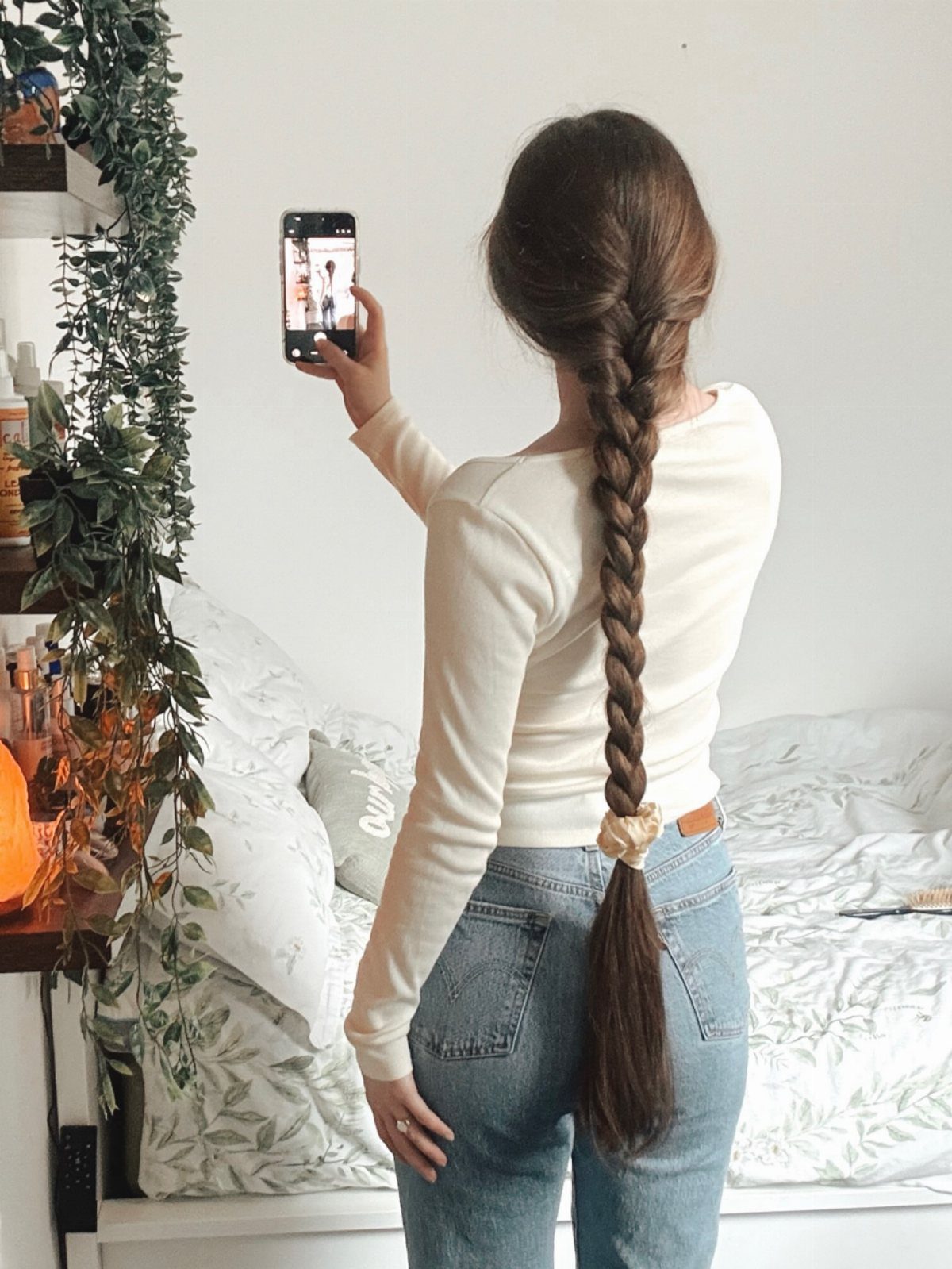
Braiding a ponytail is a small change that makes a plain one look planned. Tie the ponytail first, at whatever height you like, so the braid has a firm anchor.
Then braid a standard 3-strand plait down the length and secure the end with a second elastic. Long hair gives you plenty of braid to show, so a thinner elastic at the bottom keeps it neat.
For a finished look, wrap a small section of hair around the first elastic to cover it.
5. Half-up Hair
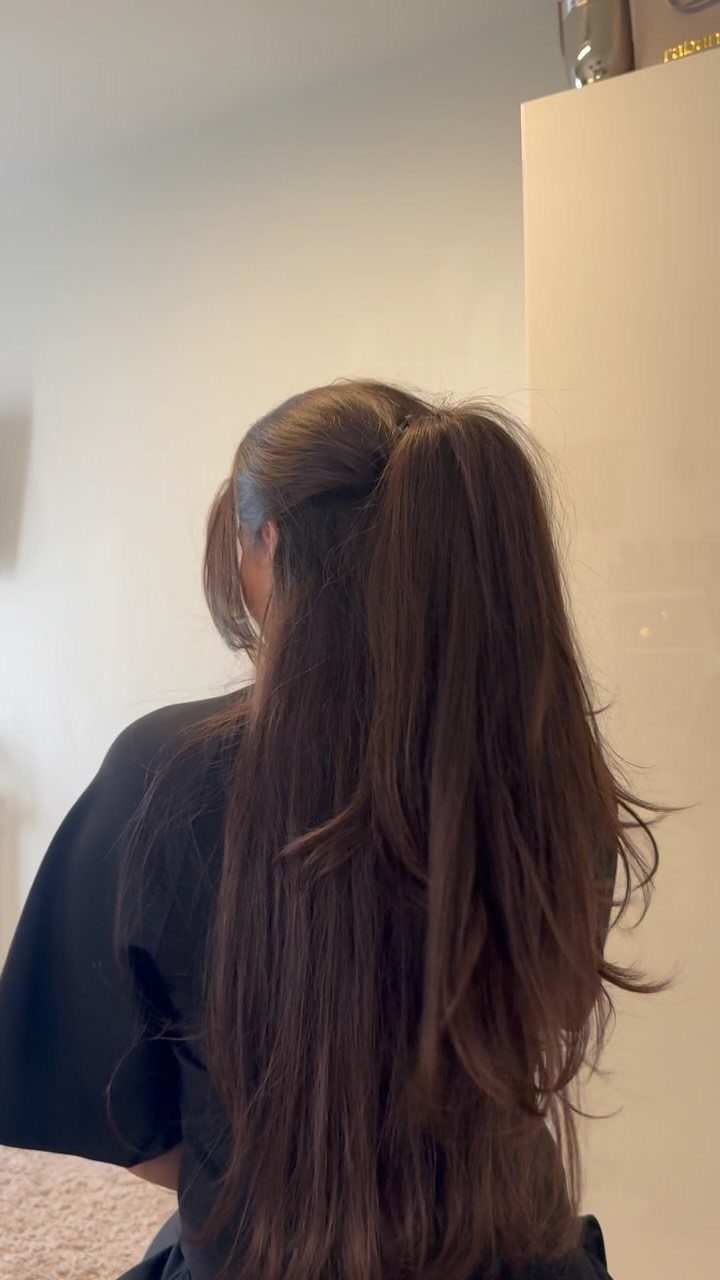
Half-up styles keep the hair mostly down while moving the front sections out of your face.
Take the section of hair above your ears, sweep it back, and fasten it with a band at the crown or just below, wherever it sits flattest.
Long hair works well here because the lower length falls past the shoulders and the ponytail adds a second layer. I prefer a medium-height tie over a very high one; it looks more relaxed.
A flatter crown can use a gentle tug on the ponytail base for lift.
6. Pigtail Braid
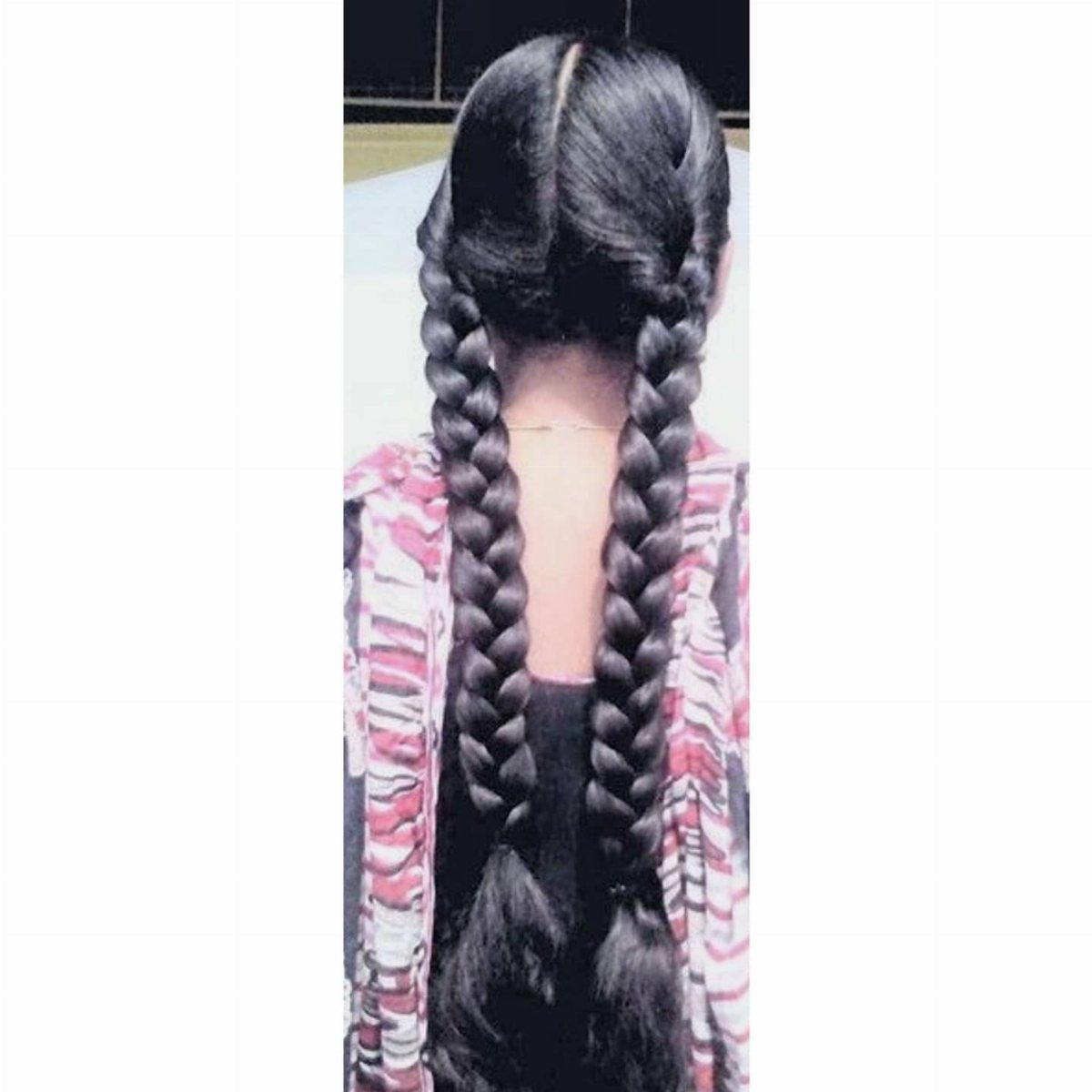
2 braids mean symmetry, so the part matters most. Draw a straight line from forehead to nape with a comb, and the rest follows.
Braid each side separately, keeping the tension equal, and tie them off at the same length. Long hair makes the braids hang well past the shoulders, which gives this style its playful look.
Keep the elastics small and matching. If one braid comes out looser, redo it rather than accepting the mismatch, because it shows.
7. Braided Bun
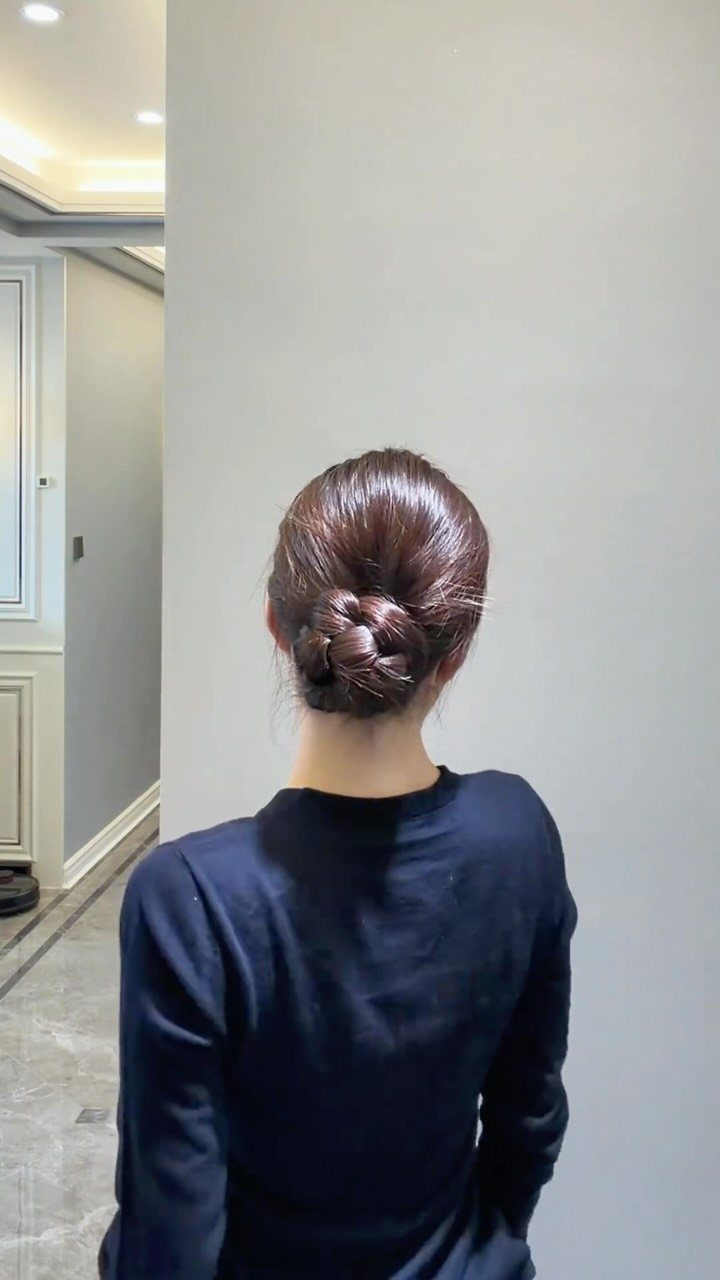
A braided bun gives a plain coil some structure, and on long hair there is plenty of braid to wrap.
Tie a ponytail first, braid it into a standard 3-strand plait, then wind the braid around its base and pin or tie the end under.
Hair this long makes a fuller bun, so I’d pick a low or mid-height base over a high one. It sits more comfortably and looks less severe.
Tuck the tail end in last, so nothing sticks out.
8. Slicked Back Ponytail
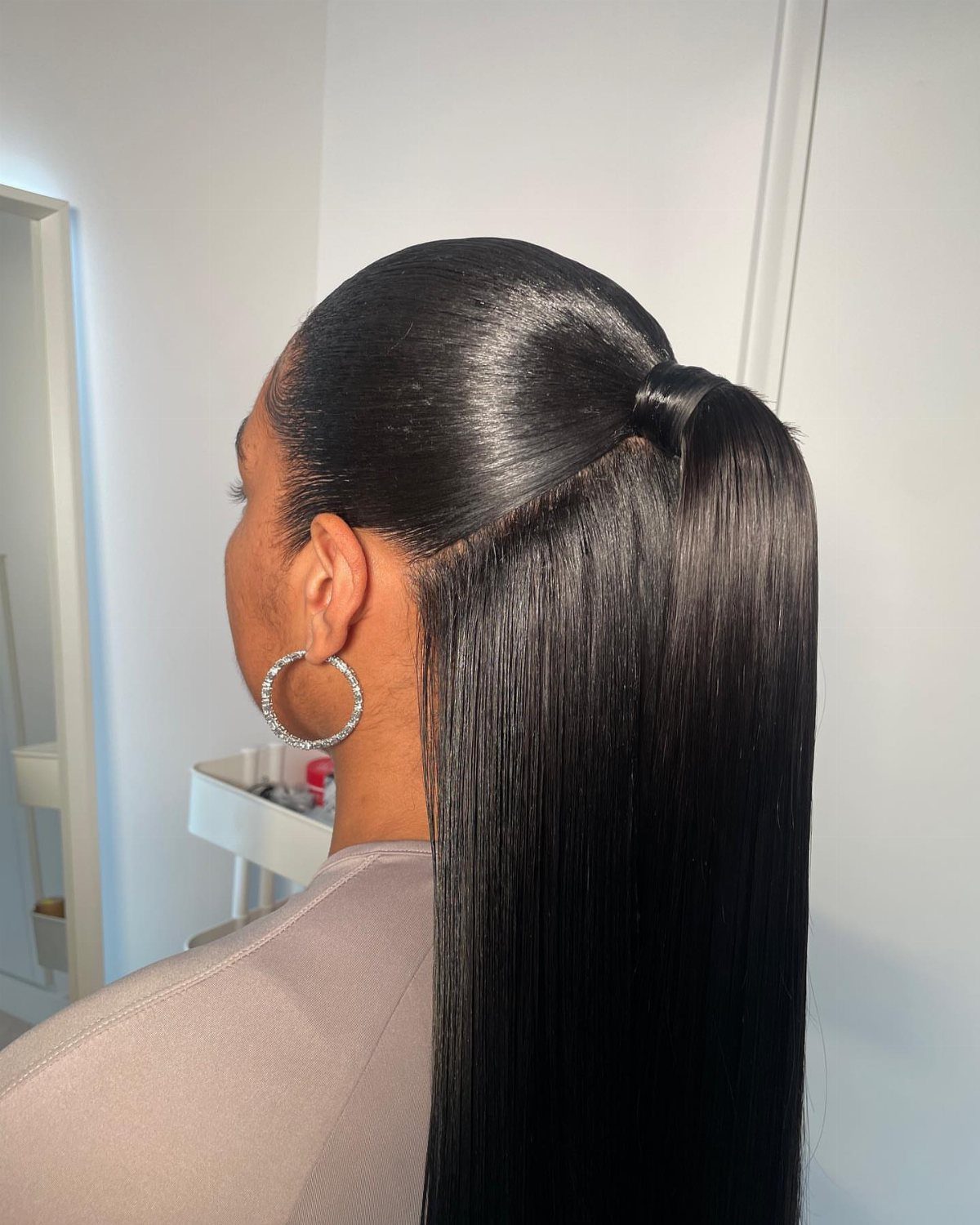
Sleek only works when the surface is smooth, so comb the hair back from the hairline before you tie anything.
Pick the spot where you want the ponytail to sit, pull everything into your hand, and give the top one last pass with the comb so no ridges show before the elastic goes on.
Long straight hair suits this best, since the ponytail falls in one clean line. Slicked styles show every bump, so check the crown with your fingers rather than guessing.
Large hoops finish it well, and they are the only accessory I’d add.
9. Classic Long Braid
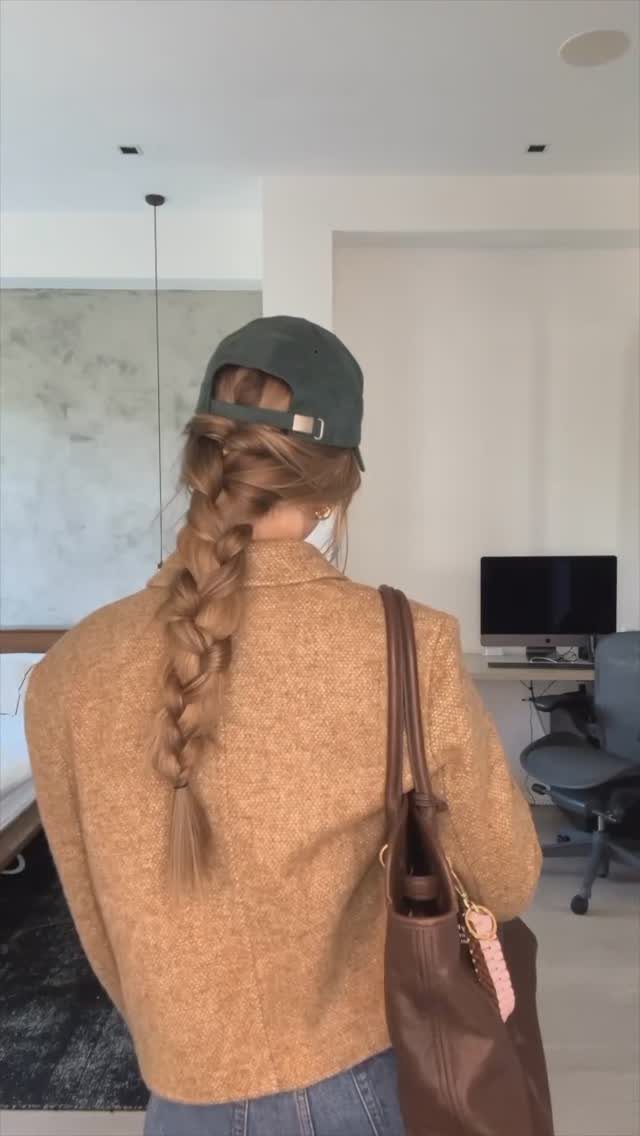
One thick braid down the back is the easiest long hair style to repeat daily. Gather everything into 3 even sections, braid the full length, and tie off with a small elastic.
Keep the tension firm near the nape, because that is where loose braids start to slump. A baseball cap pairs with it nicely: thread the braid through the back opening, or let it hang beneath.
For a softer finish, tug the edges gently once it is tied.
Tips for Styling Long Hair
Hair type decides almost every other choice, so settle it before you buy anything. A routine built for someone else’s texture can leave your strands dry, frizzy or weighed down.
Face-framing layers, cut starting around the chin or collarbone, keep long hair from hanging flat, so book them at your next trim.
They add soft pieces around the hairline and flatter most face shapes, and they keep long hair from hanging in one heavy sheet.
A shampoo and conditioner matched to your hair type, whether that’s fine, coarse, curly or color-treated, does more than any styling tool. Healthy long hair starts there.
A lighter dryer saves your arm, and a brush with bristles that suit your texture, like boar bristle for fine hair or a wide-tooth paddle for thick, cuts down on snagging. Tools that fight your hair cause damage.
One deep mask a week is plenty for most hair, and dry or bleached hair can take it twice. Working conditioner through the lengths, where hair is oldest and most worn, is what limits breakage.
If you use heat, apply a heat protectant first.
It forms a barrier, seals in moisture and smooths the cuticle. Letting your natural texture show now and then also gives your hair a break from the tools.
Challenges of Long Hair
Length brings damage.
The ends of long hair are the oldest part, so they weaken over time, then split or break. That leads to frizz and can slow how fast your hair seems to grow.
Healthy ends matter more at this length than any styling trick. Trim them before the splits climb higher.
Expect some extra work.
Long hair tangles easily, so detangle gently and keep a brush within reach. It also takes a long time to dry, so plan for that on busy mornings.
It uses more product too. You will probably go through more shampoo, conditioner and styling product than a friend with short hair does.
Keep spare bobby pins and hair ties in your bag, since long hair can catch on straps, sunglasses and headphones.
Frequently Asked Questions
What are some different ways to style long hair?
Braids and buns cover most needs: a fishtail, Dutch braid, pigtail braids, one classic braid down the back, a braided ponytail, a braided bun, a messy bun, half-up hair or a slicked back ponytail.
Long hair gives you extra length to braid, wrap and coil, so these styles look fuller than they would on shorter hair. For a rushed morning, I’d go with the messy bun, since it needs no mirror.
What makes long hair harder to style?
Long hair is prone to damage and tangles easily. It also dries slowly, takes more product, and catches on straps, sunglasses and headphones.
What is the 3 rule for hair?
No single "3 rule" governs hair, but 3 is the number behind a classic braid, where 3 sections cross over one another in turn.
A standard braid, a Dutch braid and a braided ponytail or bun all start from 3 even sections. Keep the tension equal across them and the braid stays neat.
What’s the hottest hairstyle for a girl?
I’d call braids the safest bet on long hair, especially the Dutch braid, because crossing the strands under makes it sit raised on top of the head like a rope.
A fishtail with thin strands gives a tighter, more detailed weave. Pick by your hair and your day, not by what’s trending.






