Which of these Victorian era gowns suits you depends on the occasion and how much space you have, because the options range from the Mourning Dress and the White Puffed Sleeve Day Gown to the Iridescent Green Voluminous Gown, which needs a roomy space and a plain backdrop.
A strapless tiered cream gown and a black mourning dress with a feathered hat sit at opposite ends of the mood.
1. Victorian Bustle Gown
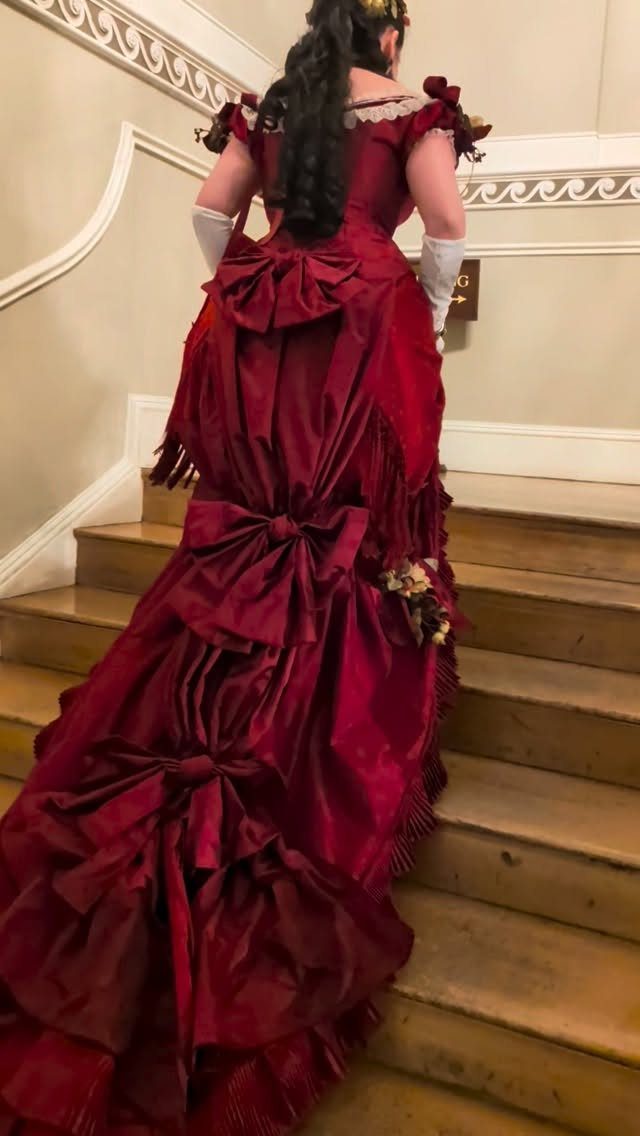
A bustle gown puts all its drama behind you, so judge it from the back before you buy.
The shape comes from fullness gathered at the rear of the skirt, and bows, like the ones on this red version, give that volume a focal point.
Staircases, doorways and any room where people will see you walk away are where it earns its place. I would skip it for crowded events with tight seating, since the back fullness has nowhere to go.
2. Mourning Dress
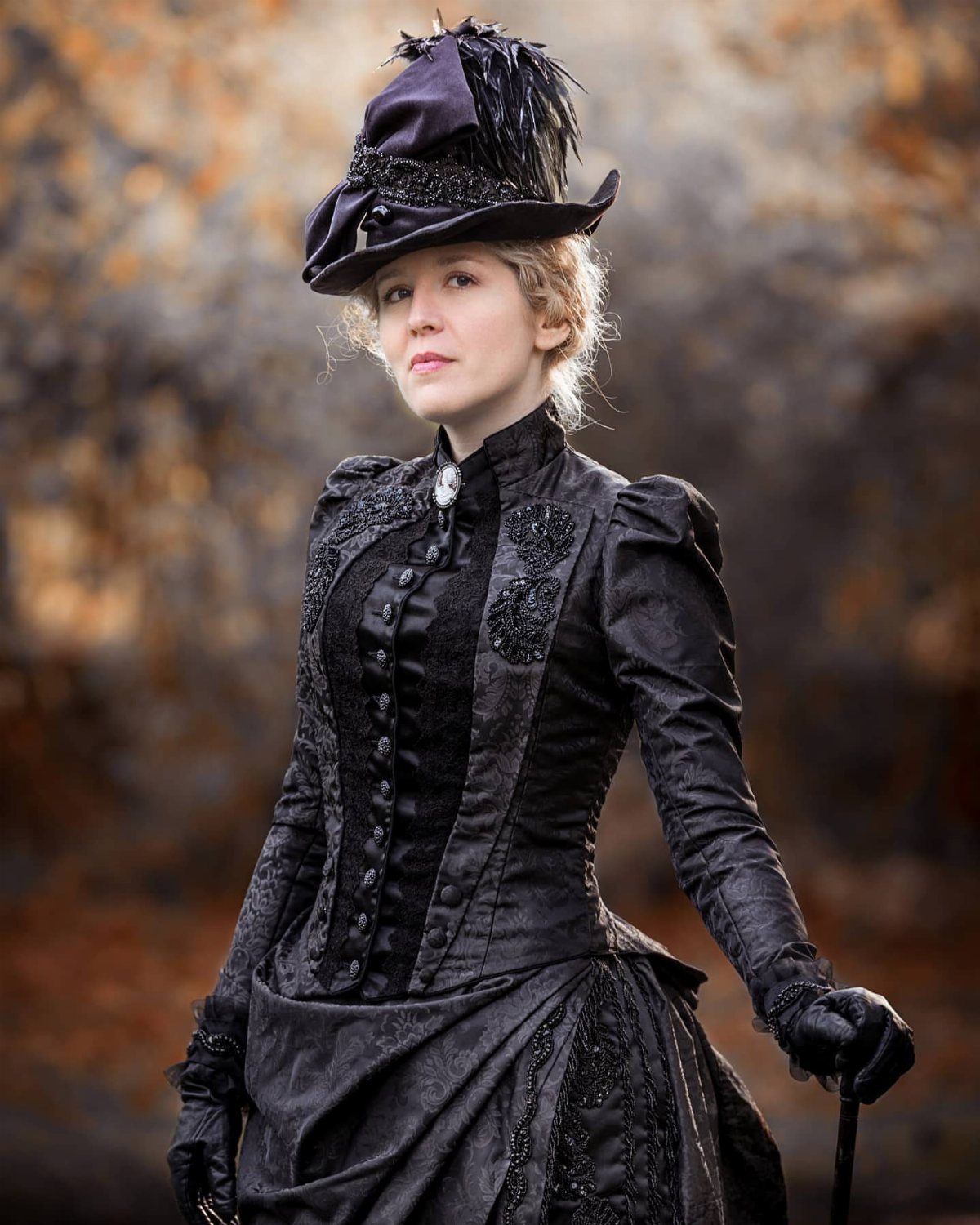
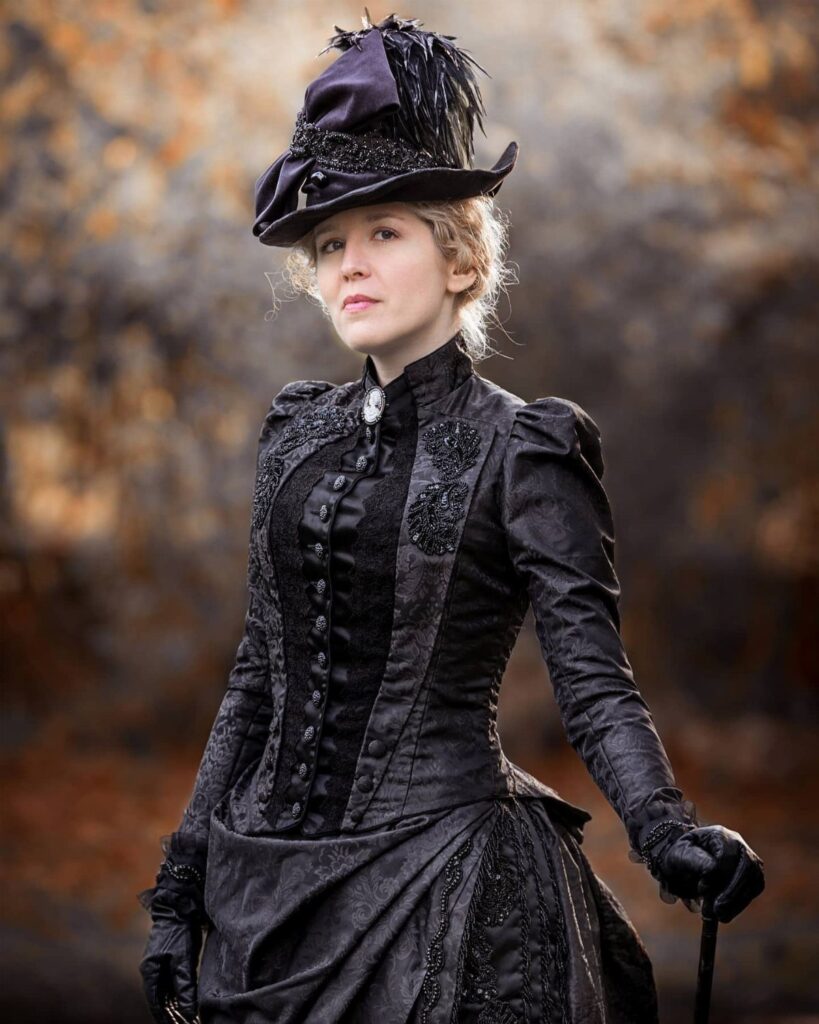
Black from hat to hem is what makes a mourning dress read as mourning, and a feathered hat like this one finishes the look without needing jewelry.
It suits a woman who wants a dark, serious gown rather than a costume-bright one.
Autumn is the natural season for it. Keep the styling quiet: one hat, one dress, and let the fabric detail carry the weight.
3. Green Satin Gown with Lace Collar
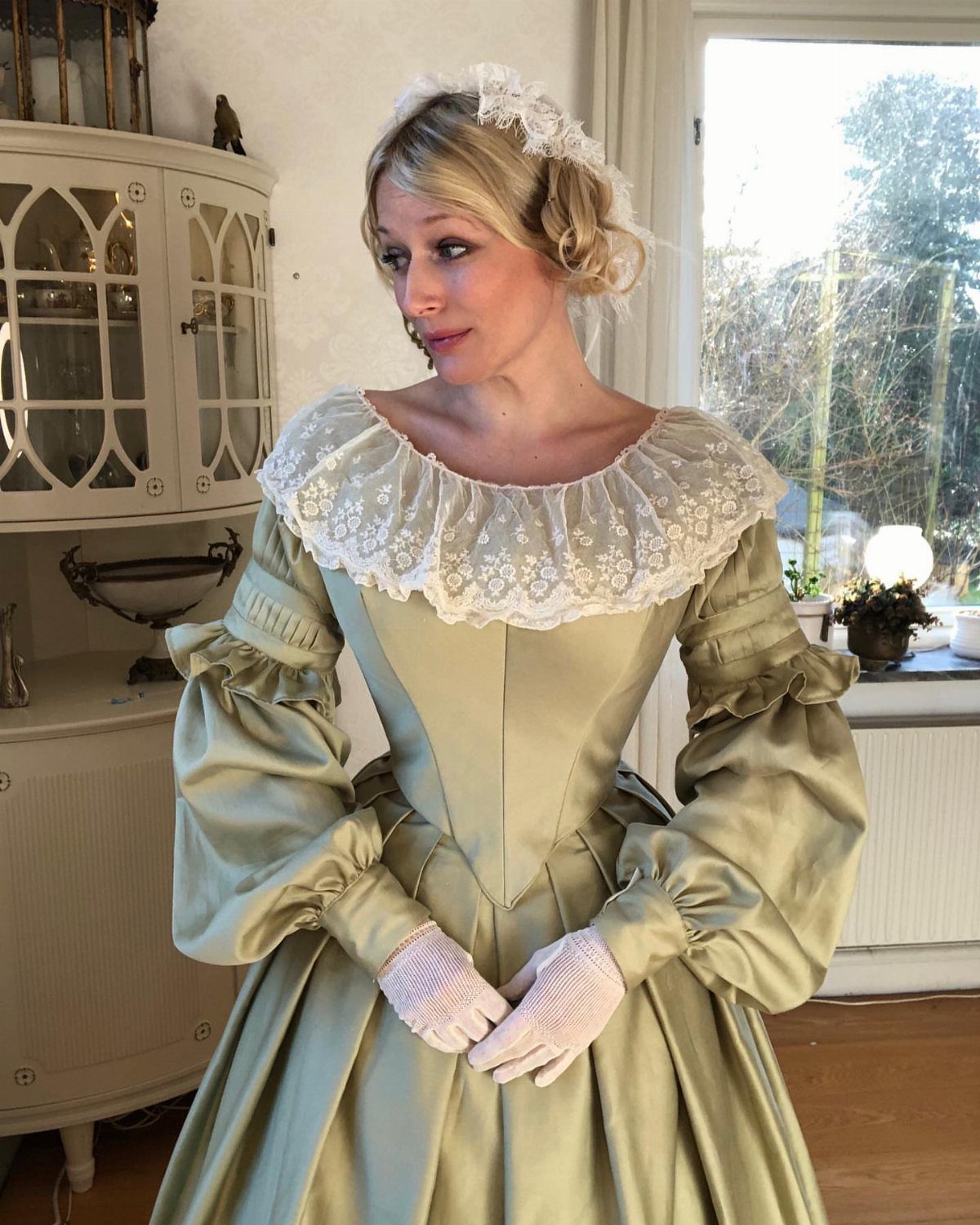
Light green satin with a wide white lace collar is a softer take on the Victorian gown, and the puffed sleeves keep the shoulders from looking plain.
Matching lace gloves tie the collar back in, so the lace looks planned instead of added on.
If satin worries you, I would choose the gloves as the one lace extra and skip a second layer of trim. A wide collar already frames the face, which is flattering on most necklines.
4. Light Blue Corset Bodice Gown
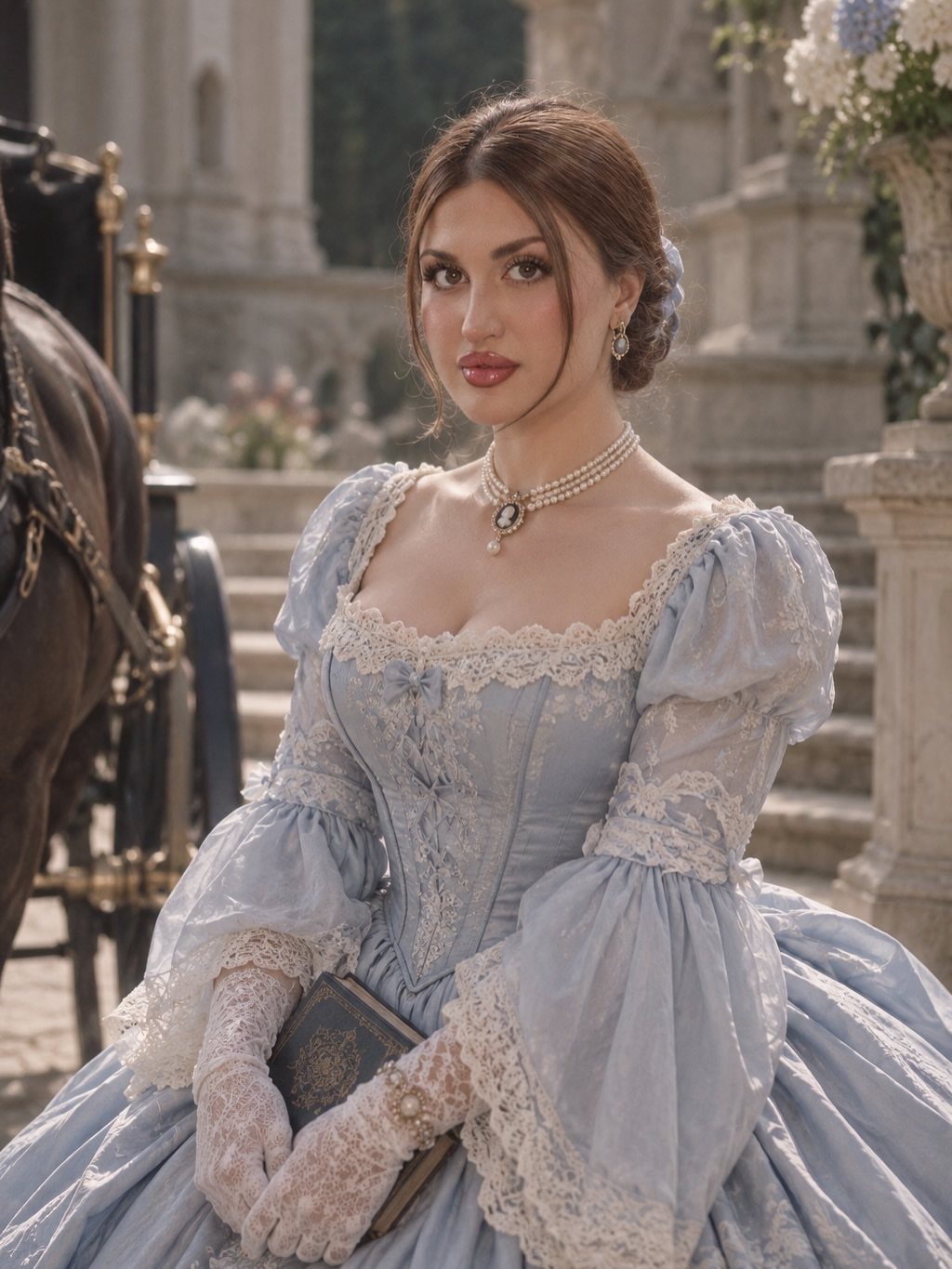
Pearls are what make light blue feel period-correct here, and I would pair them with the lace and corset bodice rather than a modern pendant.
The bodice defines the waist, while the puffed sleeves balance the shoulders, so the gown suits a narrower frame or anyone wanting a shaped midsection.
Pale blue photographs well outdoors in daylight. Keep jewelry to pearls alone so the lace stays the detail people notice.
5. White Lace High Neck Gown
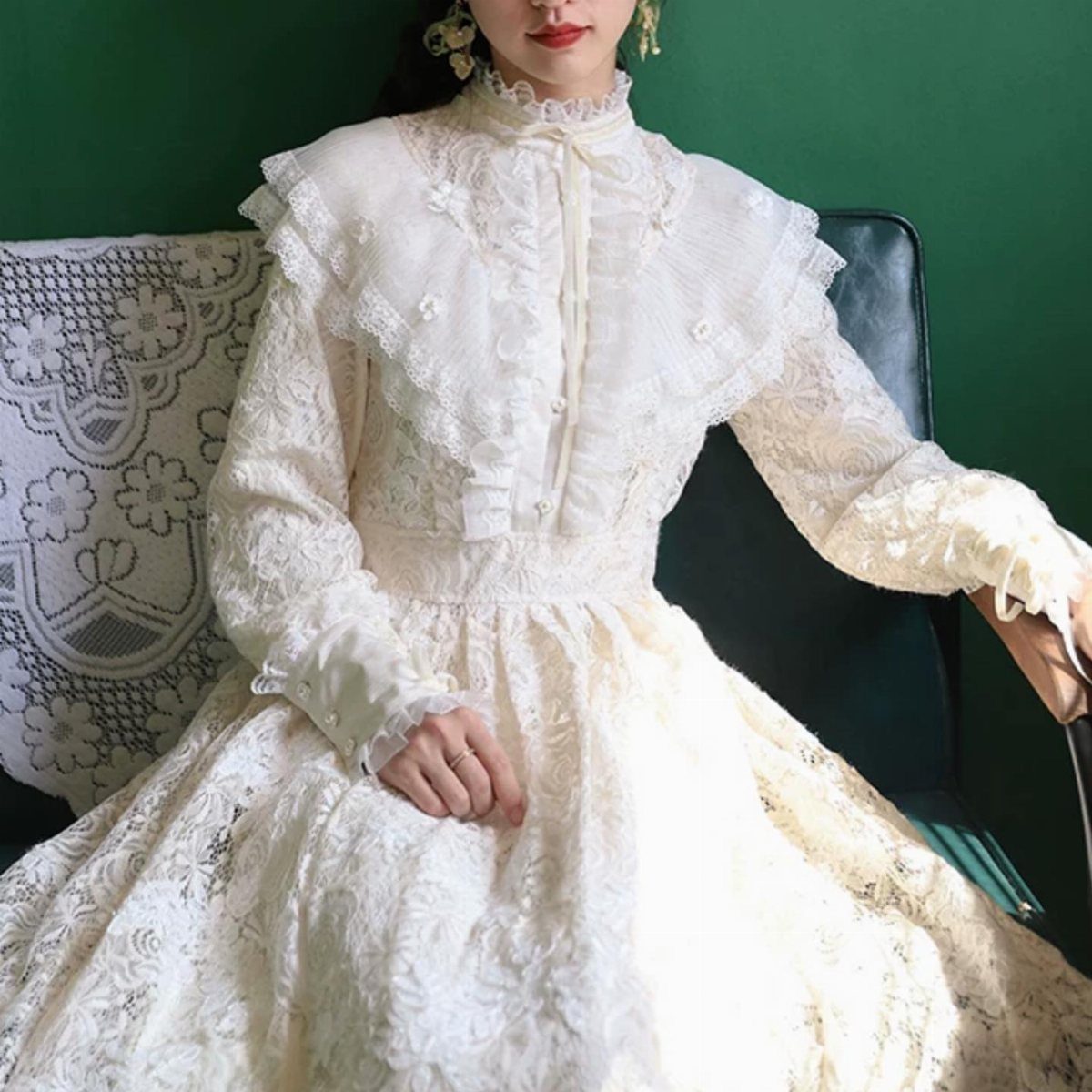
A high ruffled lace collar plus long sleeves covers nearly everything above the waist, which makes this white gown a good pick for anyone who prefers coverage.
The ruffle sits right at the jaw, so wear your hair up to show it off.
White lace is the whole design, so I would keep accessories minimal.
A plain chair or a deep green wall behind a white lace gown makes the lace read clearly, because the dark, flat color gives the pattern an edge to show against.
6. Cream Gown with Floral Corset Bodice
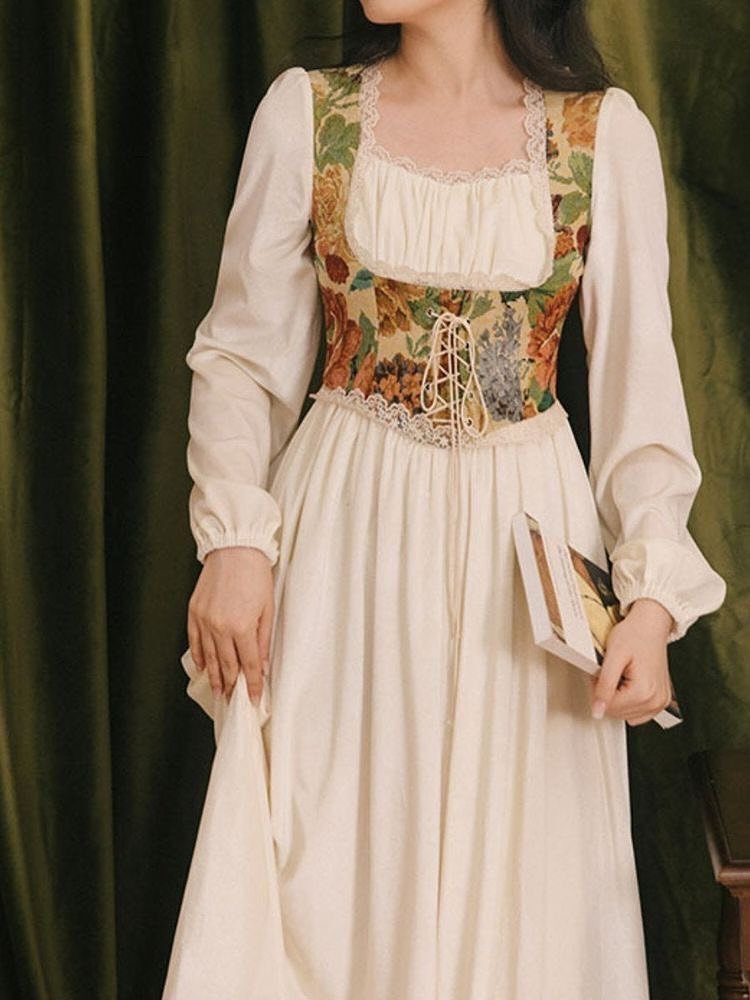
The floral lace-up bodice is what sets this cream gown apart from a plain long-sleeved dress. Lacing lets you adjust the fit at the waist, which helps if your proportions sit between sizes.
Cream is gentler than stark white against most skin tones. I like it with a rich backdrop, such as deep green velvet, where the floral pattern shows clearly.
7. Embroidered Olive Satin Evening Gown
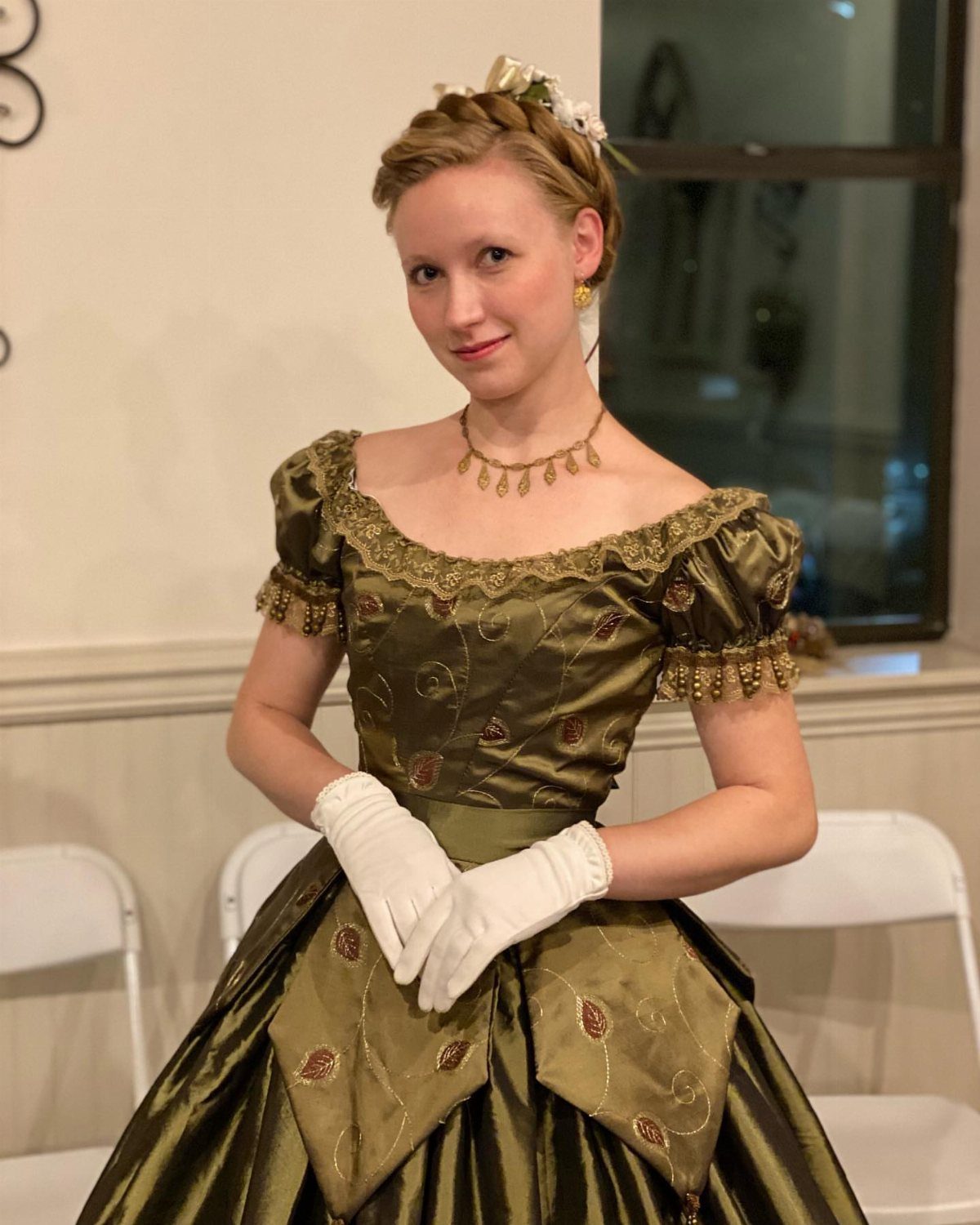
Gold embroidery on olive satin gives this gown its evening weight, and white opera gloves keep the color from going heavy.
Olive suits warm and neutral skin tones, and the short sleeves leave the arms free for the gloves to show.
I would keep the gold to one necklace, since the embroidery already supplies the shine. Short sleeves also make this the easiest gown on the list to wear indoors for a formal dinner.
8. Iridescent Green Voluminous Gown
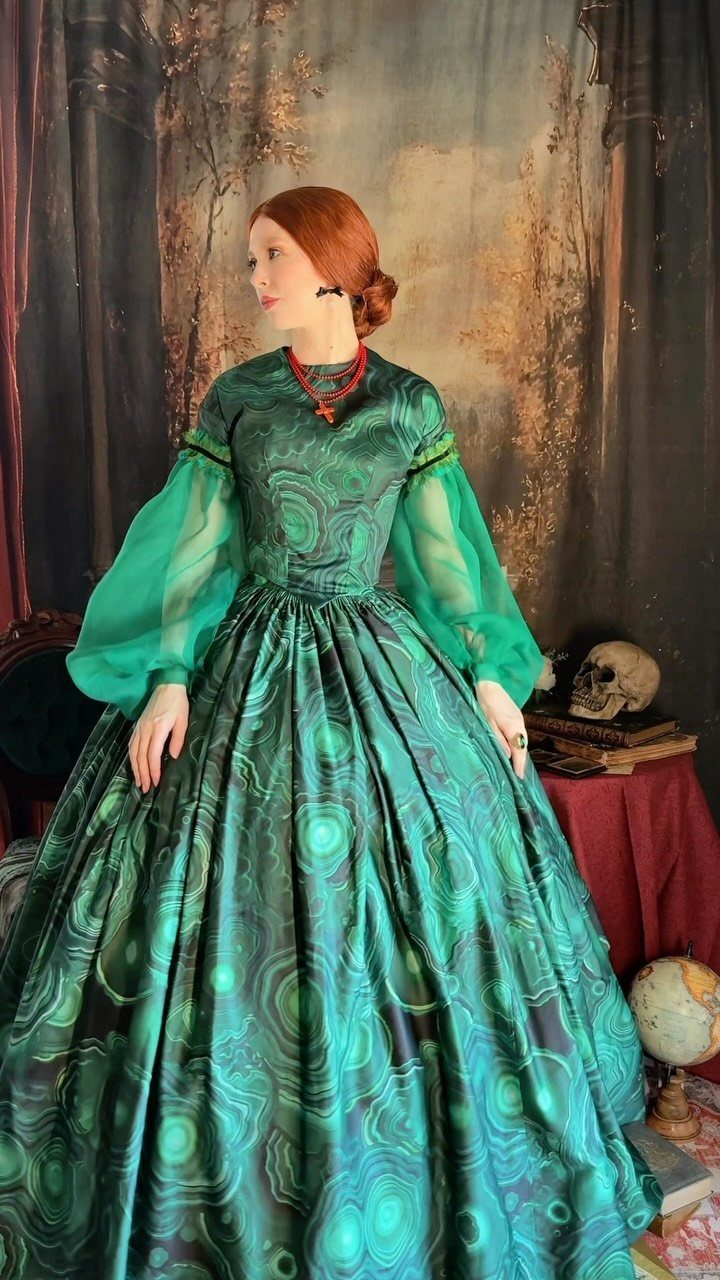
Iridescent fabric changes color as you move, so an emerald gown like this one needs very little else. The puffed sleeves and full skirt already build a large shape, and I would let that volume stand alone.
Pair it with a plain backdrop and simple hair. Red hair against emerald is a strong match, but any warm brown or auburn works the same way.
A full skirt like this takes space, so check the room before you commit to it.
9. White Puffed Sleeve Day Gown
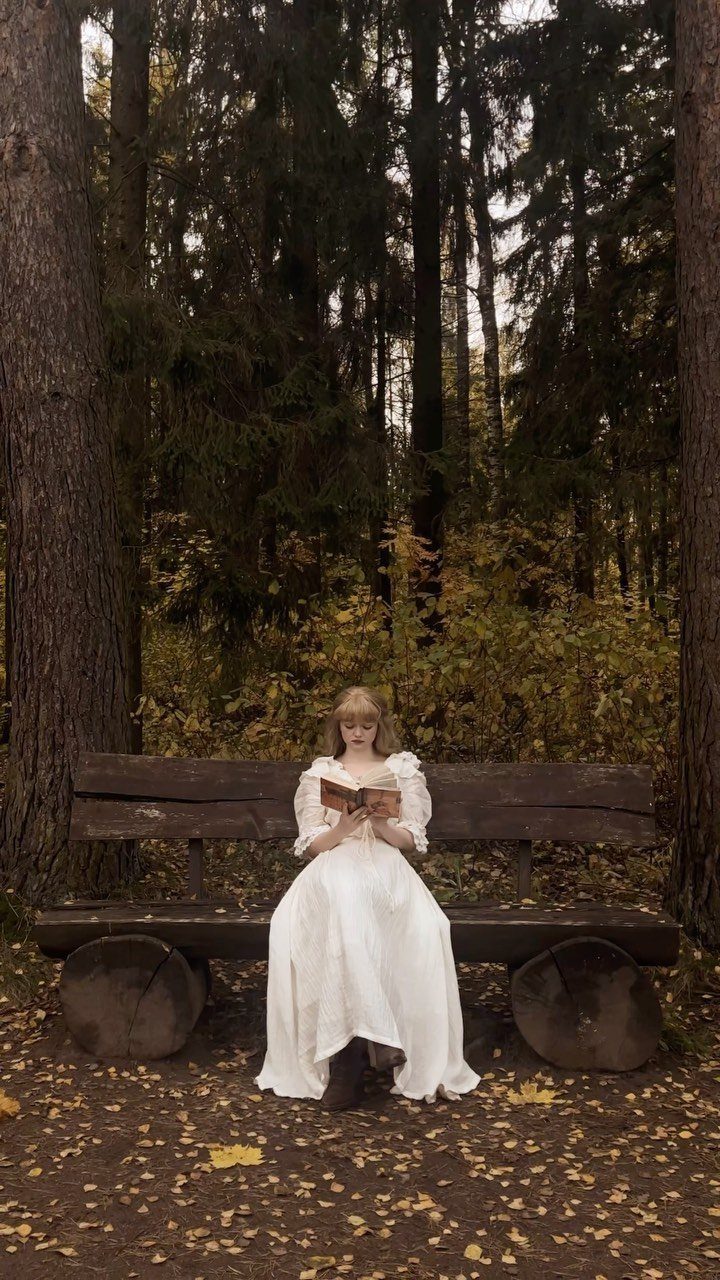
A white puffed-sleeve dress with a flowing skirt is the one I would wear on an ordinary afternoon. It has no corset or heavy trim, so it reads romantic rather than costume-like.
Wear it outdoors, where white looks soft against greenery. Flat boots or simple shoes suit it, and a book in hand does more for the mood than any accessory.
10. Strapless Ruffled Cream Gown
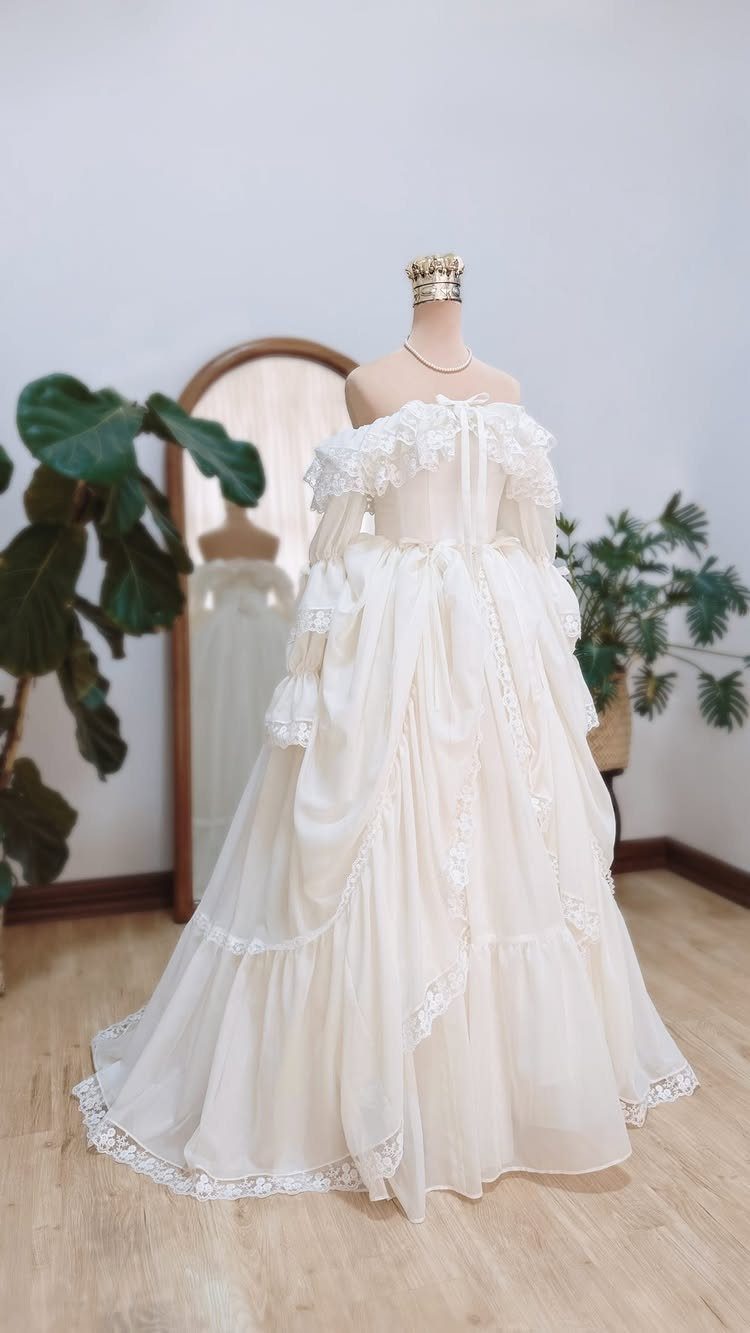
A strapless bodice over a tiered ruffled skirt makes this cream gown the boldest silhouette in the group. The tiers supply the volume, so the top can stay bare of extras.
Strapless cuts leave shoulders and collarbones open, which suits anyone who likes that line. Keep the extras small: a little crown or a simple hair piece works, and skipping the necklace lets the ruffles lead.
If you want coverage, choose a version with sleeves instead.
Victorian Fashion History
Etiquette shaped Victorian clothing, and it decides how a gown should look: the period cared about appearances, and each activity of the day had its own dress rules.
Upper-class women changed outfits several times a day, with a different dress for nearly every activity.
From about 1800 up to World War I, the daytime rule held: sleeves down to the wrist and a neckline that showed little or no cleavage.
Evening dress allowed bare shoulders and a lower neckline, which is why short sleeves and open necklines show up on the formal gowns.
Details changed with the decade and the place, so if you want an accurate look, choose a single decade and stay inside it.
Mixing real period pieces in ways Victorians never would is what makes a costume look off. If you want a gown to read as authentic, keep the daytime and evening rules separate.
New textile production changed what women wore too, and the shape of a gown moved a long way over the course of the century.
A decade-by-decade look at silk gowns from The Metropolitan Museum of Art’s Costume Institute helps you place the in-between years.
Victorian Dress Occasions
Because a day dress was worn out of the house to be seen, it was formal and elaborate. Most were built as a matching bodice and skirt, with long sleeves and a high neckline.
For visiting close friends or relatives, sleeves could run slightly shorter and the neckline a bit lower, but never as low as evening wear.
Carriage rides allowed a train; for walks, a shorter hem was the preferred choice, though some women wore the train anyway.
Since weddings took place in the daytime, a bride wore her best day dress. Queen Victoria’s wedding made white the favored color for brides, though plenty of women passed on it because pure white fabric cost so much.
If you are dressing for a daytime event, copy that structure: matching pieces, covered arms, a high neckline. Save the lower neckline for evening.
Modern Adaptations
Modern Victorian-style dresses borrow 3 things from the period: lace layers, long hemlines and modest long sleeves. That mix suits romantic dressing and the cottagecore look.
Choose one of those three as the lead and let the other two stay plain. A long hem with simple sleeves wears more easily than all three at full strength.
Black lets you wear the same long, covered shapes in a moodier way.
For everyday wear, I would go with the modest silhouette and wear it with pieces you already own, like flat boots or a plain knit layer. A modern cut keeps the period shape from feeling like a costume.
Frequently Asked Questions
What kind of dresses did Victorian women wear?
Mostly day dresses, evening gowns and tea gowns, with bustle skirts among the best-known shapes. Daywear meant a bodice and skirt cut from the same fabric, with sleeves to the wrist and a collar that sat close to the throat.
How to dress for a Victorian themed party?
Pick a single decade and stay inside it, then choose a gown that matches the time of day you are dressing for.
A long-sleeved day bodice paired with an evening skirt, or the reverse, is the quickest way to make a costume look wrong. I would keep accessories small: pearls, gloves or one hat are enough.






