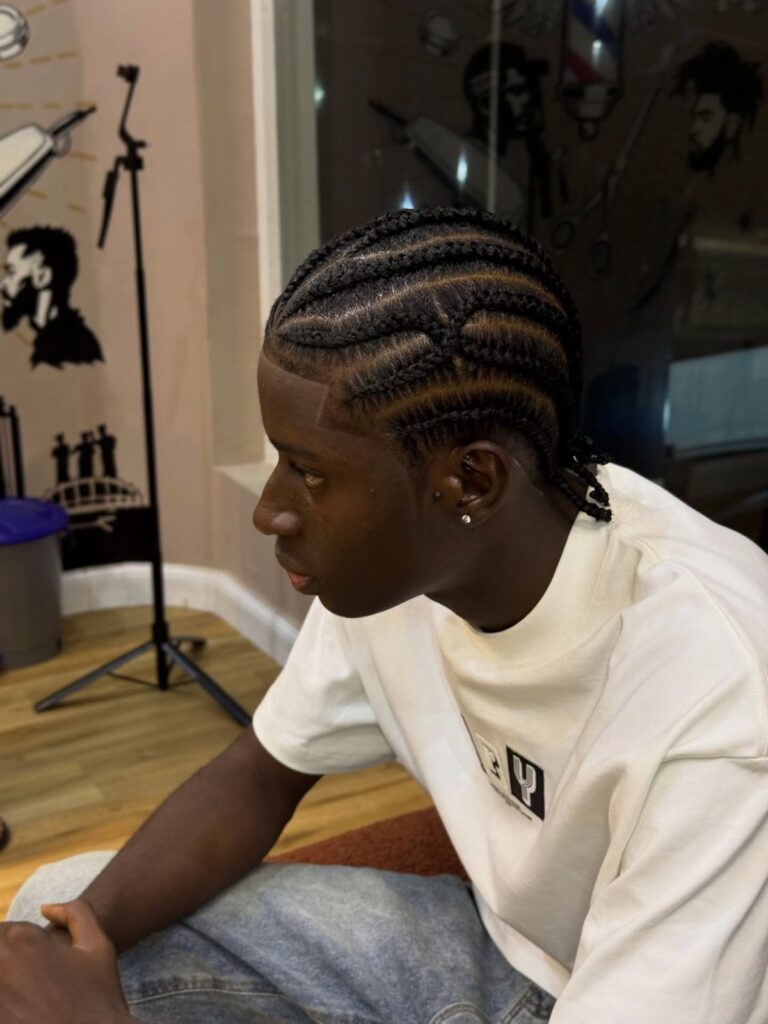
Braider skill decides which of these cornrow hairstyles for men will work for you.
Classic straight-back rows and curved waves forgive a slightly uneven part, but the crown, geometric star, maze and spiderweb designs show every wobble, so pick a braider whose portfolio shows crisp lines and bring a reference photo.
Some styles here are plain parallel rows you can wear without a second thought, others like the crown and spiderweb radiate from one center point and take a long sitting, and the 3 fade styles mean a barber visit on top of the braiding.
1. Straight-Back Cornrows with a Low Taper Fade
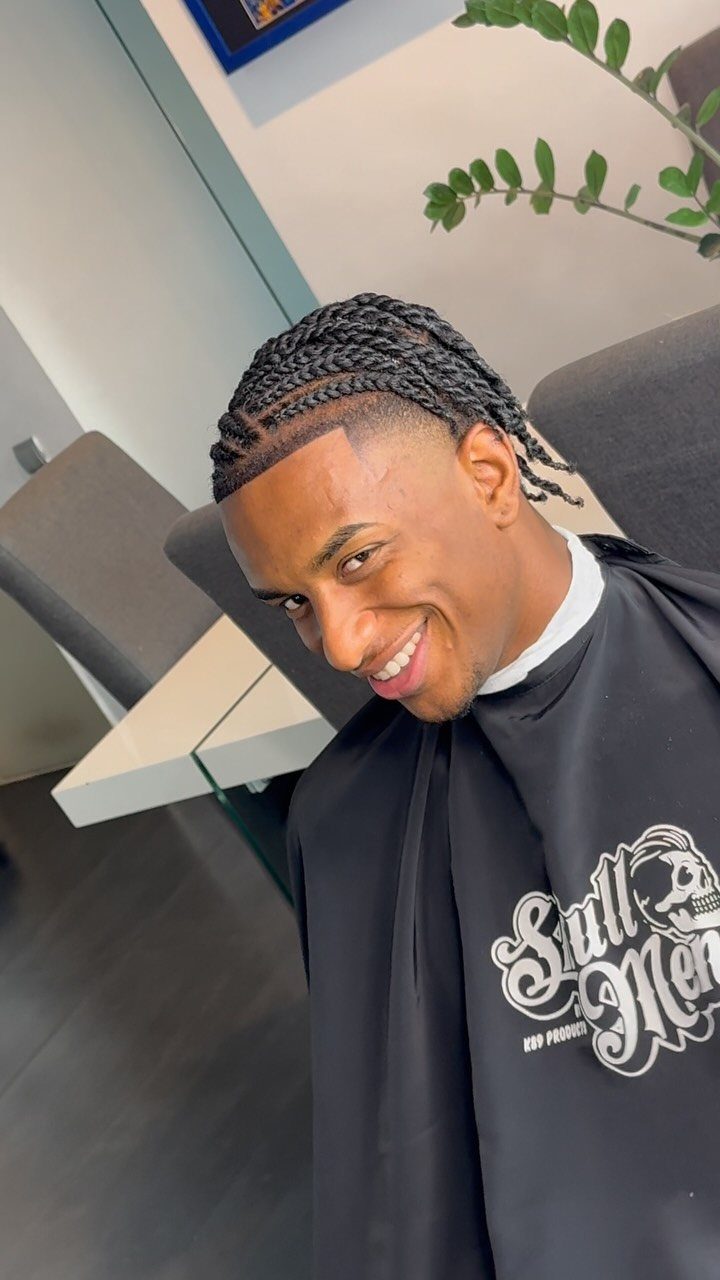
A low taper fade keeps the sides and nape tight while the braids stay the focus, which is why this pairing reads as polished at a desk and relaxed on a weekend.
Straight-back lines are the simplest braid direction, so nothing competes with the fade.
Ask your barber to cut the fade first and have the braids done after, or at least agree on where the taper ends so the lines meet cleanly at the temples.
I’d choose this over a high fade if you want something conservative.
2. Classic Straight-Back Cornrows
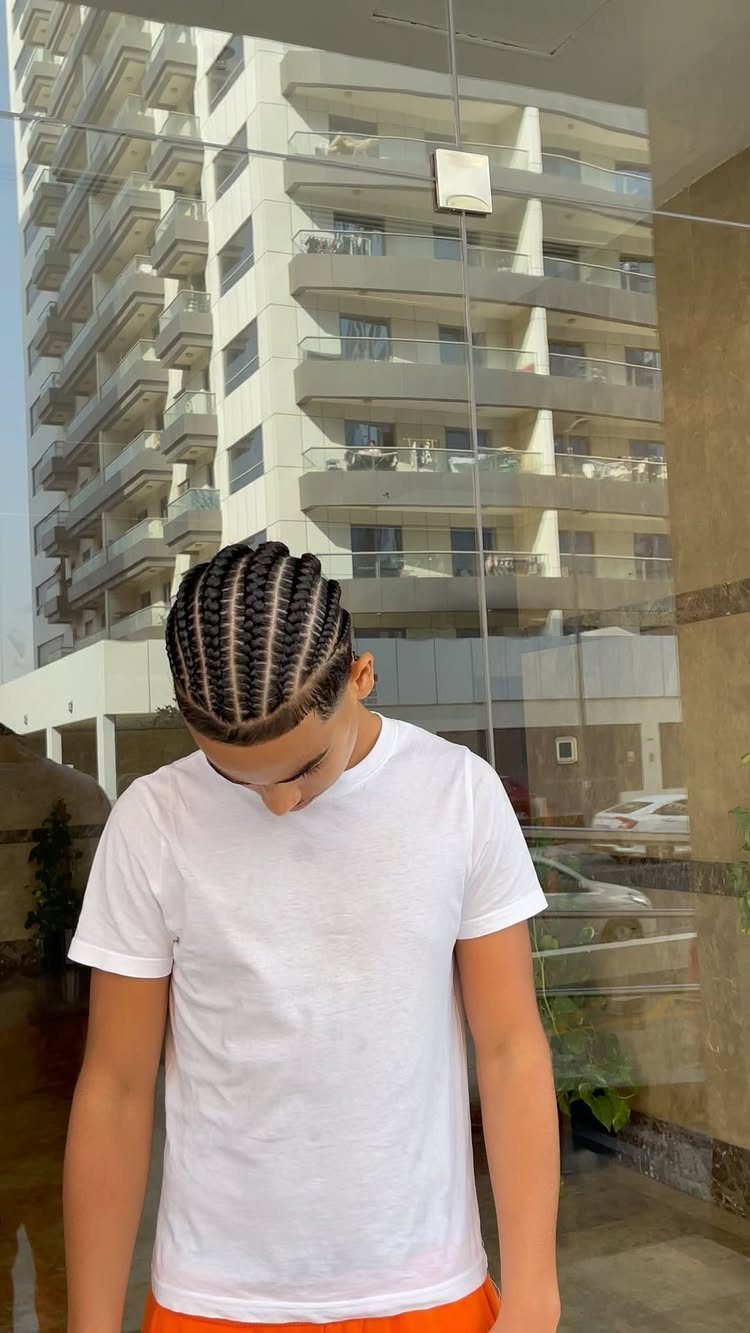
Nothing beats straight-back cornrows for a look you can wear without thinking about it.
Straight-back cornrows run in parallel lines from the front hairline down to the nape, and that even direction is what keeps the look neat with almost no styling.
Part width sets the mood: thinner rows look sharper and more detailed, thicker ones look bolder and quicker to wear. If you want one style to rotate with every outfit and occasion, I’d start here before trying anything with curves.
3. Cornrow Fade
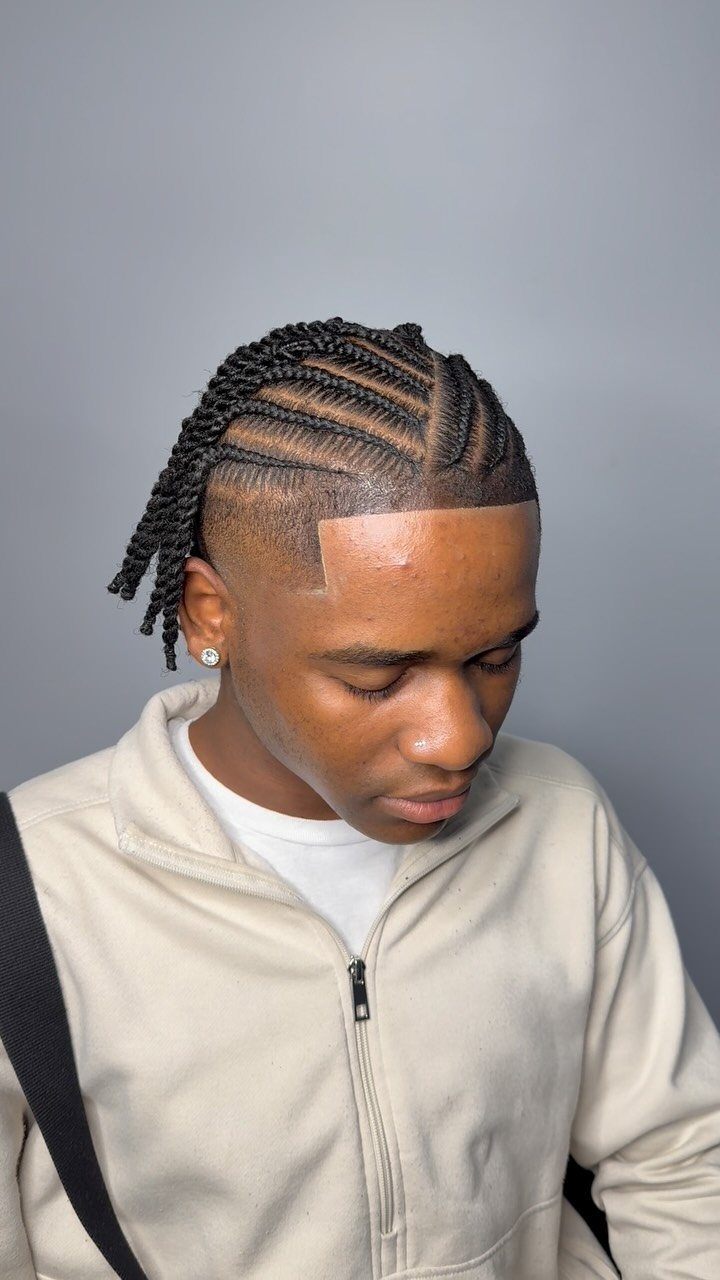
Braids on top with a faded back and sides give you the contrast that makes a cornrow style look sharp. The skin-close sides keep the neckline tidy, and only the top needs braiding.
Book the fade and the braiding with the same stylist if you can, so the line between the 2 sections is planned rather than guessed.
A fade does grow out, so this look needs a barber visit to stay crisp, which is the one real cost I’d weigh before choosing it.
4. Crown Design Braids
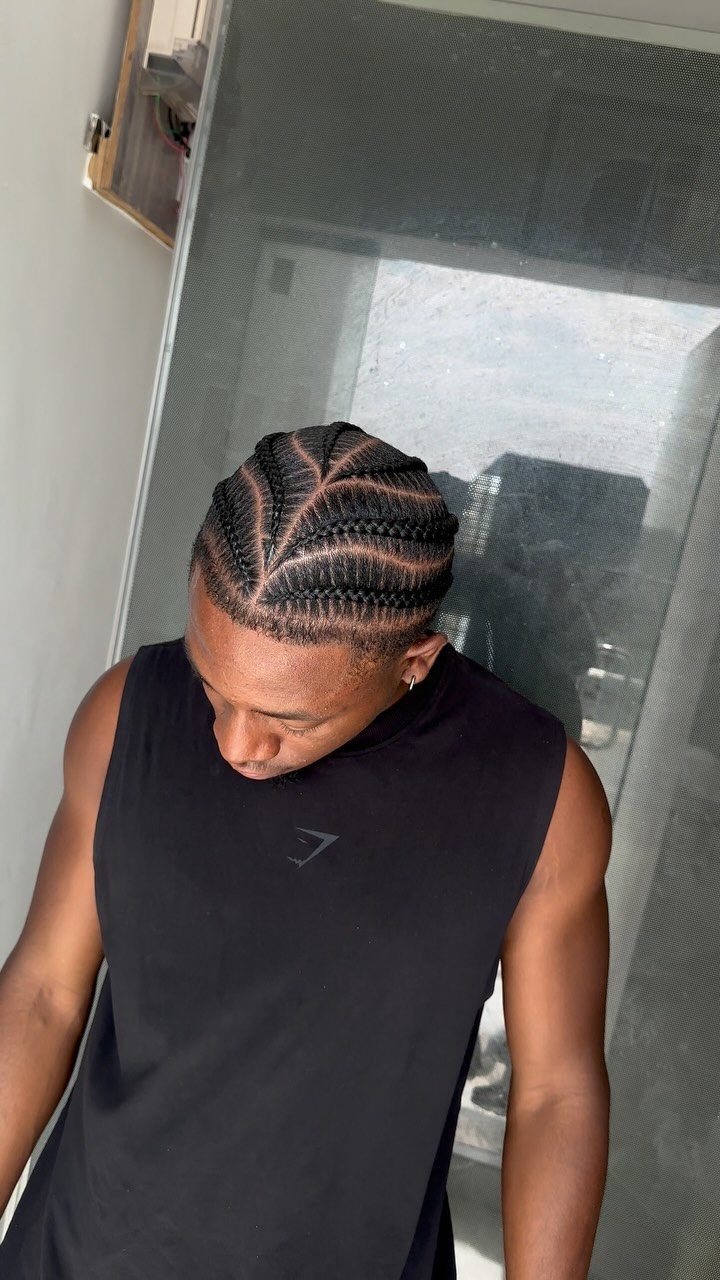
Symmetry carries crown design braids: curved rows mirror each other across the head and gather toward the center, like a crown sitting on top.
A clean hairline matters more here than with plain straight-back rows, because the curves draw the eye straight to the edges.
This one takes a skilled braider, since uneven curves show immediately. Before the first part gets made, I’d show the braider a reference photo and agree on how the 2 sides will mirror each other.
5. Freestyle Stitch Cornrows with a Drop Fade
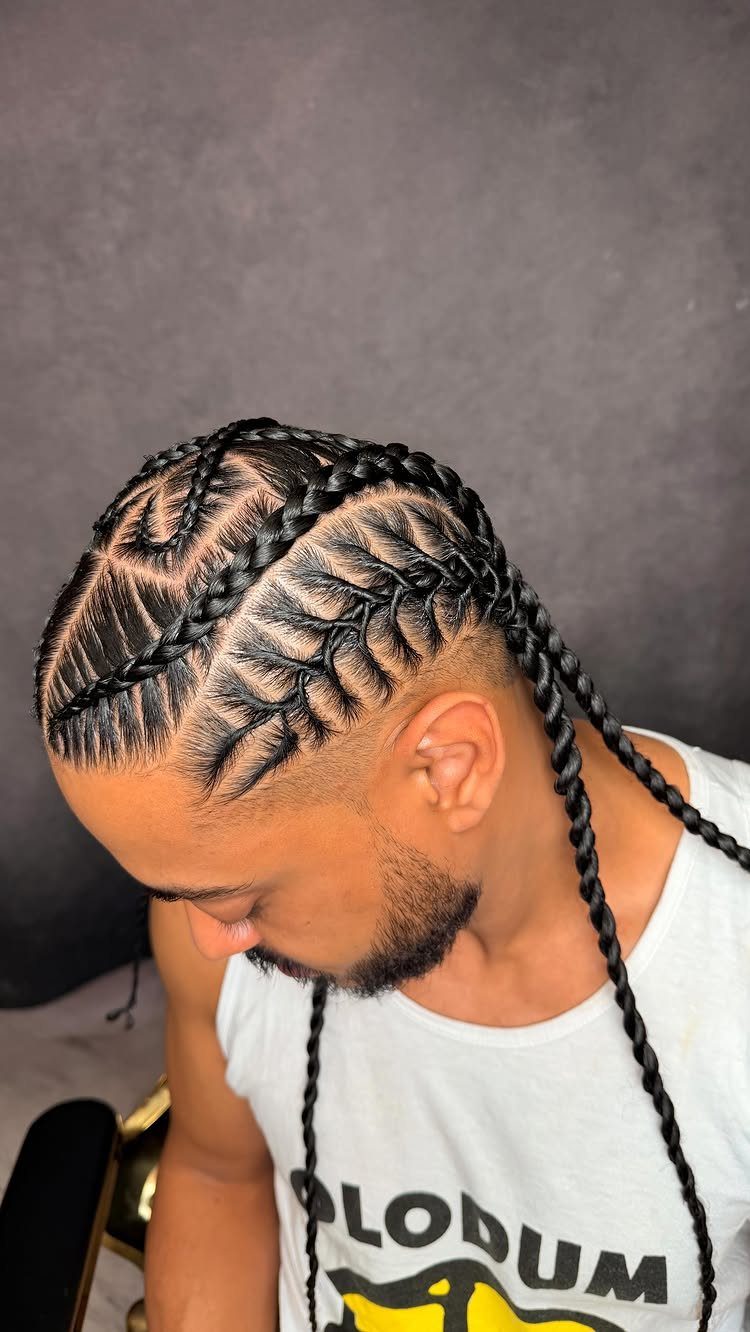
Freestyle stitch cornrows leave room for the braider to bend and curve the lines however the design wants, rather than following a fixed pattern.
Paired with a drop fade, which curves down behind the ear, the whole side profile flows in one direction.
Since the design is improvised, the result depends on your braider’s eye. I’d look through their past work first and tell them how bold you want the curves to be.
6. Geometric Star Cornrows
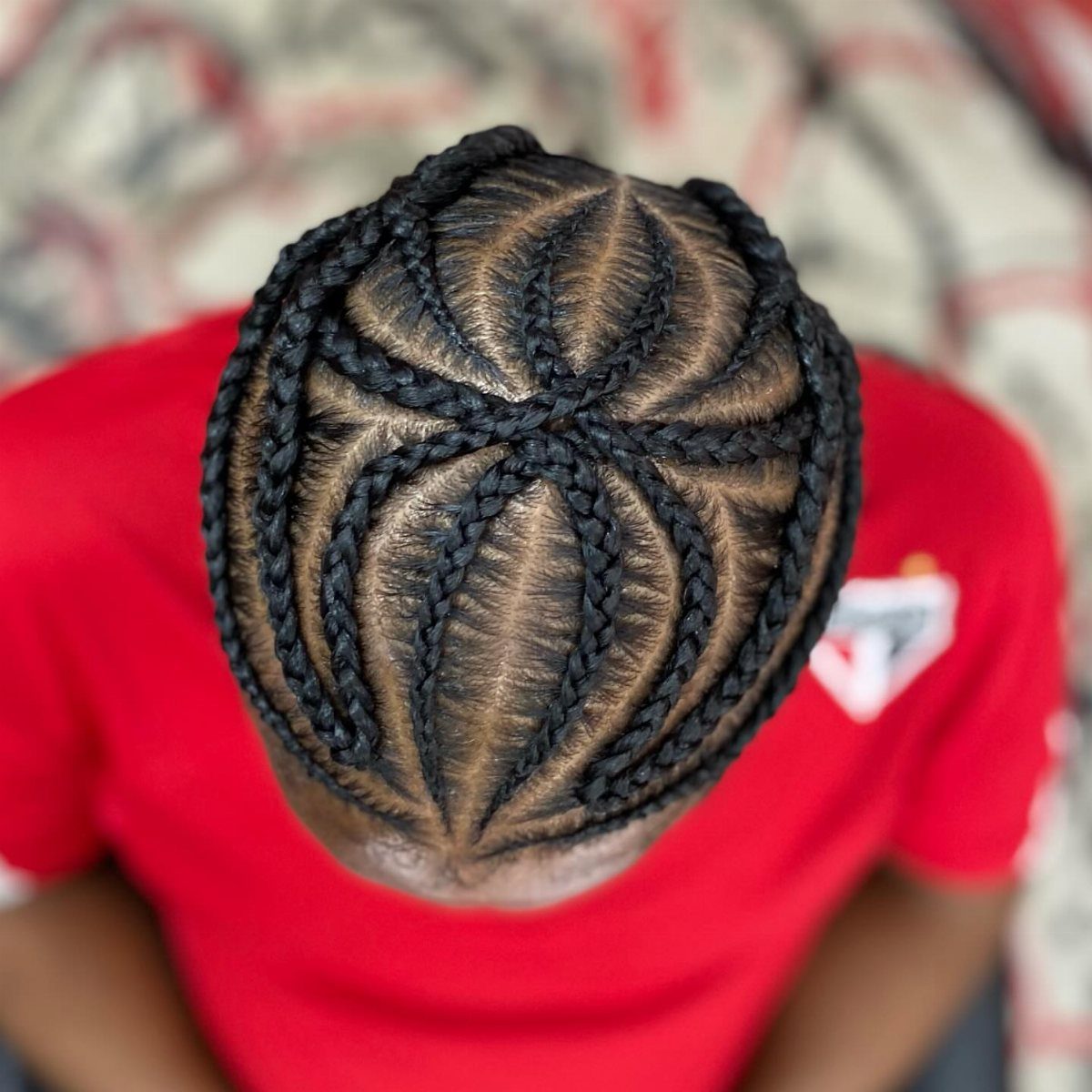
Angular lines that meet at sharp points give the star pattern the most graphic look of any cornrow design. The braids run across the scalp in straight segments, and the star shows up where those lines cross.
Straight, crisp parting is everything here; wobbly lines blur the points. Because the design is intricate, expect a longer session than with straight-back rows, and bring a clear reference image so your braider knows where the center point goes.
7. Curved Swirl Cornrows
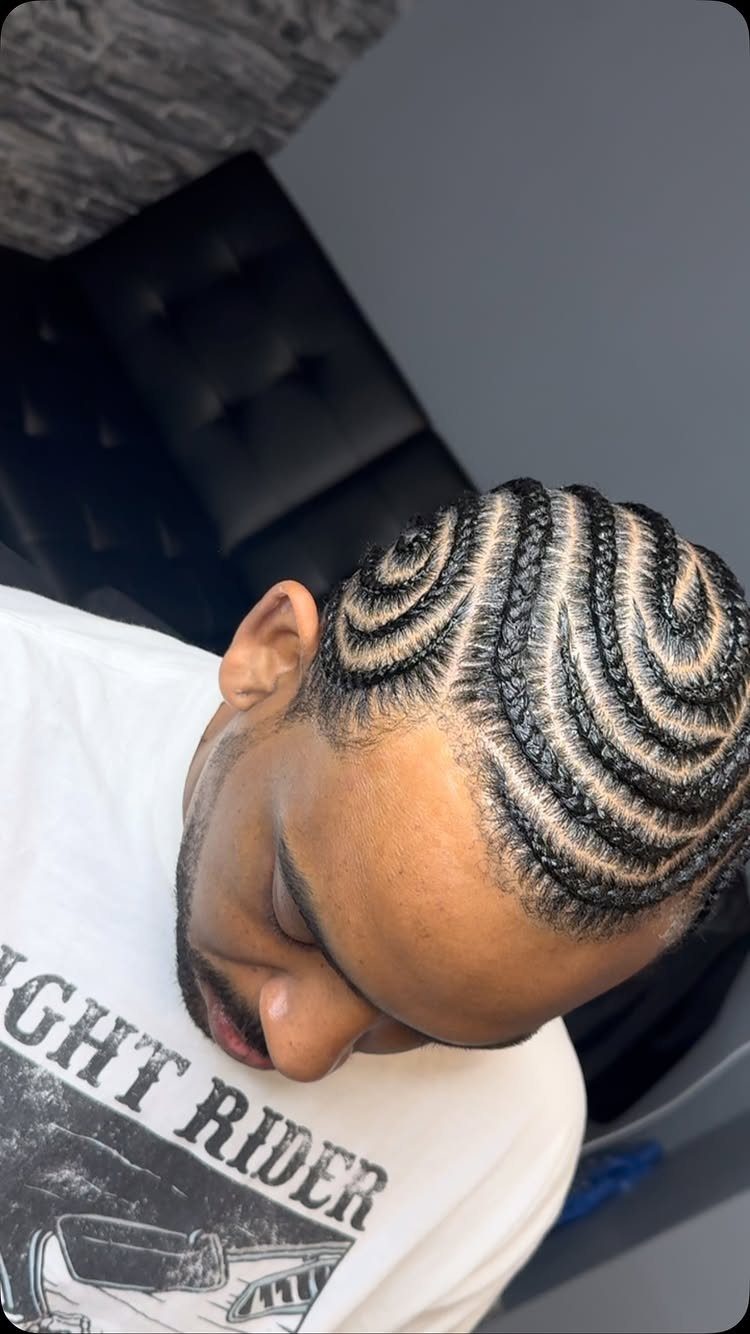
Swirls ask the braider to curve every row, so the whole head reads as one flowing line instead of a set of stripes.
That movement is the appeal, and it looks best when the curves stay smooth and the parts stay even.
Pick a braider whose past work shows clean, rounded turns. I’d say how tight you want the swirl, since a loose curve and a tight one change the whole feel.
8. Geometric Maze Cornrows
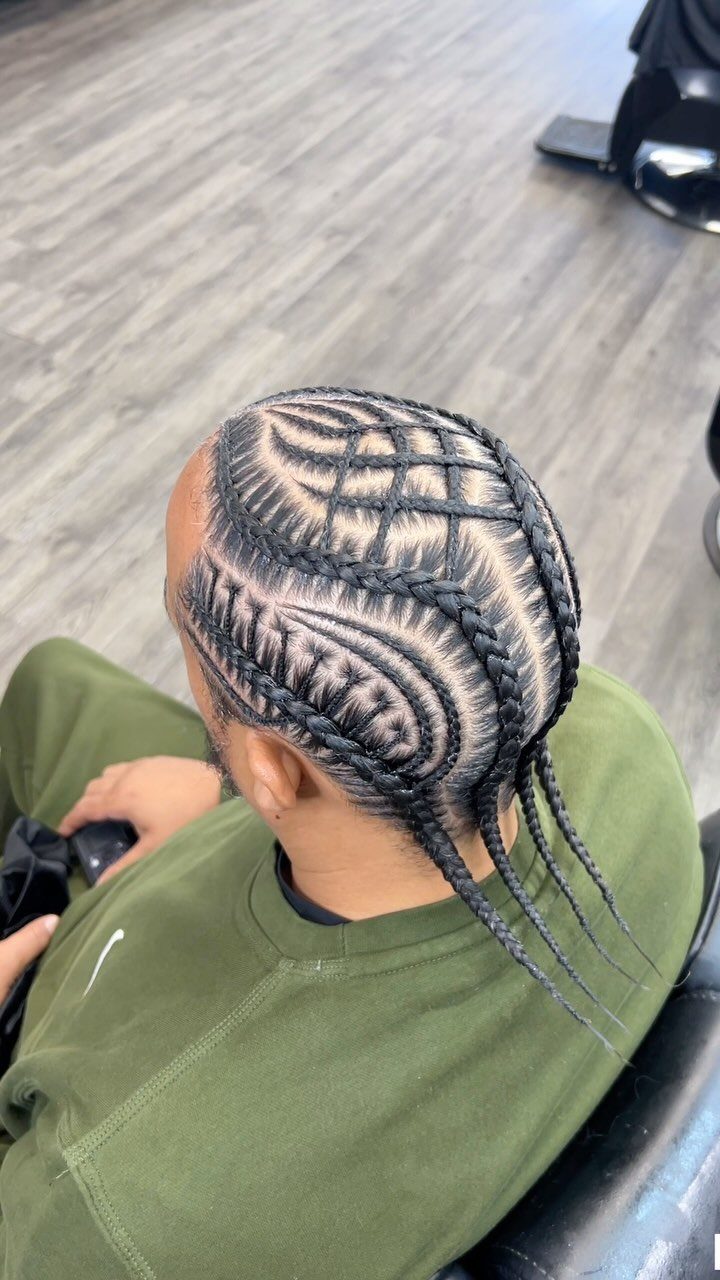
Interlocking geometric lines turn the scalp into a map, and the sharper the parts, the better the pattern reads. Maze designs are busy by nature, so a plain outfit keeps the focus on the braids.
Expect a long sitting. I’d bring a clear reference photo and agree on the layout before the first part is made, because a crooked line in a pattern this dense is hard to hide.
9. Curved Wave Cornrows
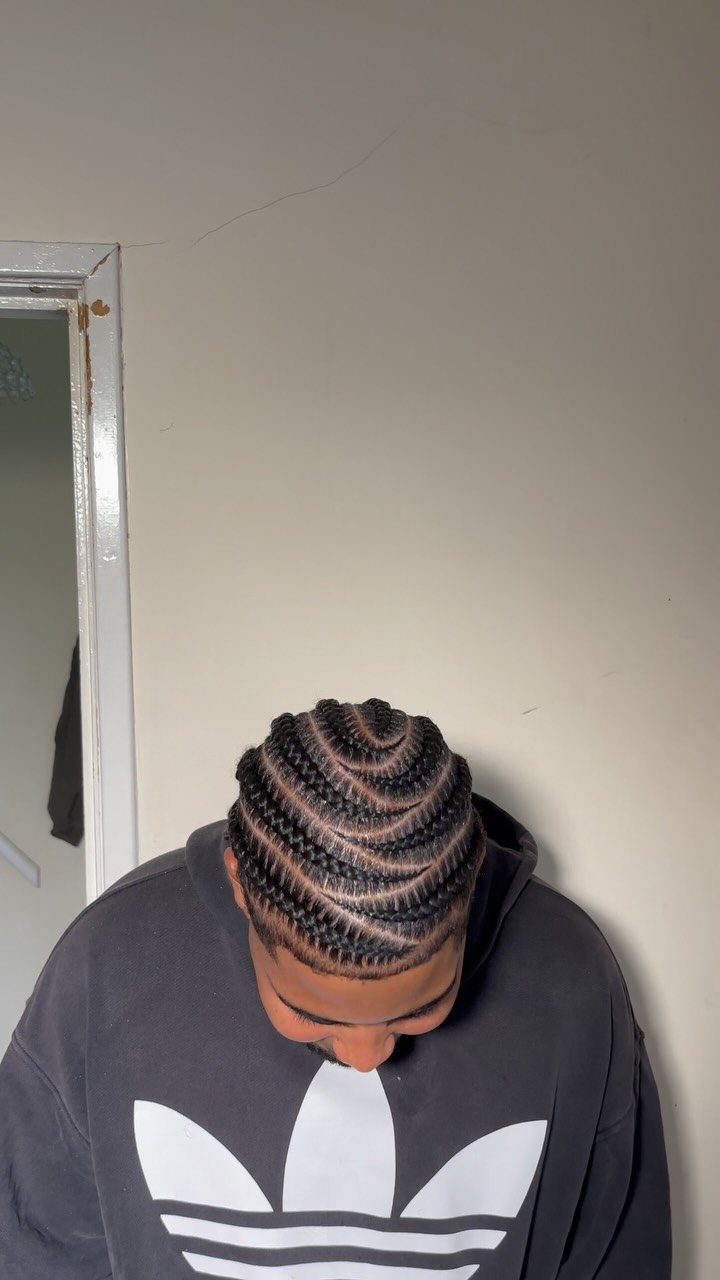
Waves keep the neat, parallel order of classic rows but add gentle movement, which makes this a good step up if straight-back feels too plain. The rows stay tight and run side by side, so the look still reads clean.
Of the curved designs here, I’d pick this one first. The parallel lines are more forgiving than a swirl or a crown, and the braids stay the clear focus.
10. Cornrows with Beads
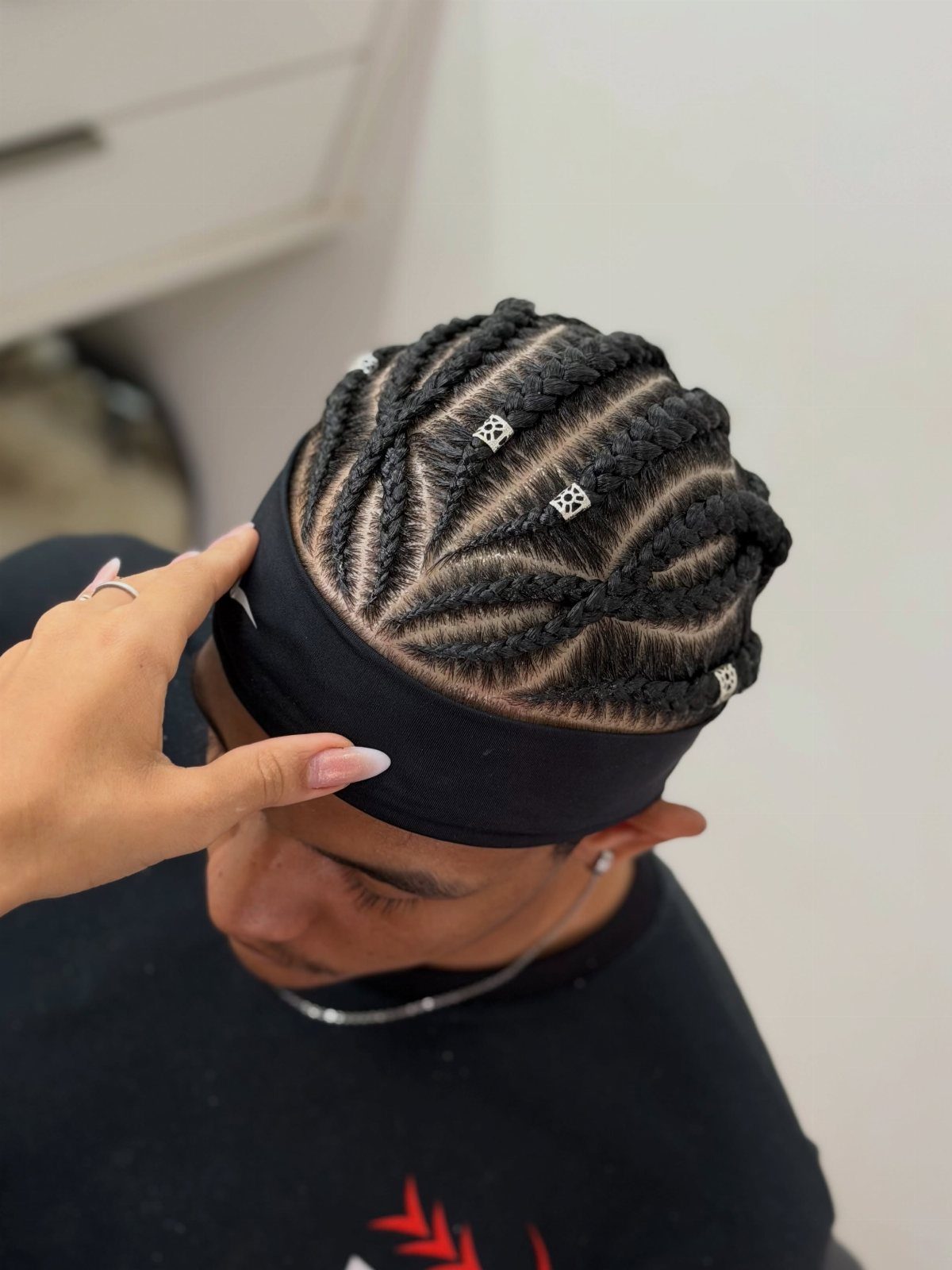
Silver beads on cornrows add a small point of shine, and they work best on a simple braid pattern where each bead can be seen. Slide them on near the ends, where they sit clear of the scalp.
I’d keep the count modest.
A few beads look deliberate; too many pull attention from the braiding itself. A plain black headband is an easy way to hold back any loose hair around the braids, and it keeps the look tidy between appointments.
11. Radiating Spiderweb Cornrows
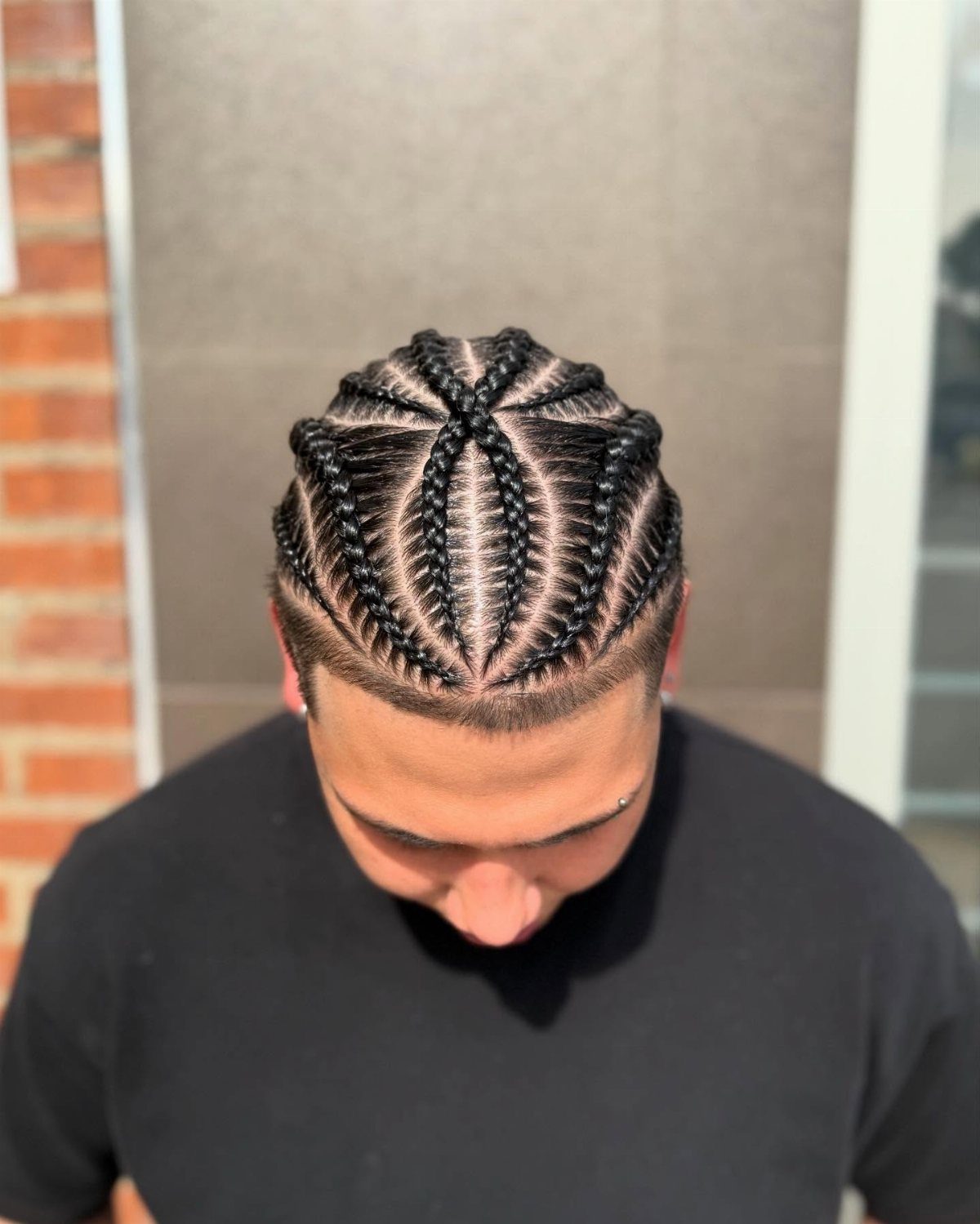
Every row in a spiderweb starts at one point on the crown and fans outward, so the center has to be placed exactly. If it drifts, every line after it drifts too.
Bring a reference photo to the chair, and settle exactly where the center of the web will fall before the first part is made, since that point decides how every line radiates from it.
The rows need clean, even spacing to look like a web, so I’d choose a braider with steady hands over a quick one.
Recommended Hair Products
Start with a durag and keep it clean. A dirty one, like a dirty hat, passes oil and buildup straight back onto your scalp.
Shea or coconut butter keeps the braids moisturized, but go light. Thick grease tends to hold onto lint and dust right along the parts, and that buildup is harder to wash out later.
A cleansing shampoo removes oil buildup, and a deeply hydrating conditioner keeps the hair from drying out. A few elastic bands come in handy when you want to gather the braids into a ponytail or bun.
Frizz around the parts usually settles with a dab of mousse smoothed over the loose hairs. At night, a satin or silk bonnet or scarf keeps the braids from rubbing against cotton.
Multivitamins are an optional extra, since healthy hair also depends on what you put in your body.
Cornrow Styling Tips
Washing is where most men overdo it. Washing once a week works for most people, though heavy sweating or layering several scalp products may call for a bit more.
Rinse until no suds remain, then blot the braids with a towel to soak up the extra water.
Check the ingredient list and skip products with oils in them.
A satin pillowcase adds protection if you would rather not wear a bonnet.
If you don’t want to fuss with the braiding yourself, hire an expert braider.
Frequently Asked Questions
What are the different types of cornrows available for men?
Straight-back rows are the simplest and easiest to wear, running in parallel lines from the front hairline to the nape. From there you can move to curved waves, swirls or crown designs, or to angular patterns like stars and mazes.
Freestyle stitch cornrows leave the lines up to the braider, and a spiderweb fans every row outward from one point on the crown. For a first style, I’d start with straight-back rows or waves, since parallel lines forgive small errors.
What does a cornrow hairstyle look like?
Cornrows are braids worked flat against the scalp in rows, so they sit close to the head and stand slightly raised.
The rows can run straight back, curve into waves and swirls, or form patterns like stars and webs. Part size changes the whole look: narrow rows read crisp and detailed, and wide ones come across heavier and bolder.
How much do cornrows usually cost?
I can’t give a reliable price, because the cost depends on your braider, and the designs vary a lot in effort.
Simple straight-back rows take less time than intricate star, maze or spiderweb patterns, which need a longer sitting. Ask your braider for a quote after showing a reference photo, so the price matches the design you want.






