These styles run from a Messy Top Knot to Voluminous Braided Extension Curls, and the effort follows the cut.
Short layered shapes like the pixie bob and the shag need regular trims, while curls worn down need almost nothing but your hands.
Natural texture decides the pick: curly or wavy hair gets fullness for free, while fine or straight hair needs help from Teased Hair, Feathered Layers or a Voluminous Shag cut.
1. High Ponytail
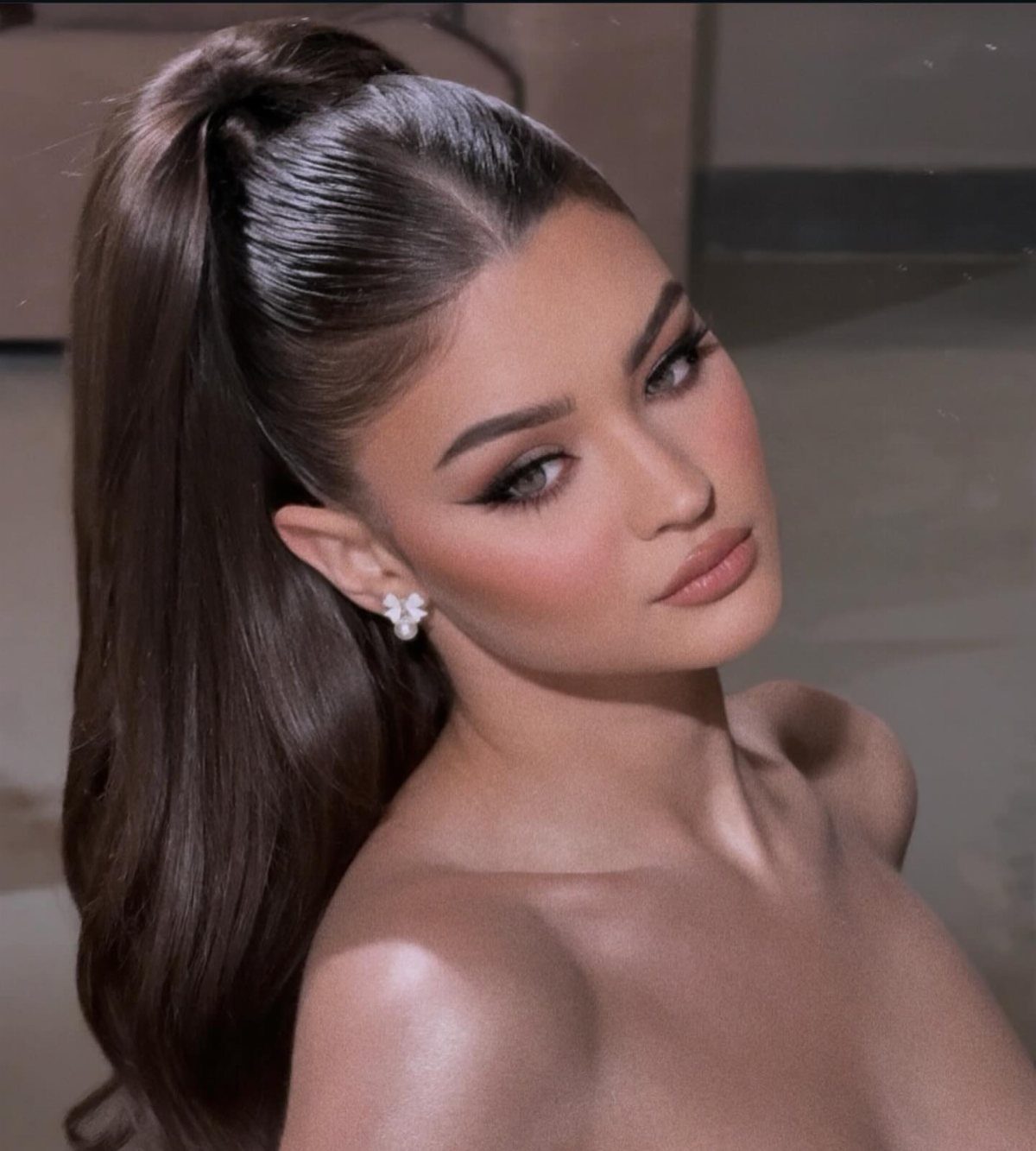
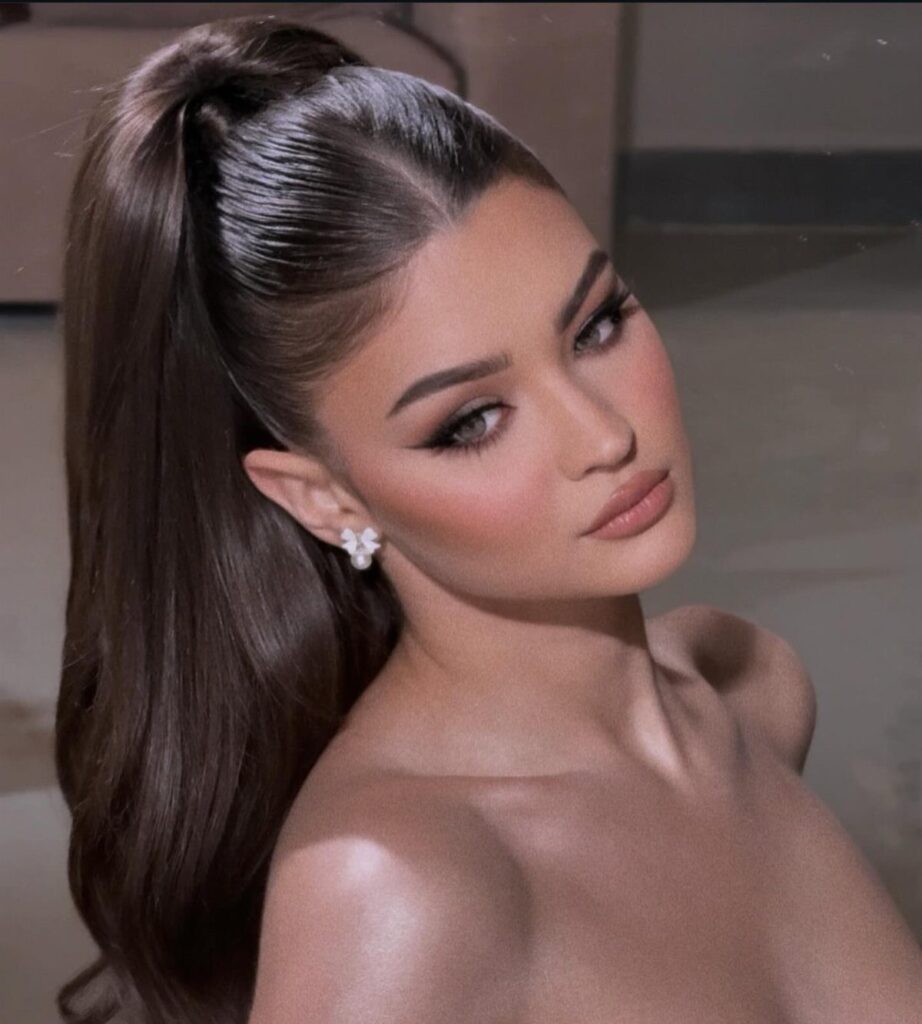
A high ponytail pulls everything off the face and neck, so the hairline and cheekbones do the talking.
Smooth the surface with a brush as you gather, and keep the tie tight at the crown. Hair this sleek pairs well with a statement earring, like the white flower one here.
Poofy hair can still work this way if you smooth the top and let the length fall full.
2. Tousled Updo
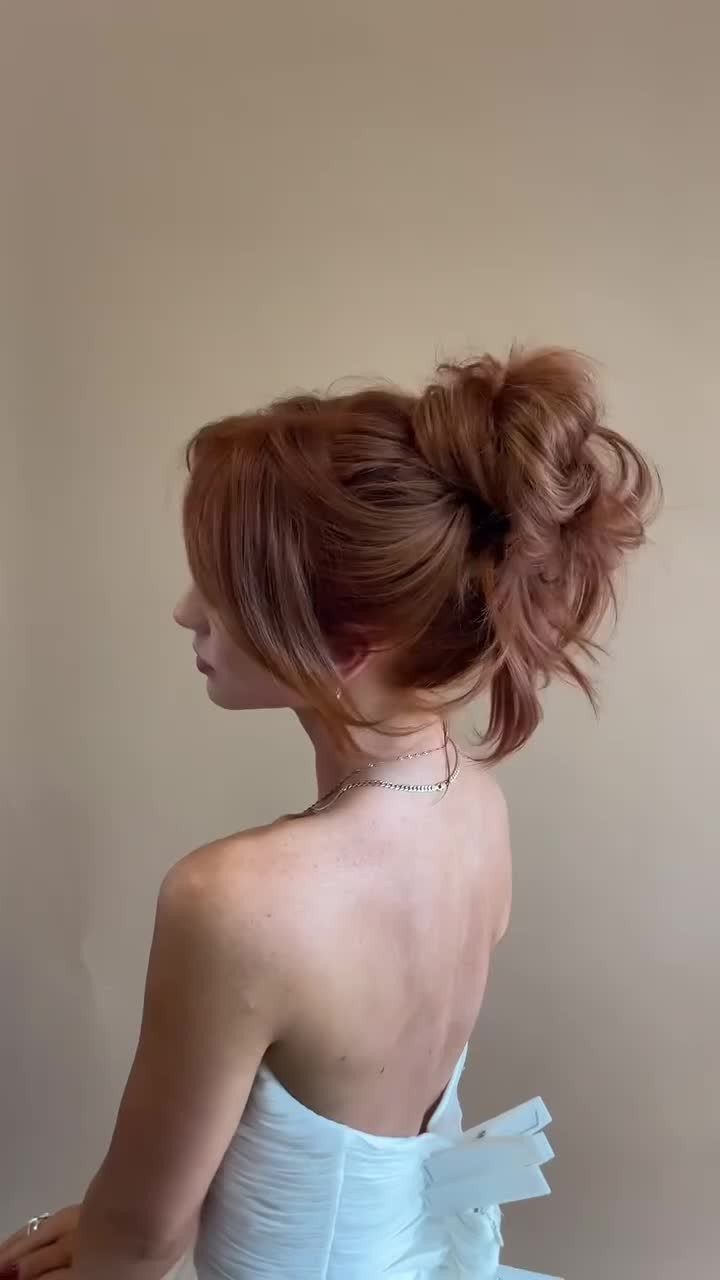
Loose pieces are what separate a chic tousled updo from a careless one, so pull them out on purpose and leave them there. Leave some strands falling along your cheeks and neck, and keep the crown full rather than flat.
Strapless dresses and bare shoulders suit it best, since nothing competes with the shape. Evenings when a polished updo feels too stiff are exactly when this one earns its spot for me.
3. Half-Up, Half-Down
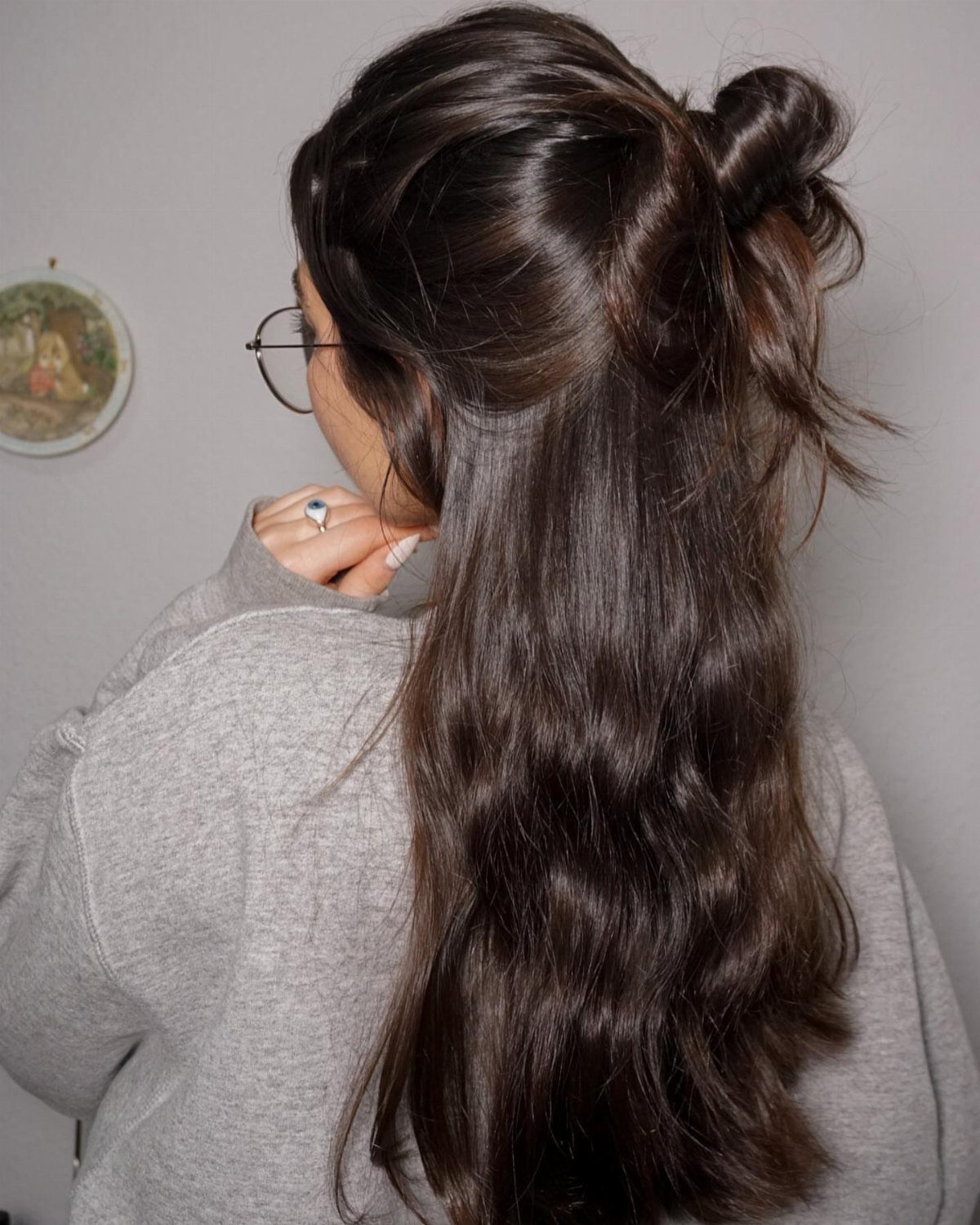
Half-up, half-down is my pick for days when you want hair off your face but still want length and body.
Gather the hair from the crown down to about ear level into a messy bun and leave the rest loose, waves included.
It works with glasses and a sweatshirt as easily as with a dress, which makes it one of the more flexible poofy options. Wavy texture hides imperfect pieces, so skip the brush.
4. Slick Ponytail
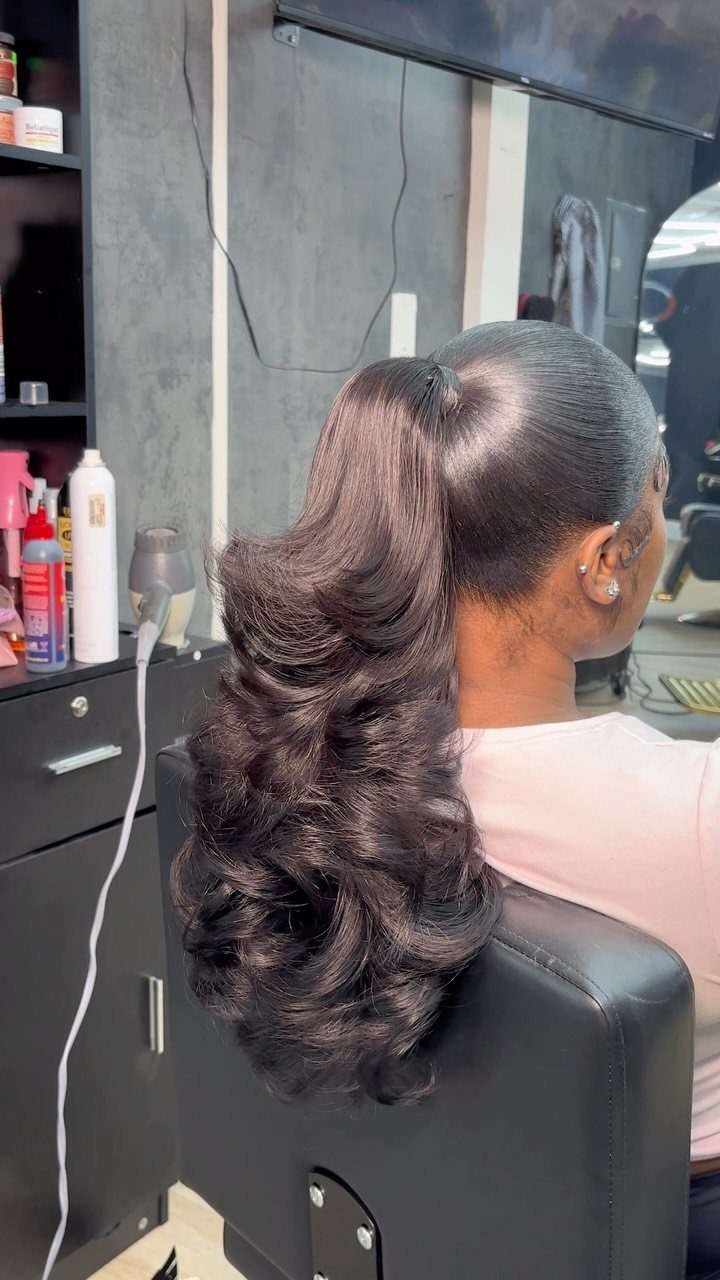
Frizz control is where a slick ponytail wins. Pull the hair back high, smooth the front and sides flat, and let the ponytail itself stay full and curly, which gives you polish at the hairline and volume in the length.
Curls that bounce out of a smooth base look deliberate, not unruly. A brush and a bit of product at the edges are all the setup it takes.
Take a page from Zendaya and embrace your poofy glory. Slick down the front with a little gel and gather the rest of your hair into a pony, letting your natural volume take center stage.
— PureWow
5. Teased Hair
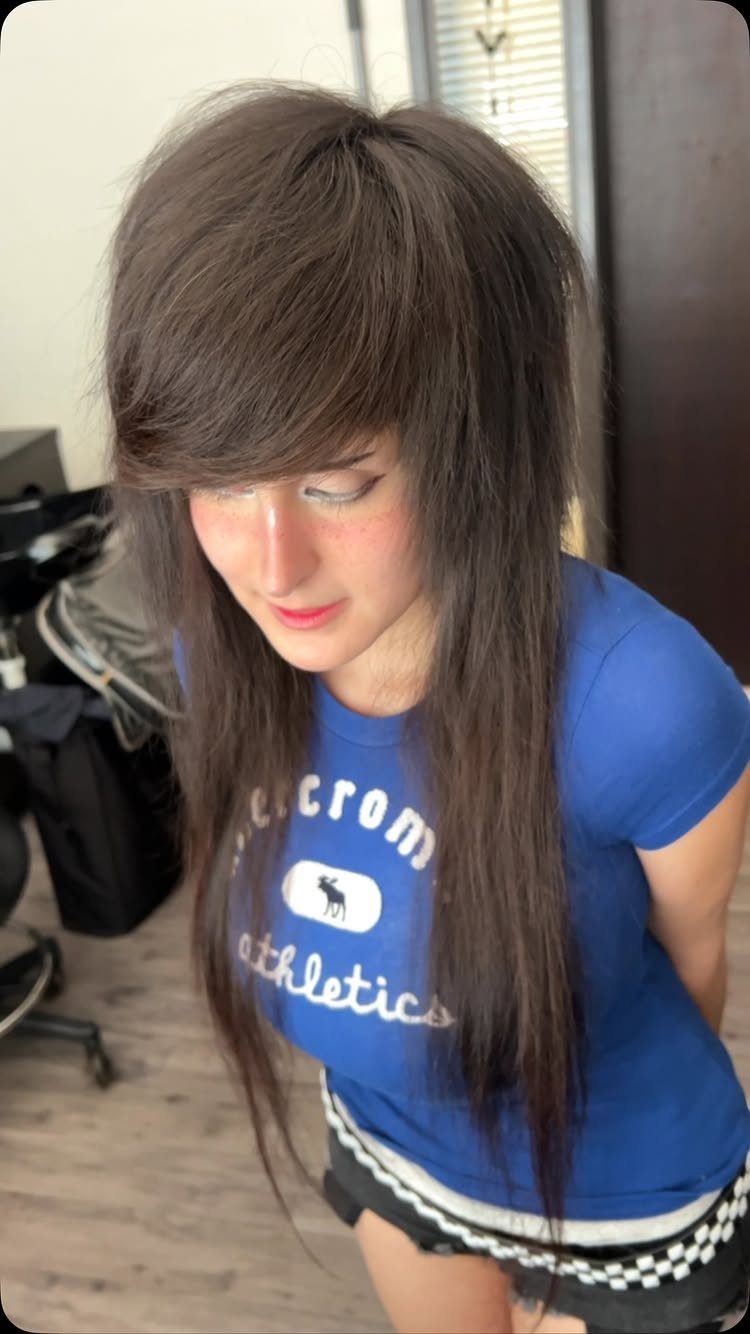
Backcombing at the crown gives teased hair its lift. Take a small section there, hold it up, and comb short strokes toward the scalp until it stands on its own, then smooth the top layer over it.
Leave the lengths straight, as in this look, so the volume reads as intentional. Teasing is rough on strands, so I save it for occasions and brush it out gently afterward.
6. Layered Pixie Bob Cut
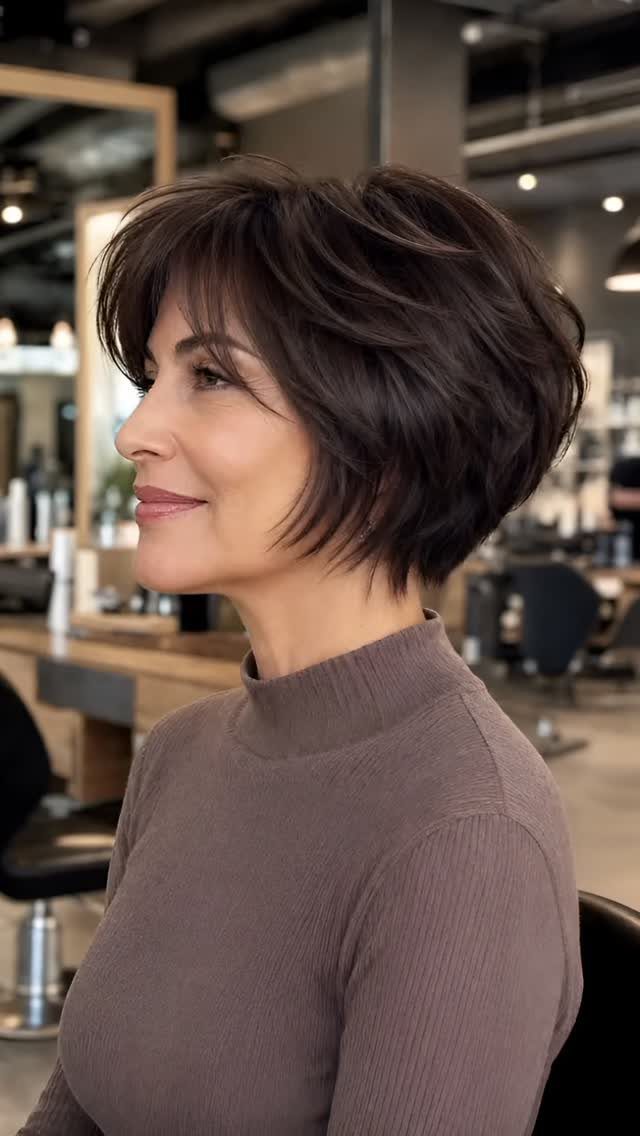
Layers do the heavy lifting on a pixie bob, especially when short hair tends to puff. Cutting them in removes bulk and gives the shape movement, so the volume looks designed instead of accidental.
Ask your stylist for layering through the crown and sides. A cut this short needs regular trims to hold its outline, which is the main cost of keeping it.
7. Bubble Braid
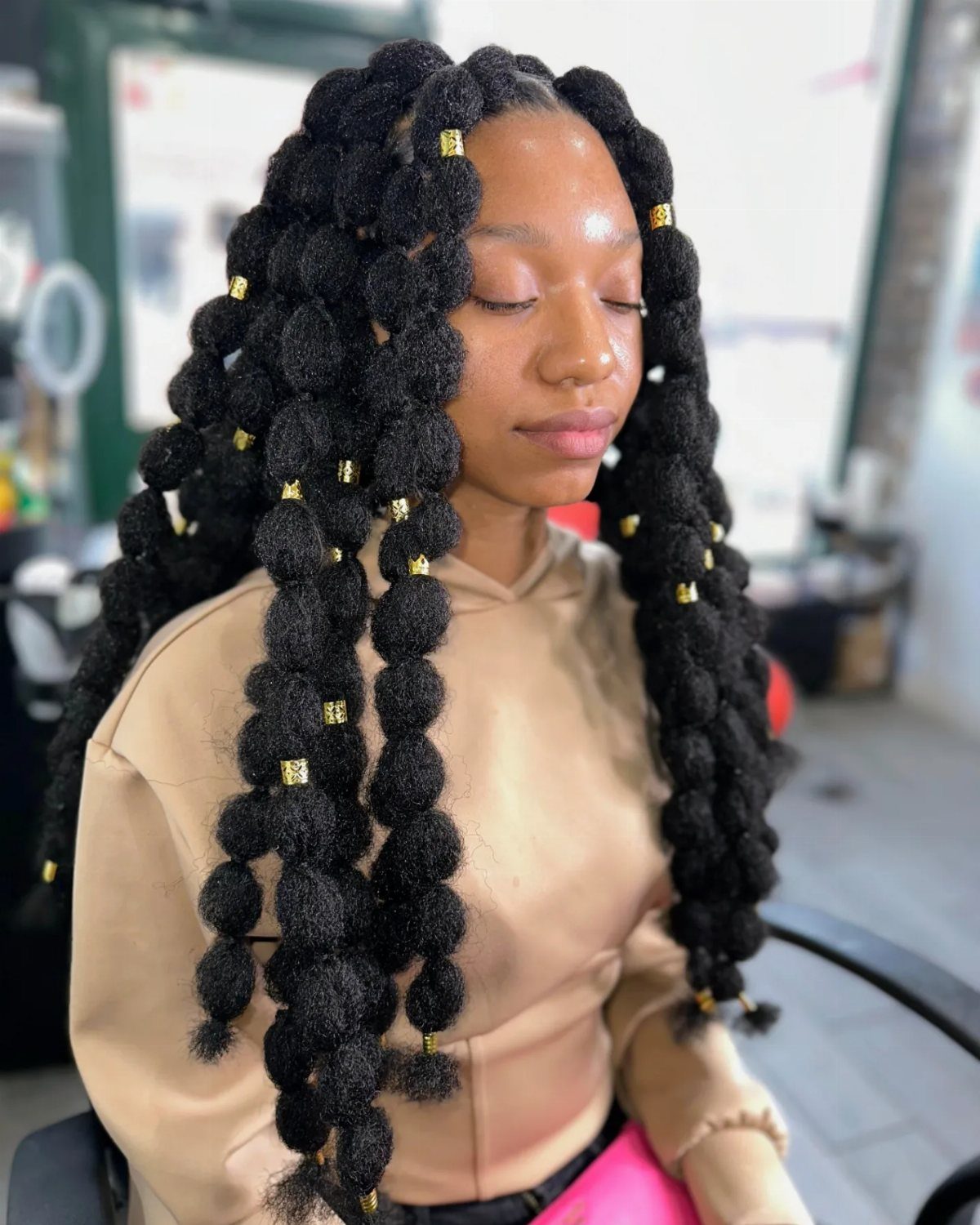
Bubble braids turn a plain ponytail into a row of puffy sections by tying elastics down the length and gently pulling each segment outward.
Gold cuffs slid over the elastics hide the hair ties and add a little shine, so the braid looks finished without any extra styling.
Pull slowly and evenly, or the bubbles come out lopsided. If your hair is already full, the puff comes easily, so I would use cuffs or clear bands and let the shape carry the style.
8. Wet Look
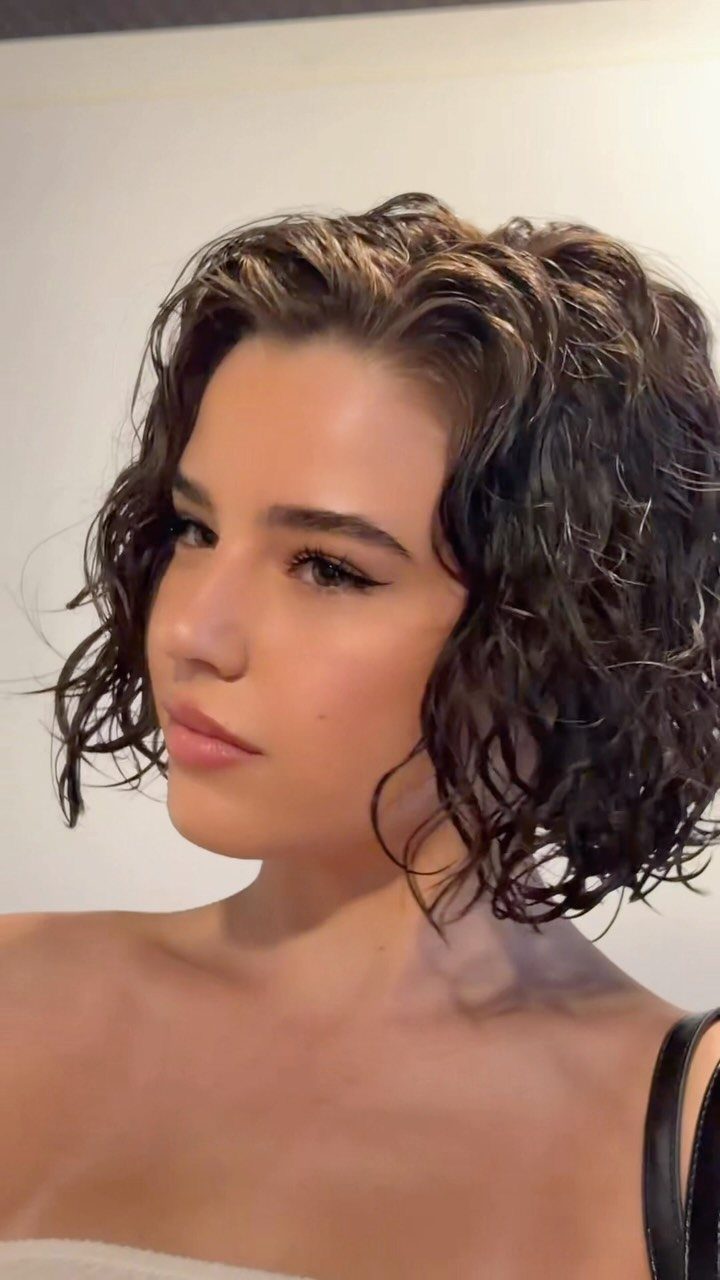
Glossy, defined curls are the whole appeal of a wet look, and short hair like this shows it best. Work product through damp hair and shape each curl with your fingers so the texture stays clear.
A wet finish keeps frizz down, which makes it useful for poofy hair that tends to expand.
I prefer it on short cuts, where the shine reads as deliberate. Skip the brush and let the curls set on their own.
9. Bantu Buns
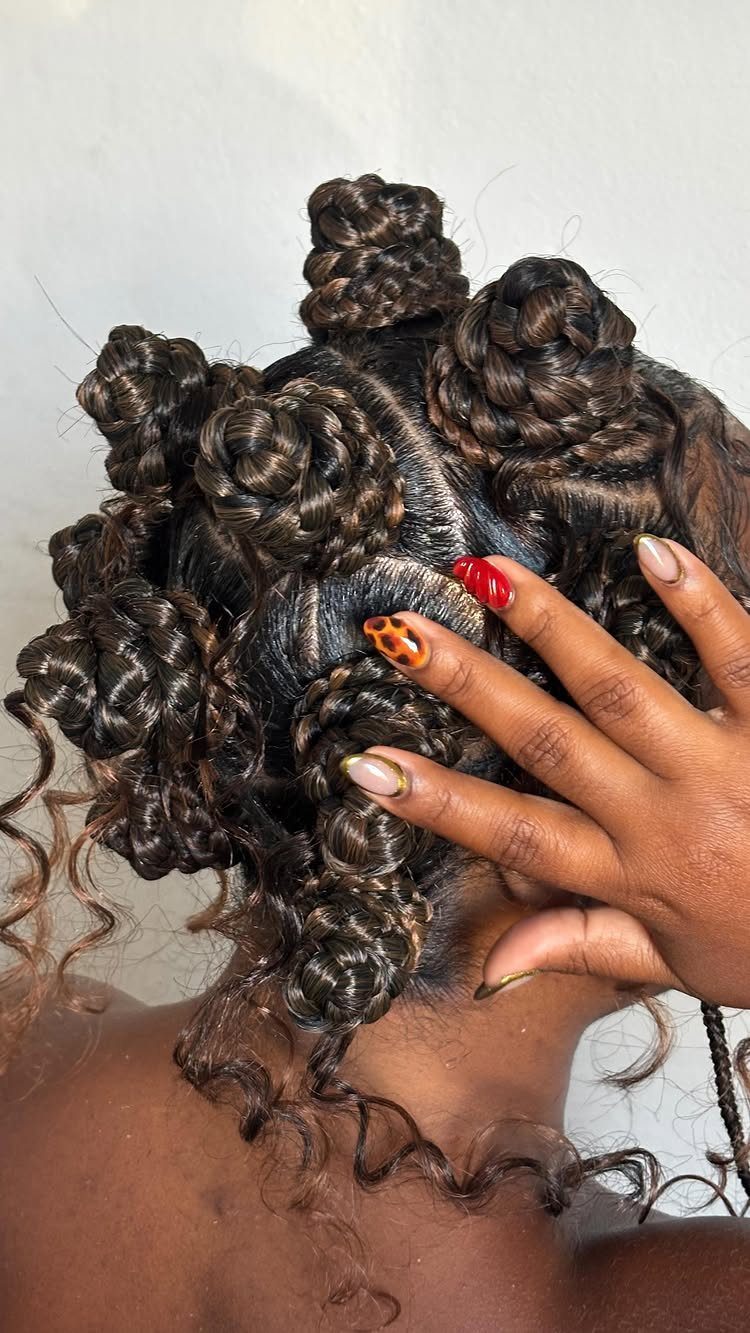
Small, coiled buns lined across the head keep every strand off the face, and that is the reason I like Bantu buns for busy days.
Section the hair into even parts first, since neat parting is what makes the finished rows look tidy.
Twist each section, then wrap it around itself into a mini bun and pin it flat.
A small amount of edge control or smoothing gel, brushed along the hairline with a soft toothbrush, gives Bantu knots and buns that glossy, laid-down finish.
10. Messy Top Knot
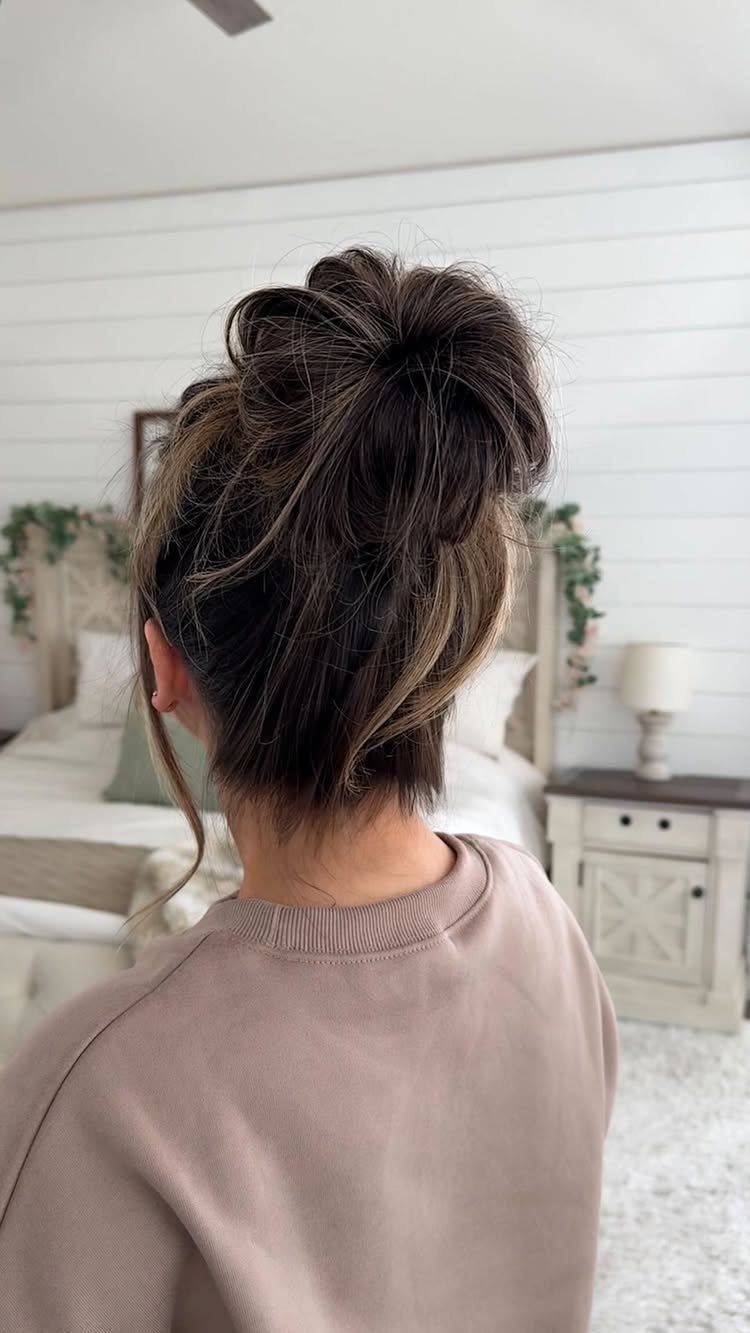
Casual is the point of a messy top knot, and it takes about a minute. Gather the hair high, twist it around its base, and secure it with an elastic, then tug a few pieces loose.
Because the hair is lifted off the neck, it suits warm days and cozy sweatshirt afternoons alike. Poofy hair makes a fuller knot, so I would not fight the shape; looser is better here.
11. Textured Short Fluffy Bob
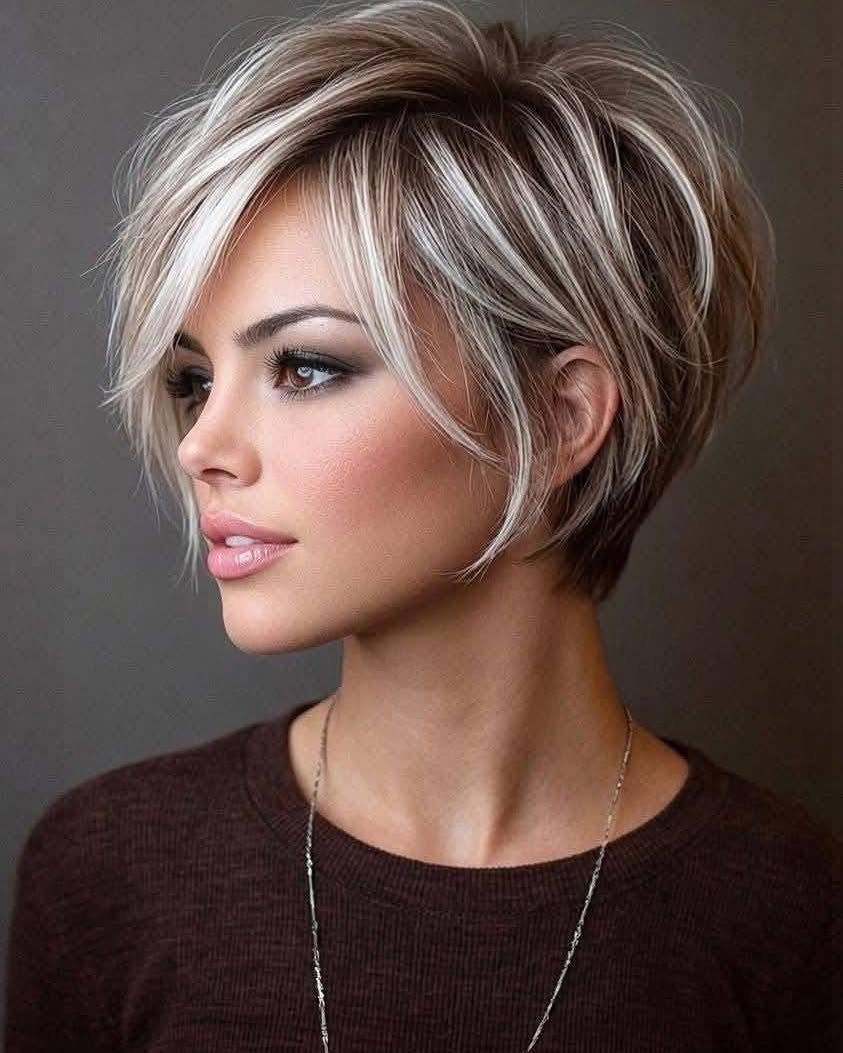
A short bob with texture and highlights gets its fluffy shape from layers, and the lighter pieces make the movement easy to see.
A textured cut with layers that keep volume through the crown will hold the fluff better than a blunt line, so bring that detail to the salon.
Fingers and a light product work better than a brush for styling it. Highlights add dimension, though they mean color upkeep, so decide whether you will keep that up.
12. Voluminous Shag
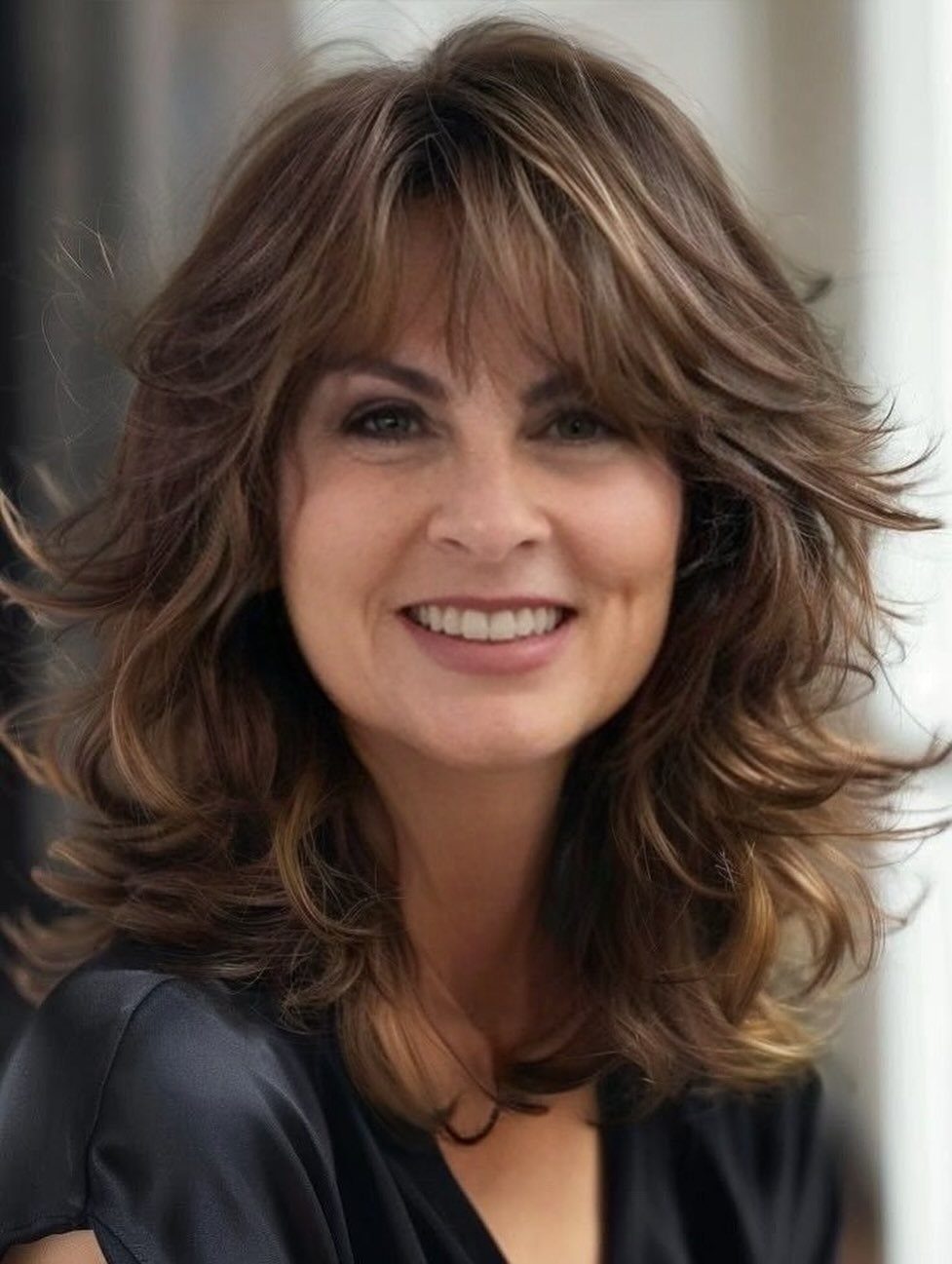
Choppy layers and bangs make a shag one of the fullest cuts you can ask for, and it looks best on hair with some natural body. Request layers throughout, with bangs that blend into the sides.
Tousle it with your fingers while it dries instead of smoothing it flat. Expect regular trims to keep the layers from growing out shapeless.
13. Feathered Layers
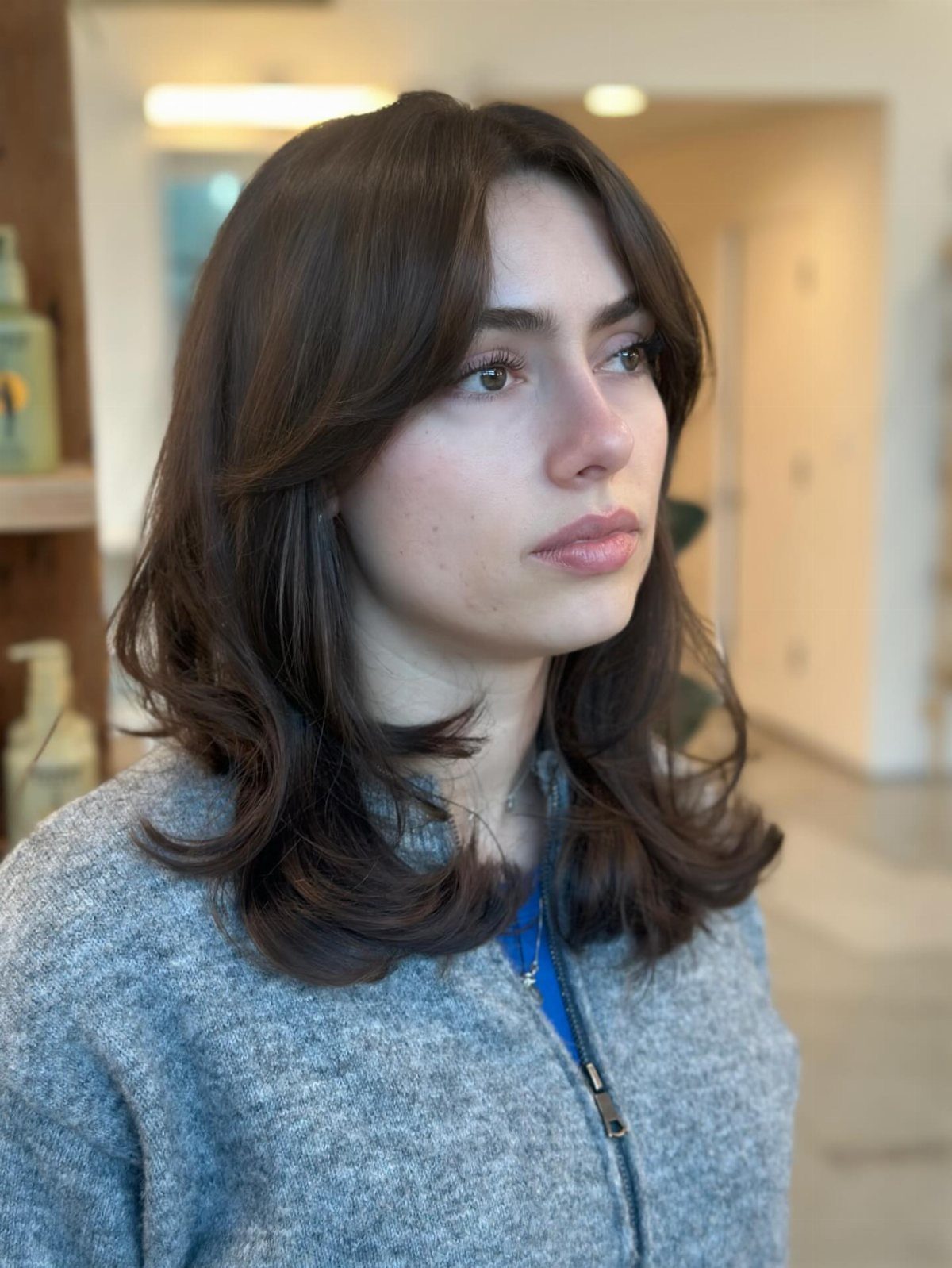
Feathered layers are cut so the ends curve and flick away from the face, which is where the movement comes from. Book a cut with long, blended layers that start near the cheekbones and keep their length through the back.
Roll a round brush through each section while the blow-dryer runs, and the ends will curve and flick away from your face in a soft arc.
Turn the ends outward and set them with a cool blast. Fine hair gains the most from this cut, though the shape needs regular trims to stay clean.
14. Full Natural Curls Down
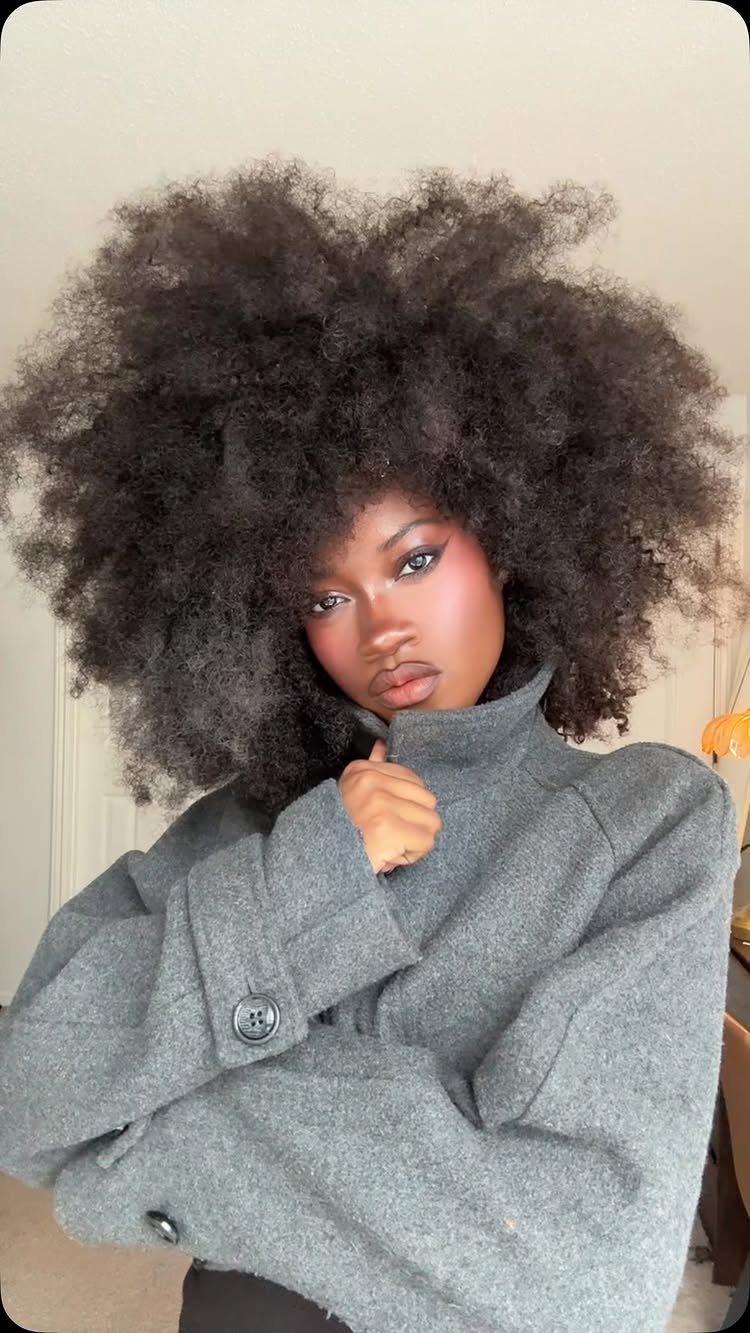
Natural curls worn down need very little from you, and that is why I like them. The shape is the style, so fluffy volume through the crown and sides is the goal, not something to correct.
Detangle while the hair is damp, then shape curls with your fingers instead of a brush, which breaks up the pattern and brings frizz.
Hands off until the curls are completely dry, since touching them while damp breaks up the clumps and brings on frizz.
A coat with a high collar, in grey or any muted shade, sits comfortably against a full head of curls without crushing them.
15. High Twisted Bun
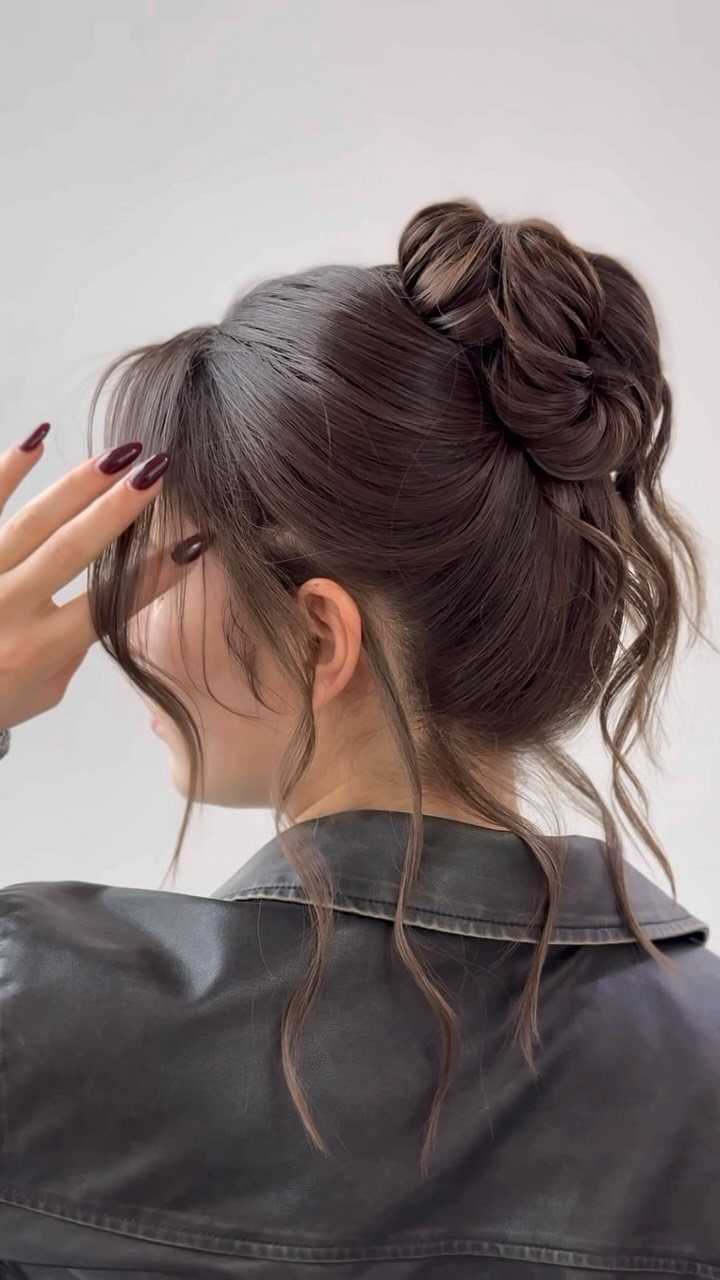
Loose tendrils are what keep a high twisted bun from looking severe. Gather the hair at the crown, twist it into a rope, and wind it around its base into a full bun, then pin it in place.
Pull a few curls free at the temples and nape afterward.
Curly or wavy texture makes the bun fuller with no extra work. Pin more than you think you need, since a high bun carries real weight.
16. Long Voluminous Waves
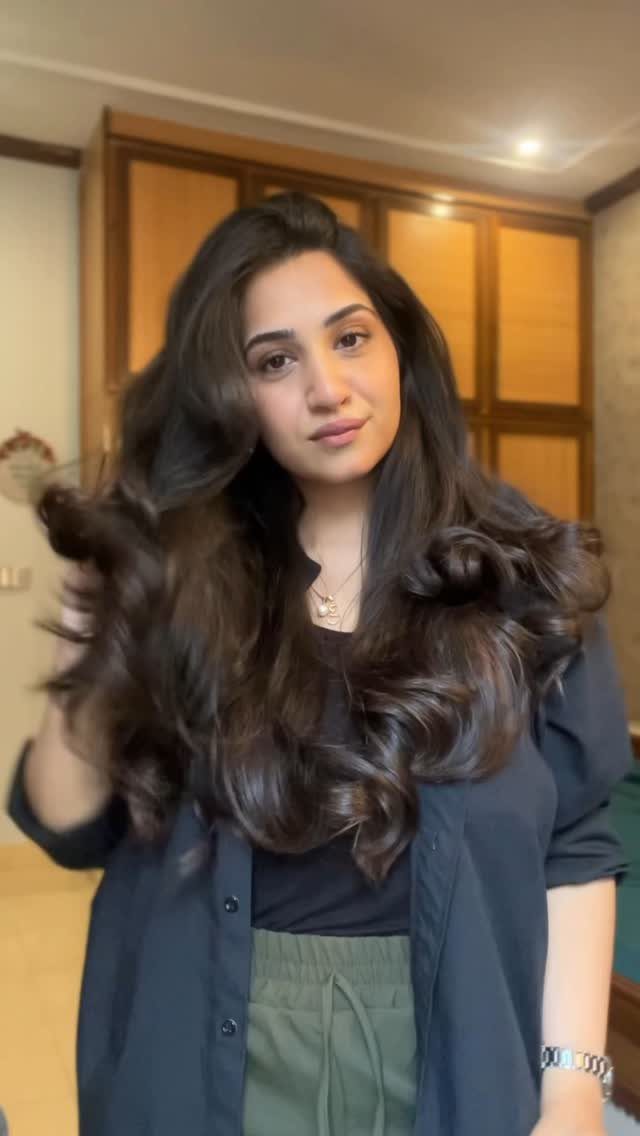
Long waves look fullest when the volume starts at the roots and the bounce stays through the ends. Thick hair like this holds a wave well, so a loose curling iron or soft heated rollers will do the job.
Brush the waves out gently once they cool, and finish with a light spray so they keep their lift. I would skip heavy serums, which weigh the length down and flatten the body.
17. Claw Clip Bun
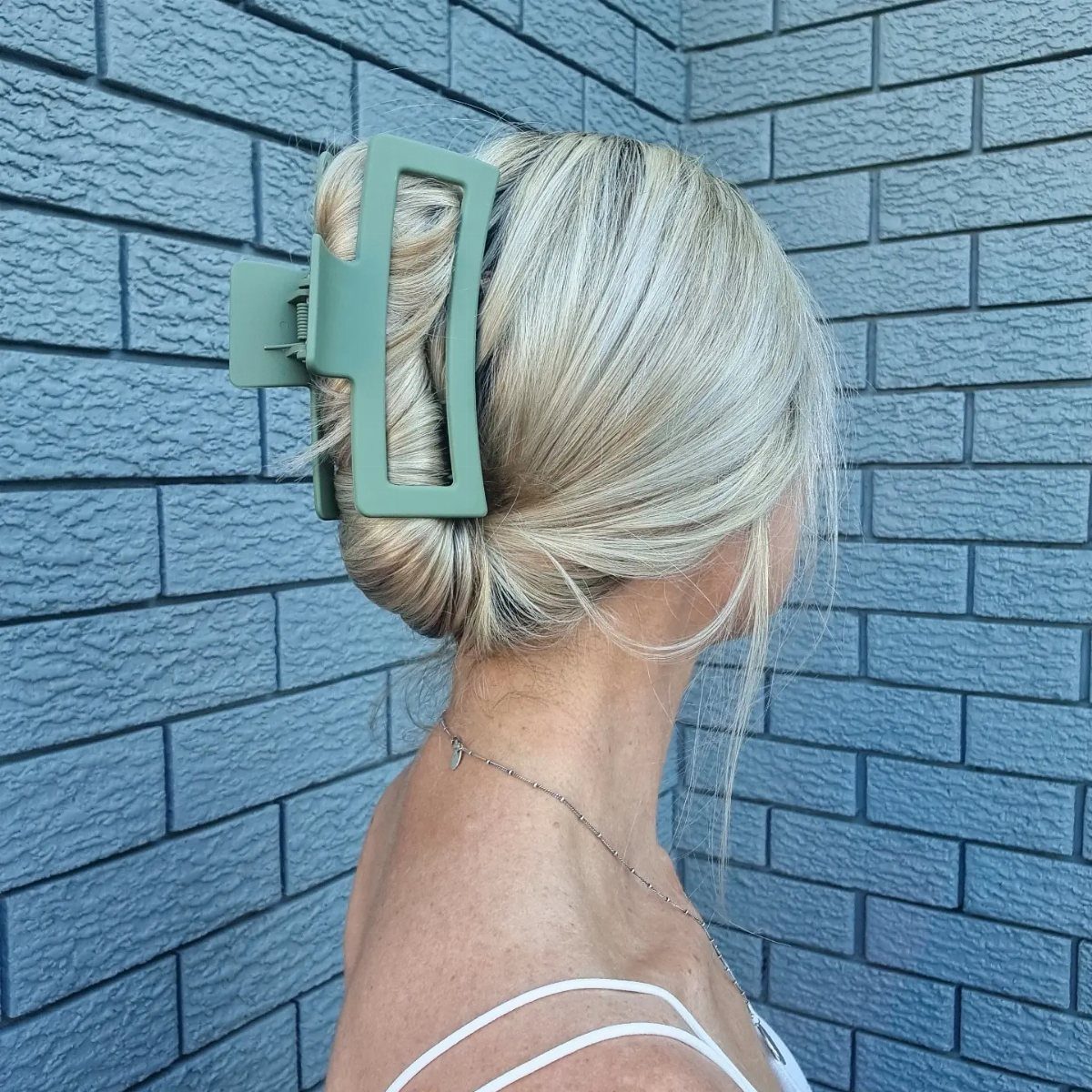
An oversized claw clip is the fastest way to a secure bun. Twist the hair up, fold the ends under, and clamp the clip across the twist so the teeth grip both sides.
A big clip holds thick or poofy hair better than a small one, so size up. Leave a few strands loose at the nape for a relaxed look.
18. Curly Poofy Updo
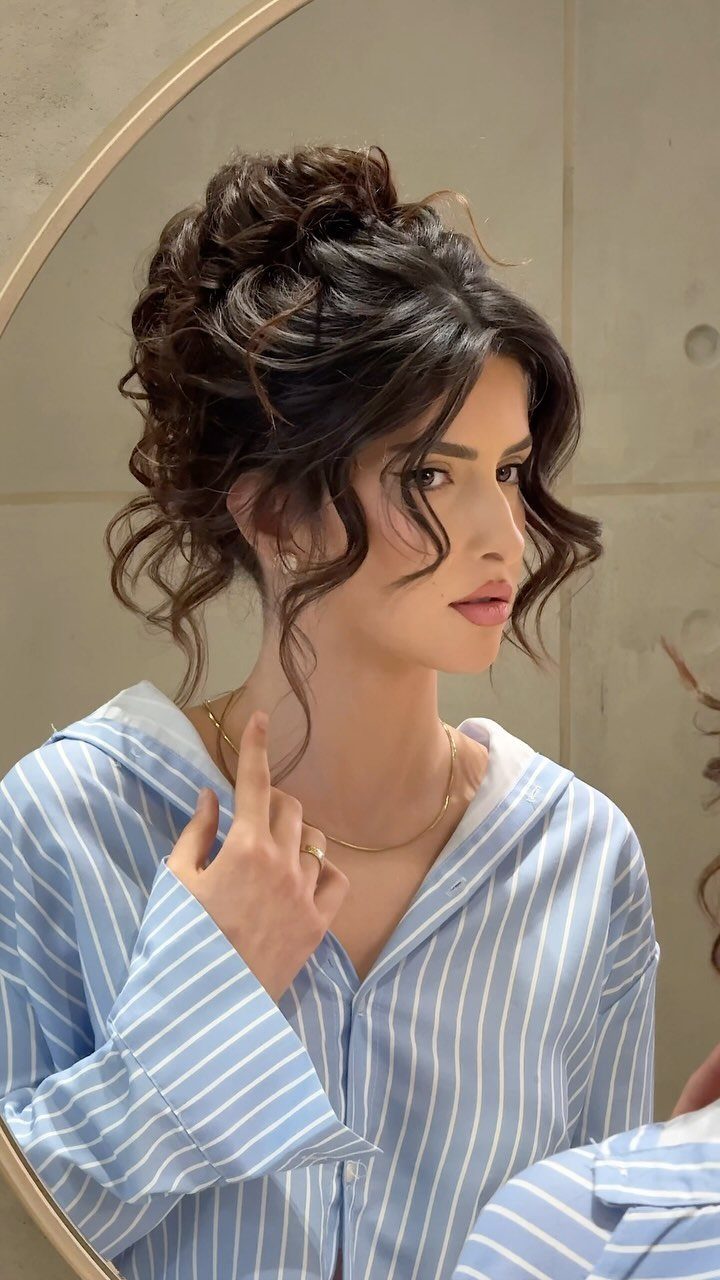
Height is what defines a curly poofy updo, and curls give it for free. Gather the hair high on the crown, secure it with an elastic, and fluff the curls outward with your fingers or a pick.
Tug a few soft tendrils loose at the front so the updo looks softer around your cheeks and forehead.
Stay light-handed with it, because over-smoothing flattens the shape you came for. It suits mornings at home and nights out equally well.
19. Voluminous Braided Extension Curls
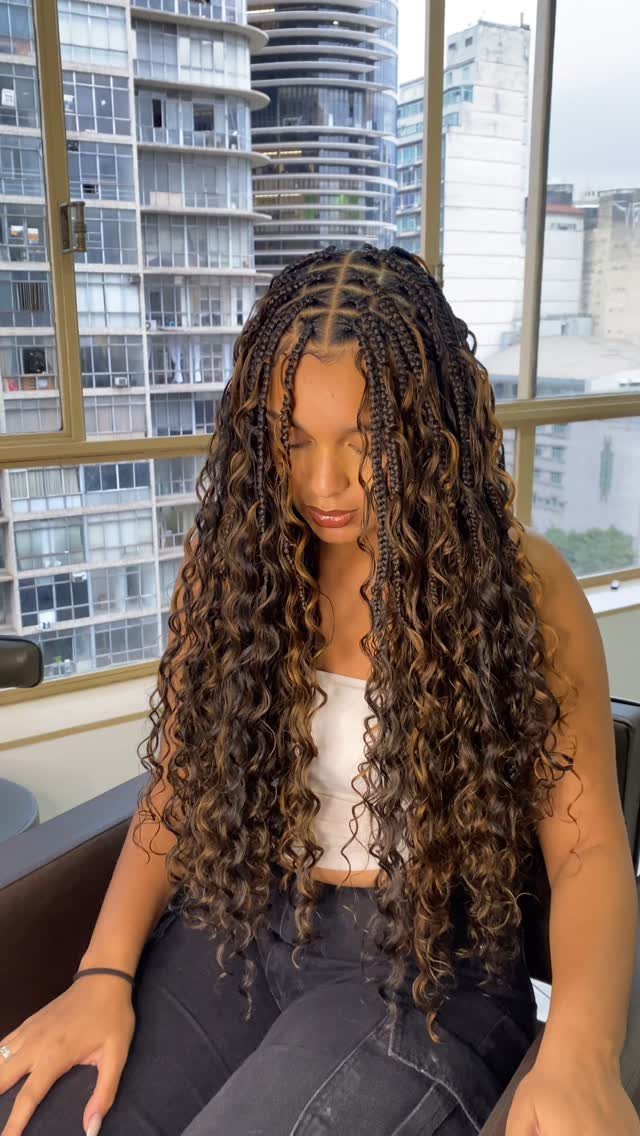
Braided roots give extensions an anchor, so the curls can stand out big without tugging on the natural strands underneath.
Ask a stylist to braid the roots flat first, then weave in long, curly pieces so the volume starts close to the scalp.
Mixing brown and blonde strands adds depth to the curls, though it means matching shades carefully, so bring a photo to the appointment. Fluff the curls with your fingers, never a brush, so the pattern stays full.
Long extensions add weight, so I would keep the look to days when you want the hair to be the whole outfit.
Styling Techniques
Rough dry first, then flip. For the blowout, I dry with my head upright until the hair is roughly 70% dry, then flip forward and finish upside down while working a boar bristle brush through it.
Flipping lifts the hair at the roots, which is where volume starts. It works on long and short hair alike, so length is no excuse to skip it.
A diffuser is the other tool worth owning if your hair is curly or wavy.
It spreads the airflow so the curls dry in place instead of being blown apart, which adds body and keeps frizz down. Keep your hands out of it while it dries.
Differences Between Hair Types
Fluffy and poofy are not the same thing, and the difference changes how you style. Poofy hair is the frizzy, shapeless version, with no clear outline.
Fluffy is built with products and technique. Nobody plans poof; it shows up on its own, depending on your hair type, your texture and how humid the air is that day.
So if your hair puffs up on damp days, you are not doing something wrong. Aim to give that shape a clear outline: smooth the surface, define where the volume sits, and stop it from spreading out in every direction.
Product Recommendations
Volume starts in the shower. A volumizing shampoo and conditioner set the base, and the L’Oréal Paris Elvive Hyaluron + Plump line (shampoo, conditioner and Moisture Plump Serum) is built that way.
For styling, stay light. Look for a thickening spray with rice proteins, which coats each strand and adds structure without making hair feel heavy.
Heavy products are the usual reason fluffy hair goes flat by noon. Hydrate, but choose formulas that leave the hair able to move.
Frequently Asked Questions
What is the best haircut for poofy hair?
Layered cuts and shags handle poofy hair best. Layers through the crown and sides remove bulk and give the volume a shape, so it looks designed instead of accidental.
A shag works best on hair with some natural body, and either cut needs regular trims so the layers don’t grow out shapeless.
What is the puffy hair style called?
Puffy hair is usually called poofy or frizzy hair, meaning hair that expands without a clear outline.
Fluffy is the deliberate version, made with a volumizing product and a diffuser or blow-dryer, whereas poof simply appears when your texture and the day’s humidity decide it should. Puffing on damp days doesn’t mean you’re doing anything wrong.
What are the hottest hair styles for 2026?
I don’t tie poofy styles to a year, but the ones I’d pick for body and shape are the voluminous shag, feathered layers, long voluminous waves and full natural curls worn down.
All four get their fullness from the cut or the natural texture, so they hold up season after season. Choose by your hair type and how much upkeep you’ll actually keep up.






