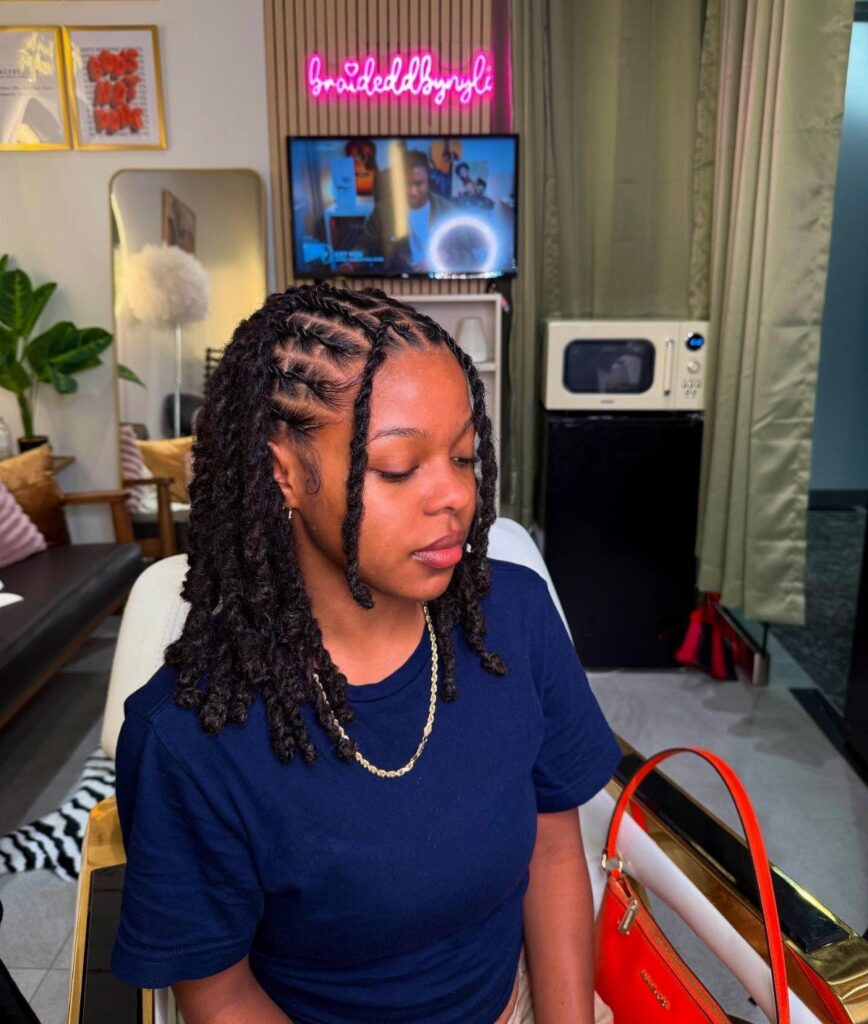
Styles here start with micro twists, which give the most defined texture and take the longest to install, and end with chunky twists, which need the fewest sections and the least time.
1. Micro Two Strand Twists
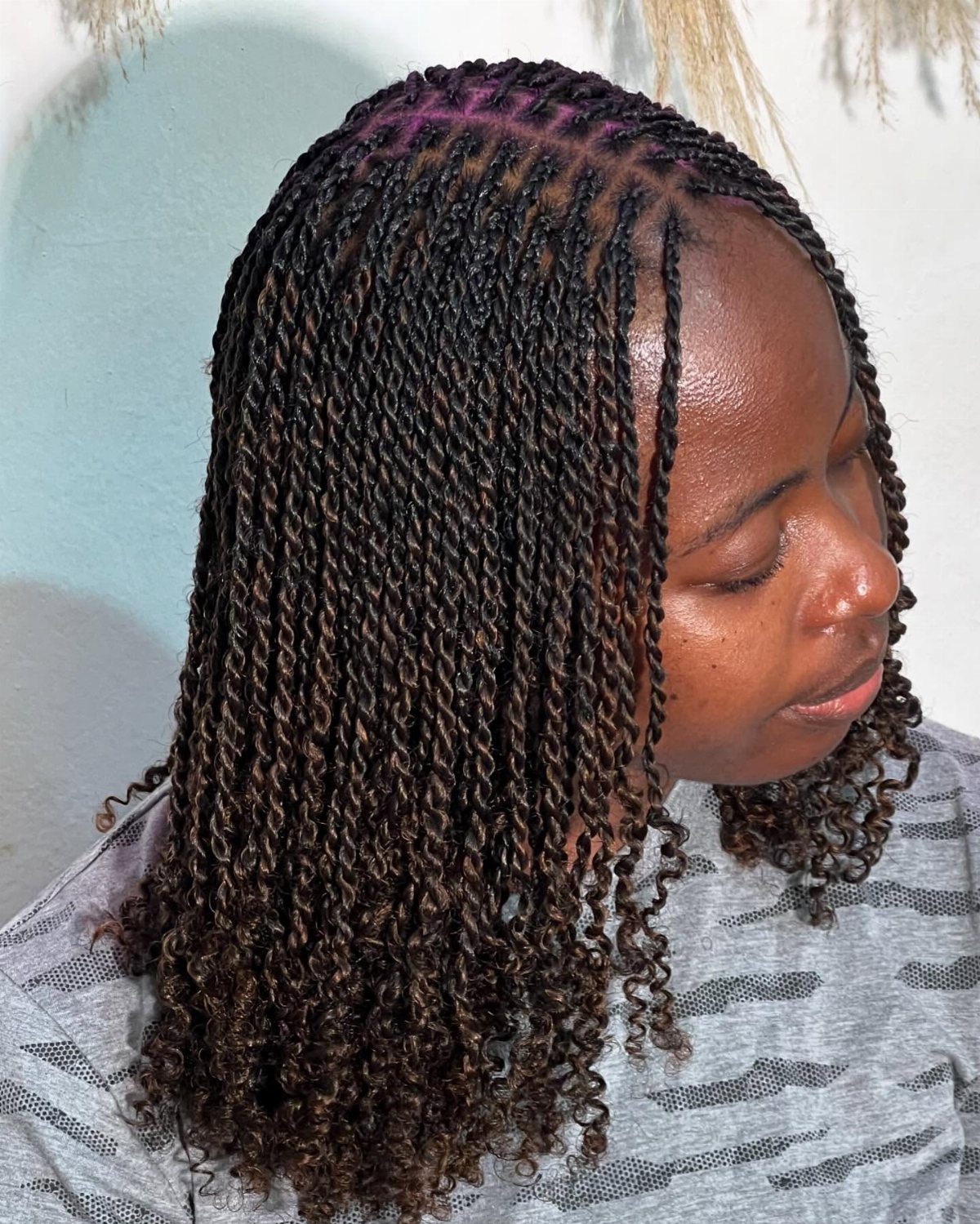
Micro twists give the most defined texture of any two strand style, because each strand is small enough to read as its own tiny coil.
A purple highlight at the crown stands out against the fine pattern of micro twists, so color placed there reads clearly.
Time is the cost: more twists means a longer session, so I would plan for it and work in sections. For a low-effort color touch, a single patch at the crown keeps the rest of the head simple.
2. Pinned-Back Two Strand Twists with Gold Cuffs
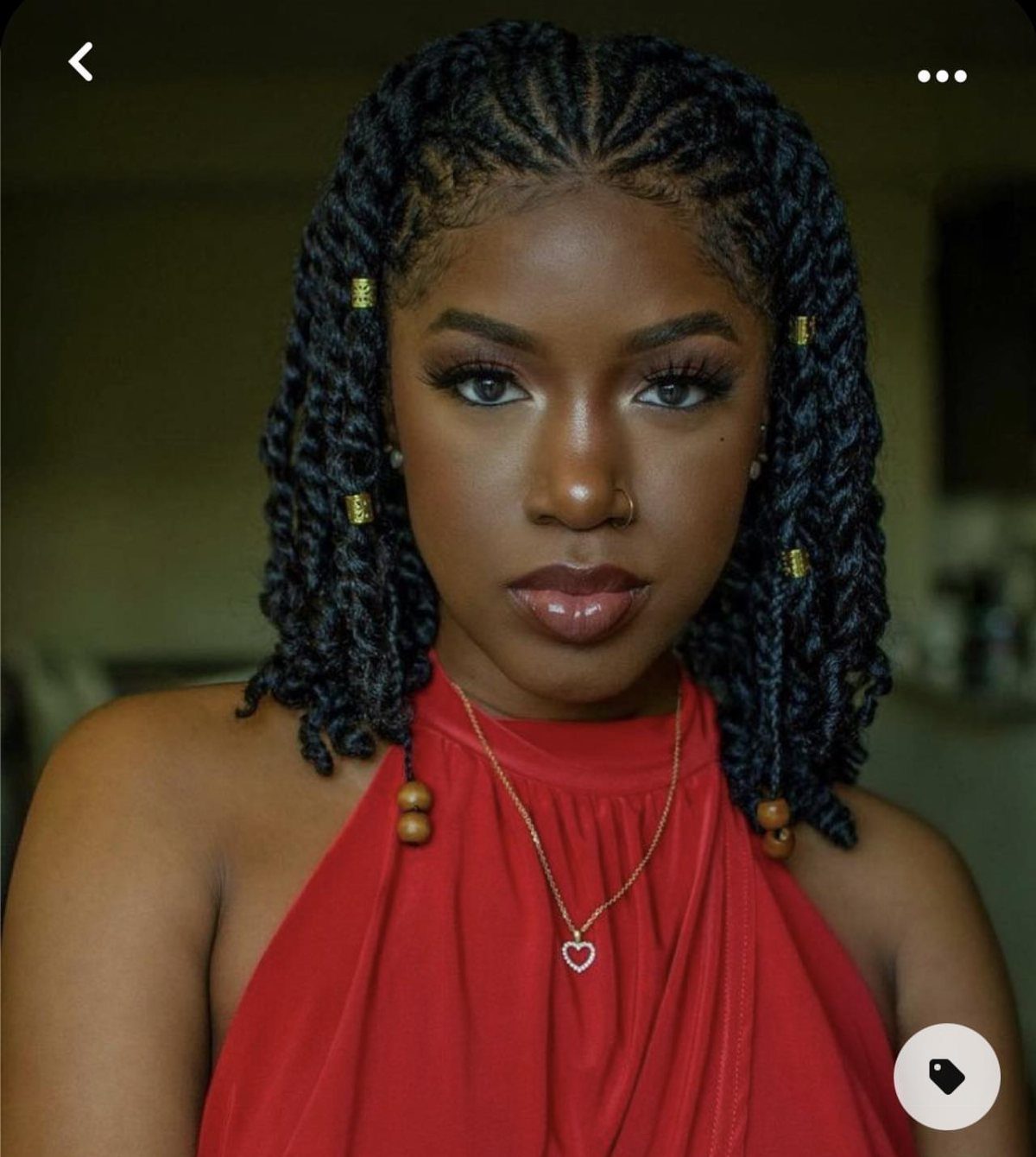
Gold cuffs do the styling for you. Pinning the twists back clears the face, then a few cuffs along the lengths add shine without any extra effort.
I would keep the cuffs to a handful so the twists stay the focus.
Against black hair, gold reads clearly, and a red top like this one pairs well with it. Cuffs are cheap to buy and easy to slide off, so you can wear the same twists plain the next day.
3. Two Strand Twists with Beads
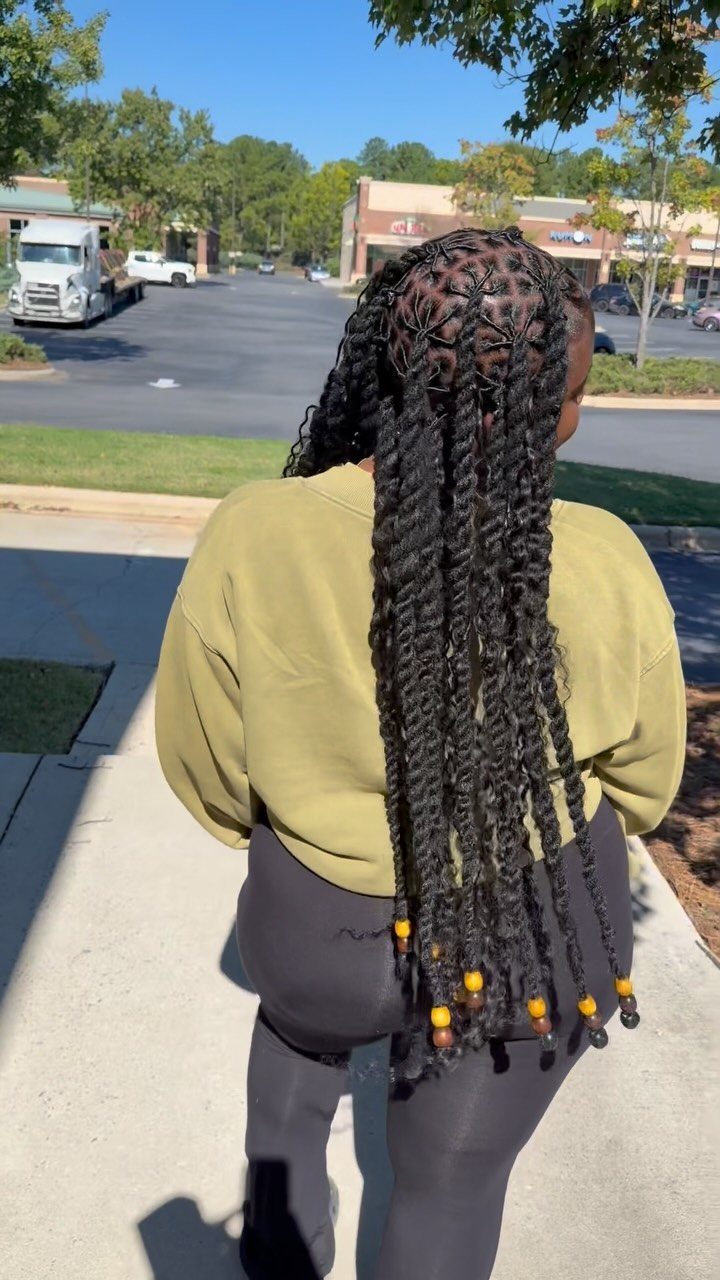
Beads at the ends turn plain twists into a style with movement and a little sound. Wooden beads in yellow and brown, as visible here, keep the look earthy and soft against black hair.
Put them only on the tips of long twists, where they can be fastened and kept from sliding off.
Fewer, larger beads look cleaner than many small ones. Pair them with a casual outfit, like a sweatshirt and leggings, so the hair carries the detail.
4. Chunky Two Strand Twists
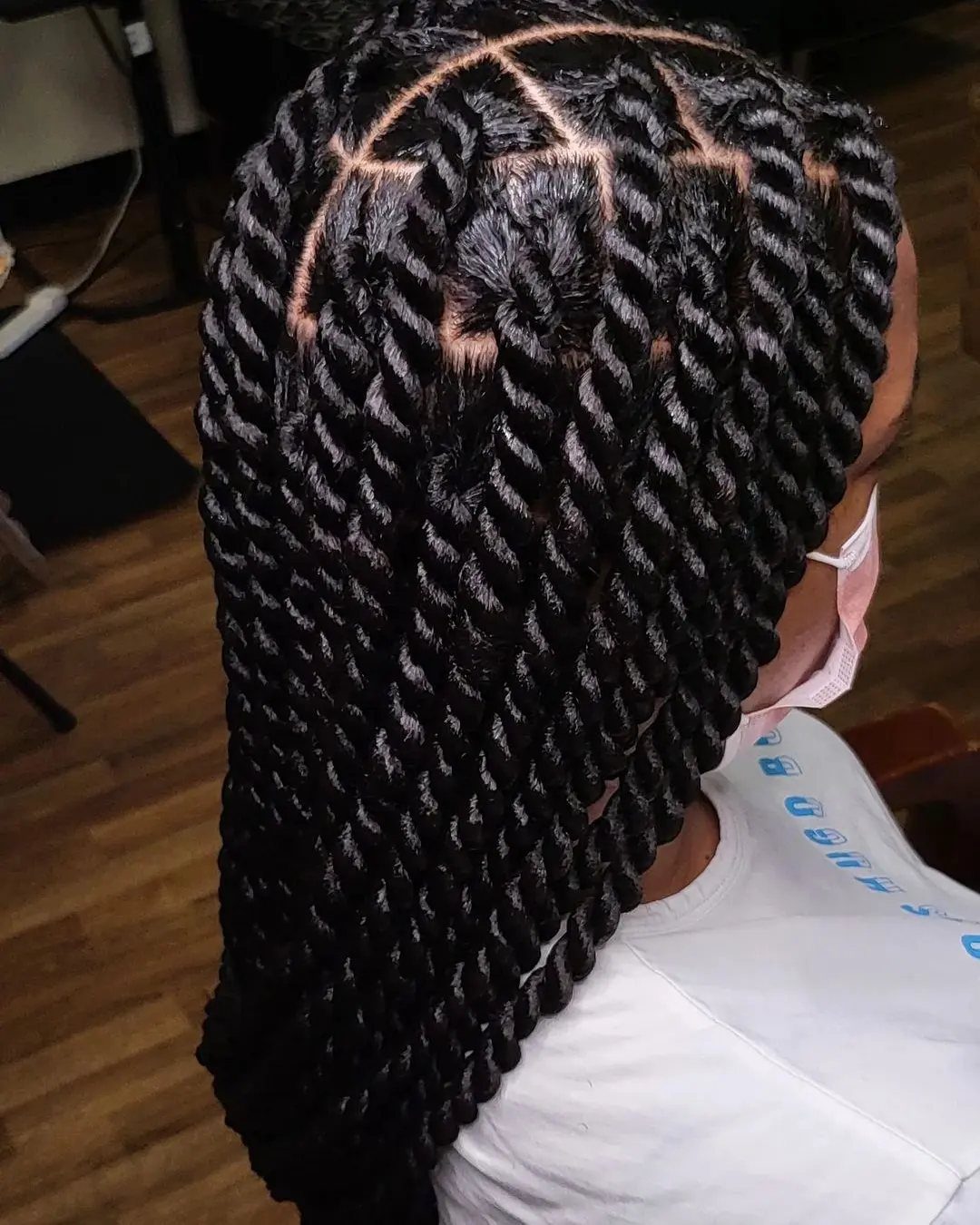
Thick twists make the loudest statement of the whole list, and they do it with the least work. Fewer, larger sections mean a shorter twisting session and fewer pieces to manage.
The scalp shows more between big parts, so I would plan the parting pattern before starting.
Clean, even partings matter more here than with smaller twists. If you want a bold style you can do at home without a whole afternoon, this is the one I would pick.
5. Two Strand Twists with a Headband
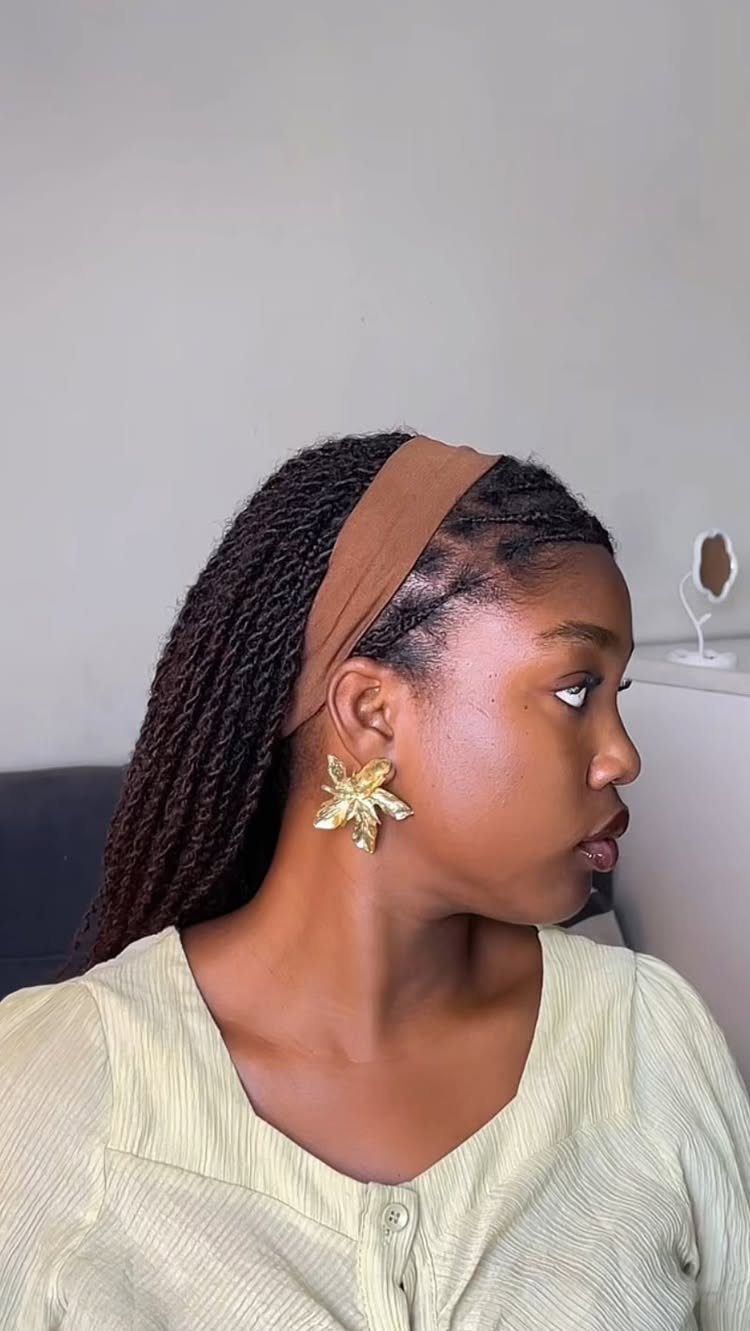
A brown headband gives long twists a finished look with almost no effort. Slide it on, then settle the twists behind it so the band sits cleanly along the hairline.
Choose a band in a tone that picks up your hair or your jewelry; brown sits well next to gold earrings, as visible here.
It is the cheapest way to change twists you already have, and a different band gives a different mood by the next day.
6. Half-Up Half-Down Chunky Twists
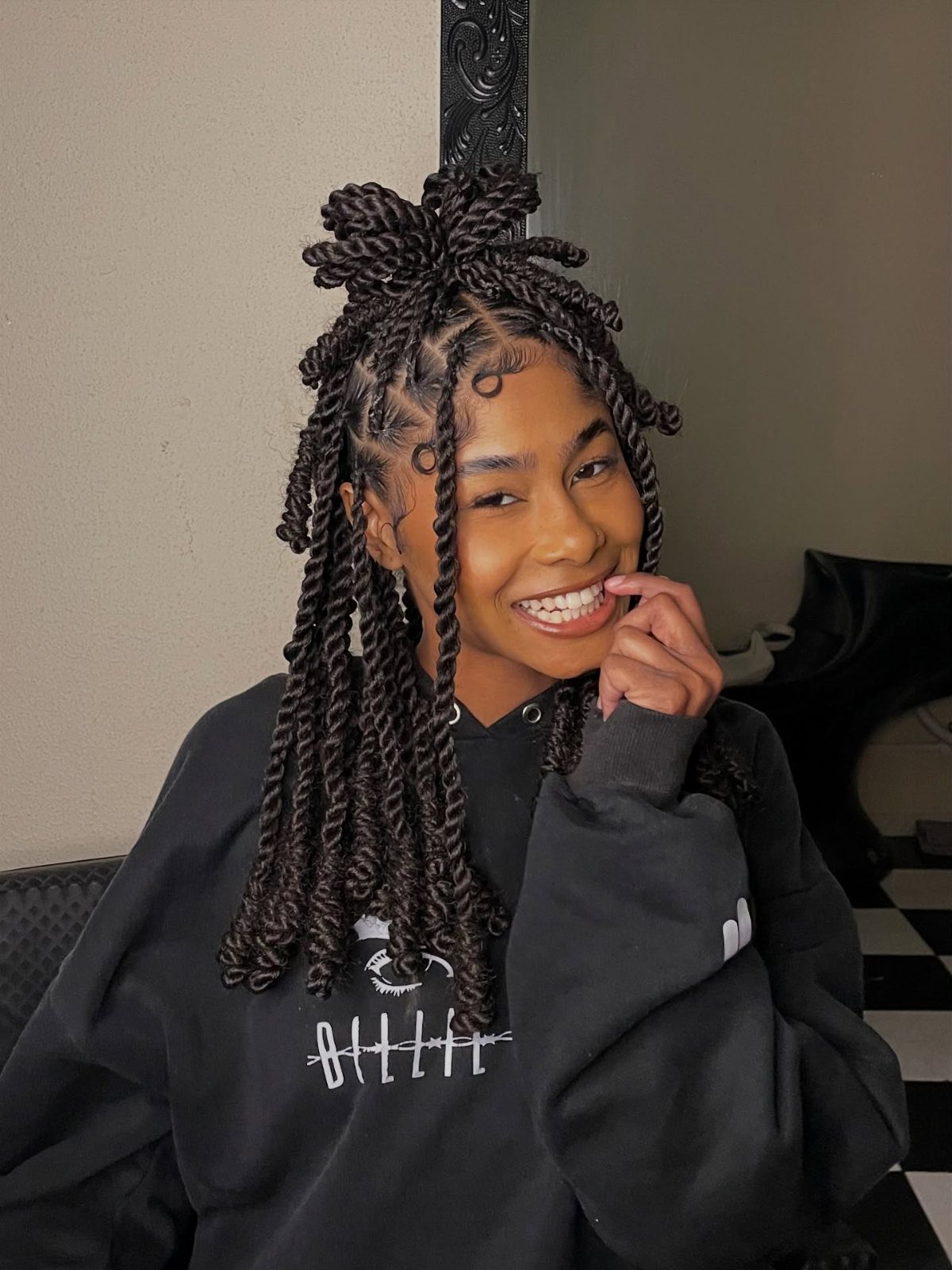
Half-up half-down suits chunky twists because the thick sections hold their shape when gathered. Pull the top twists back and secure them, then let the rest hang free.
I like this for anyone who wants length down the back but needs hair off the face.
A sturdy clip or band works best on heavy twists. Thick sections can feel weighty, so keep the gathered portion small if your head tires easily.
7. Two Strand Twisted Bob
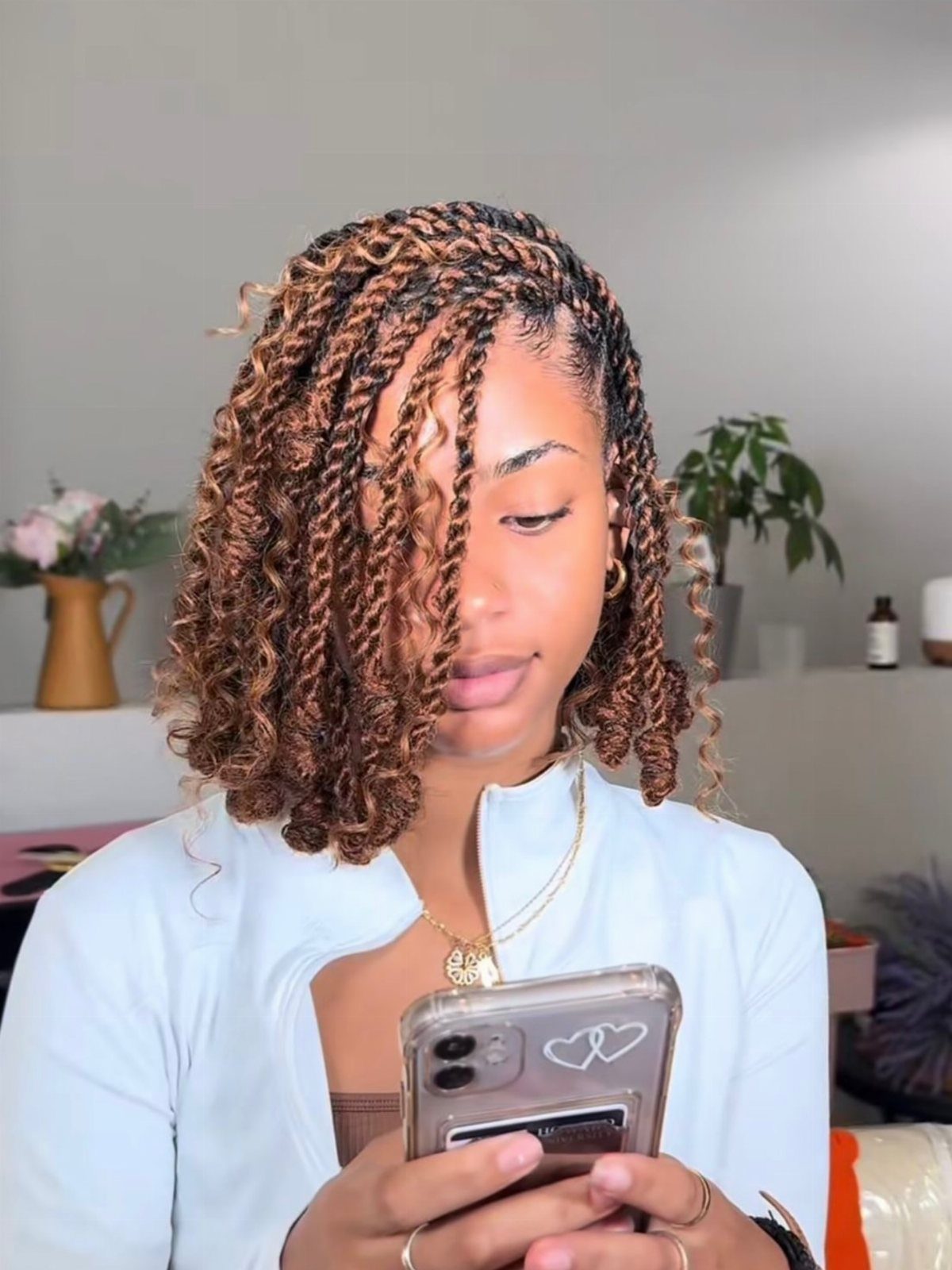
A twisted bob keeps the length short and the texture defined, so there is less hair to manage than with long twists. The brown and blonde mix here gives the cut some depth.
Short twists dry faster after washing, and a bob needs no pinning or styling to look finished.
I would pick this for anyone who wants a neat, ready-to-go shape. Keep the ends even so the bob line stays crisp.
8. Flat Twists and Two Strand Twists on a TWA
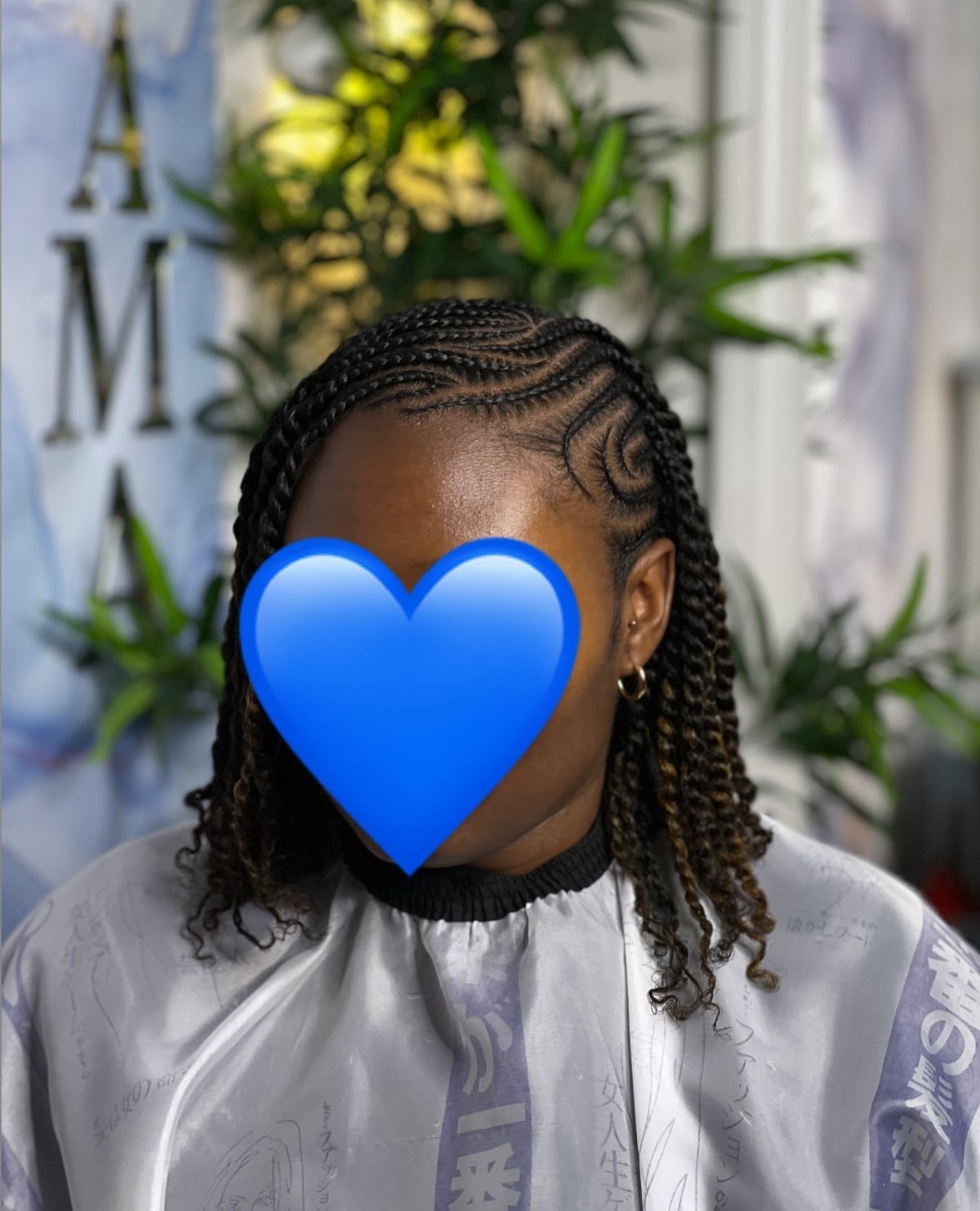
Flat twists across the top that flow into hanging two strand twists give a TWA two textures in one style. The flat section lies smooth against the scalp, while the loose twists add movement below.
I like it because the flat twists keep the front tidy and the hanging twists need little care.
Plan the direction of the flat twists first, since they set the shape of the whole head. A cape and a steady hand help if you do it at home.
9. Two Strand Twists with Extensions
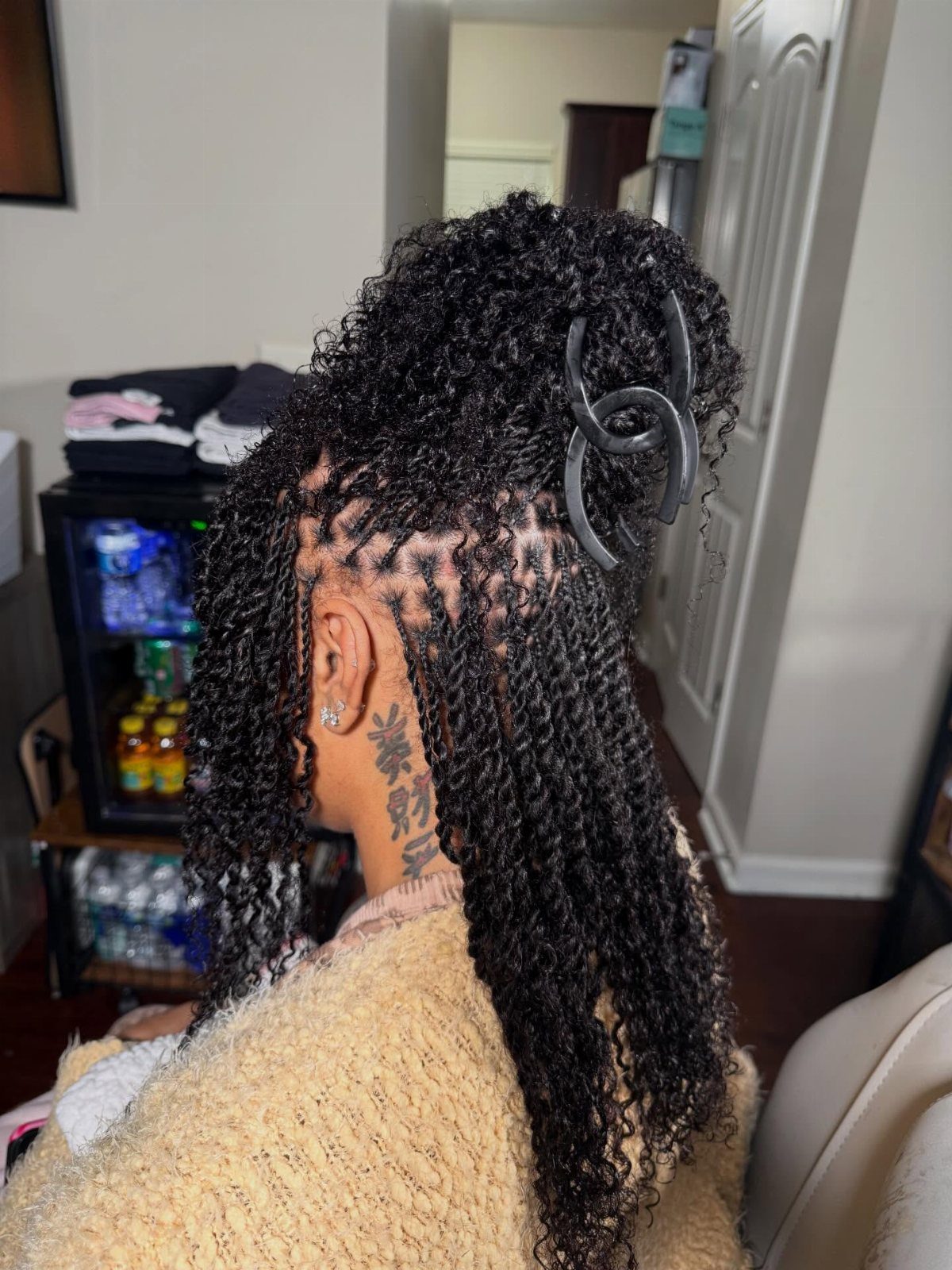
Extensions add the length that natural hair may not give, and twists hold the added hair in place.
Extensions add length and weight, so twists can be gathered into a claw clip in seconds, which makes the style practical on busy days.
Match the extension color to your own hair so the twists blend at the root. Heavy long twists pull on the scalp, so I would use a clip that grips well and change the position now and then.
10. Asymmetrical Two Strand Twists
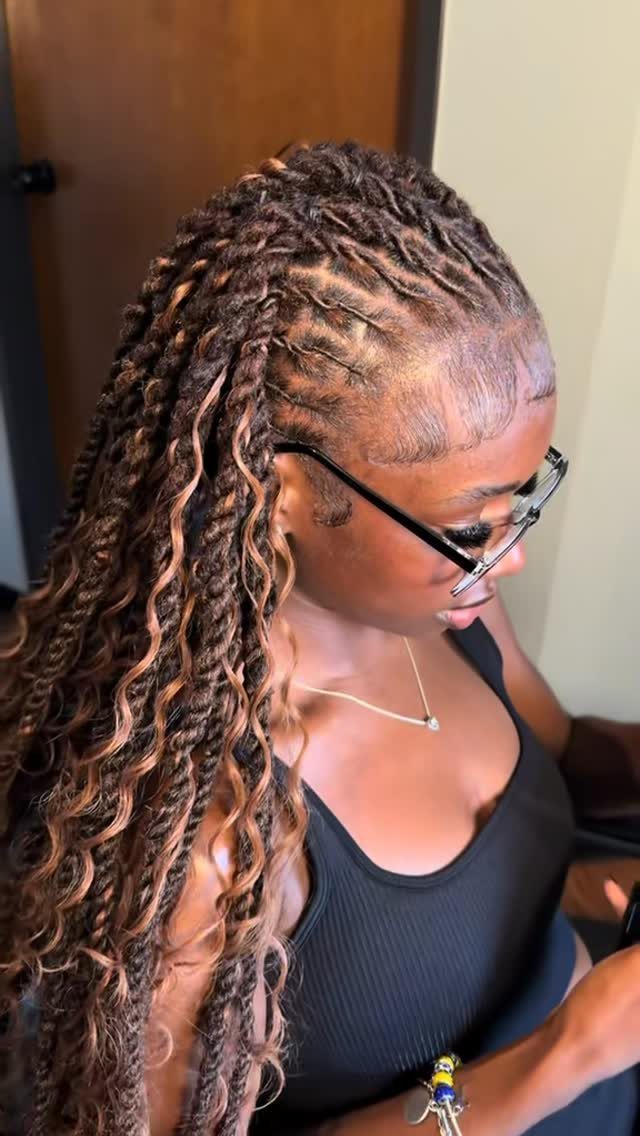
Moving the part or the weight of the twists to one side makes a simple style look planned. Here the long brown and blonde twists sweep unevenly, which frames glasses nicely.
Part the hair off center before you start twisting, and let one side fall longer or fuller. It costs nothing extra, only a little more care with the parting.
If you want a subtle version, keep the difference small. A bolder one needs a sharper side part.
11. Two Strand Twists with Color
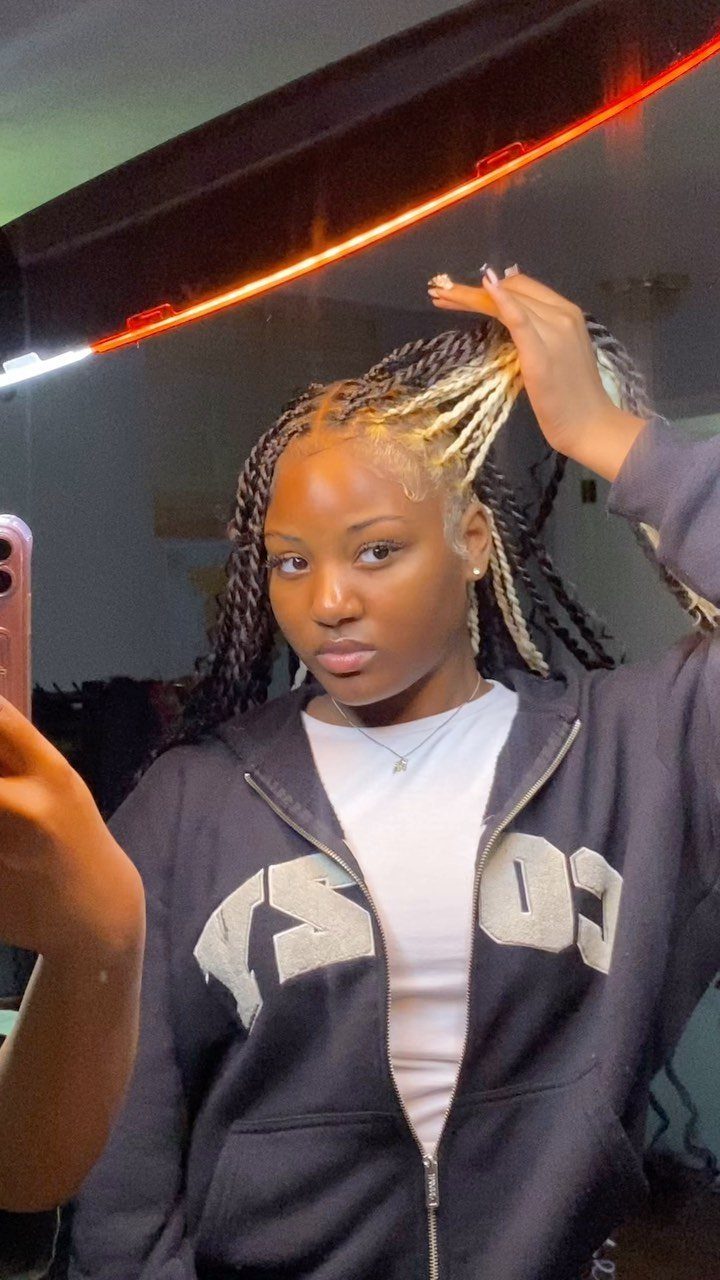
Blonde mixed into dark brown twists adds contrast without changing the pattern of the style. The light strands catch the eye and make each twist easier to see.
Color can come from dye or from blonde added hair, and the second is gentler on your own strands.
I would mix the shades evenly rather than placing blocks, which looks more natural. Expect a bolder look than plain dark twists, so pair it with simple clothes like a hoodie.
12. Cornrows Into Two Strand Twists
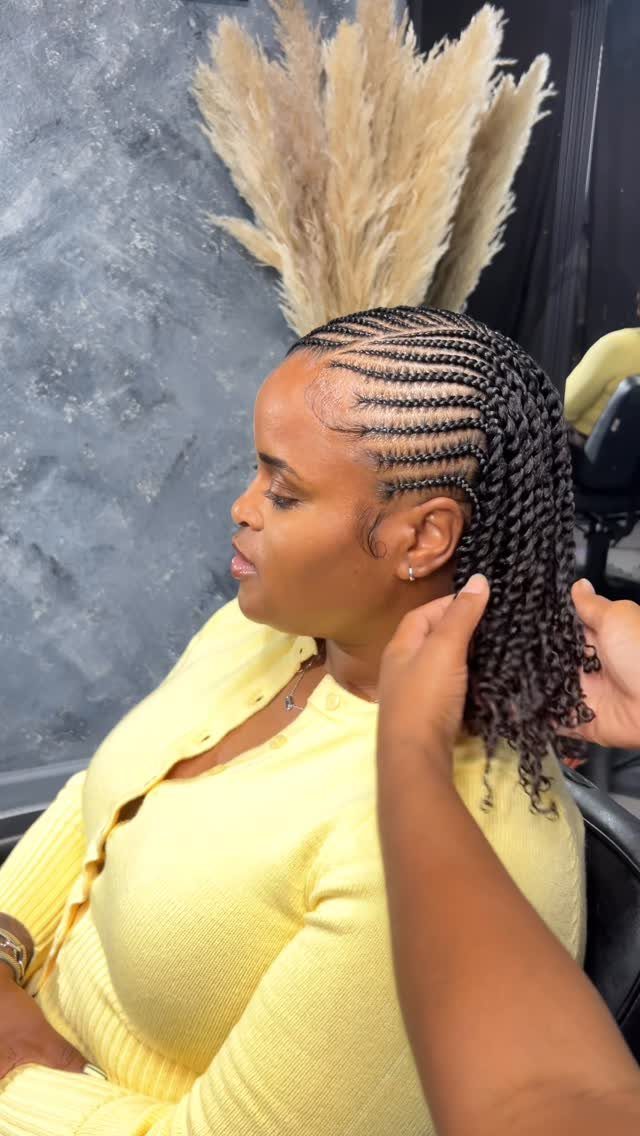
Cornrows along the front and sides, ending in loose 2 strand twists at the back, give a style that is neat up top and relaxed below. The braids keep the scalp pattern clean, and the twists add length that moves.
The cornrow section takes the most skill, so I would leave it to a stylist if you are new to braiding.
Once it is done, the twists are easy to maintain at home. A bright top, like this yellow cardigan, suits the clean lines.
13. Long Two Strand Twists
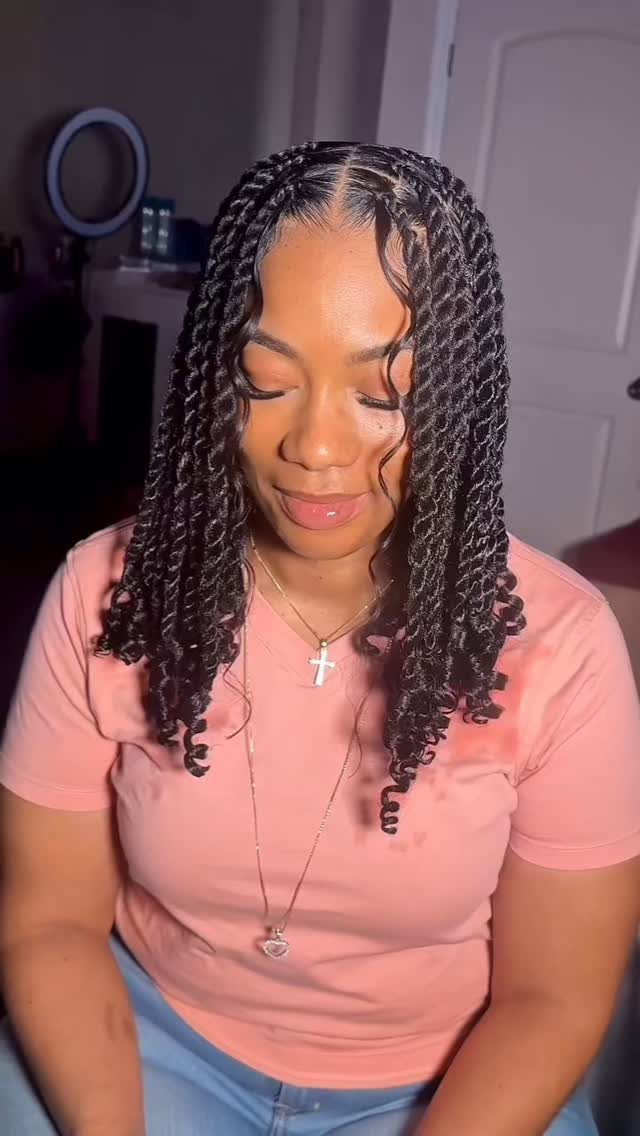
Long twists hanging free are the plainest version of this style, and plain is why they work. Black twists past the shoulders need no pinning, no accessories and no daily styling.
Long twists already carry the whole look, so a plain tee and 2 delicate necklaces are plenty.
Long twists carry more weight than short ones, so tie them loosely at night if they tug. If you want a change, a headband or a few cuffs can go on later.
14. Twisted Low Bun Updo
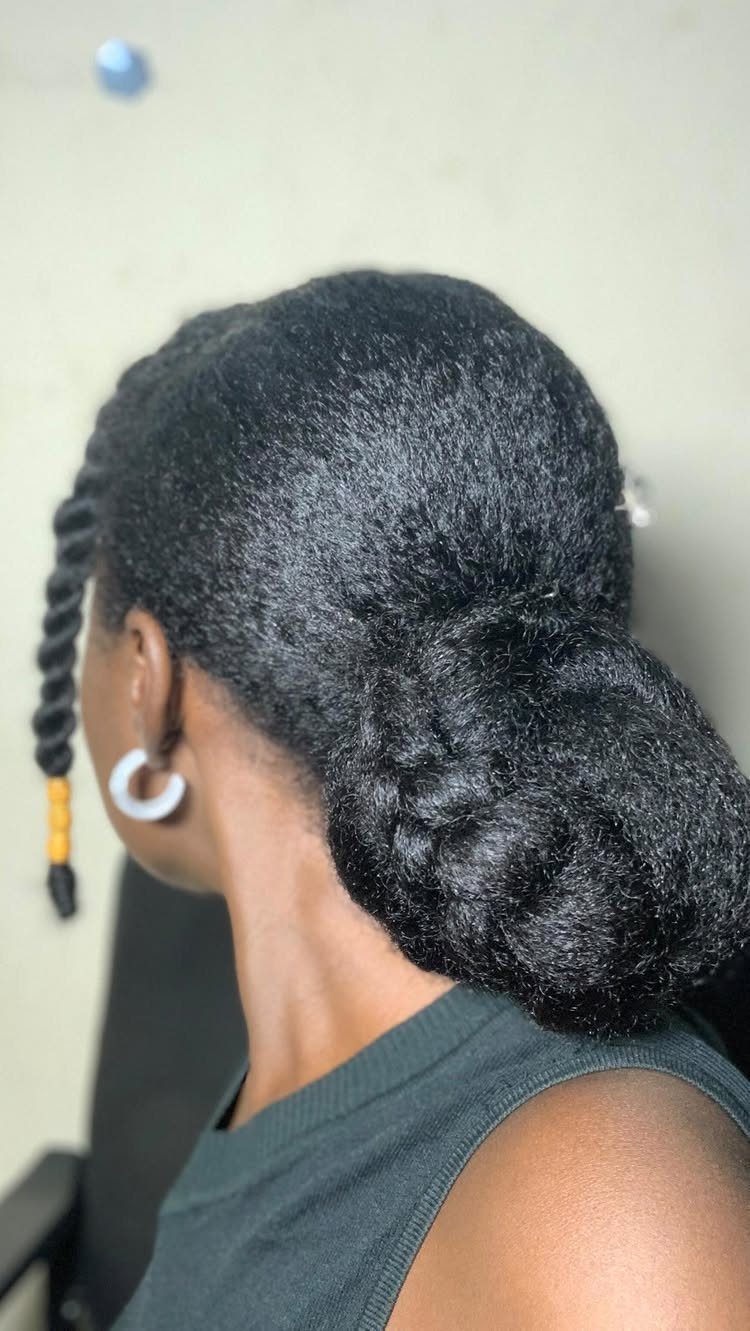
A low bun at the nape with one twist left out in front looks finished in under a minute once the twists exist.
Gather the twists at the back of the neck, wrap them into a bun, and secure it with pins or a band.
Pull the accent twist loose before you lock everything down, so you can judge its length against your face.
I like a single twist better than several; it reads as a choice. A sleeveless top shows off the neckline and the bun’s placement.
15. Shoulder-Length Two Strand Twists
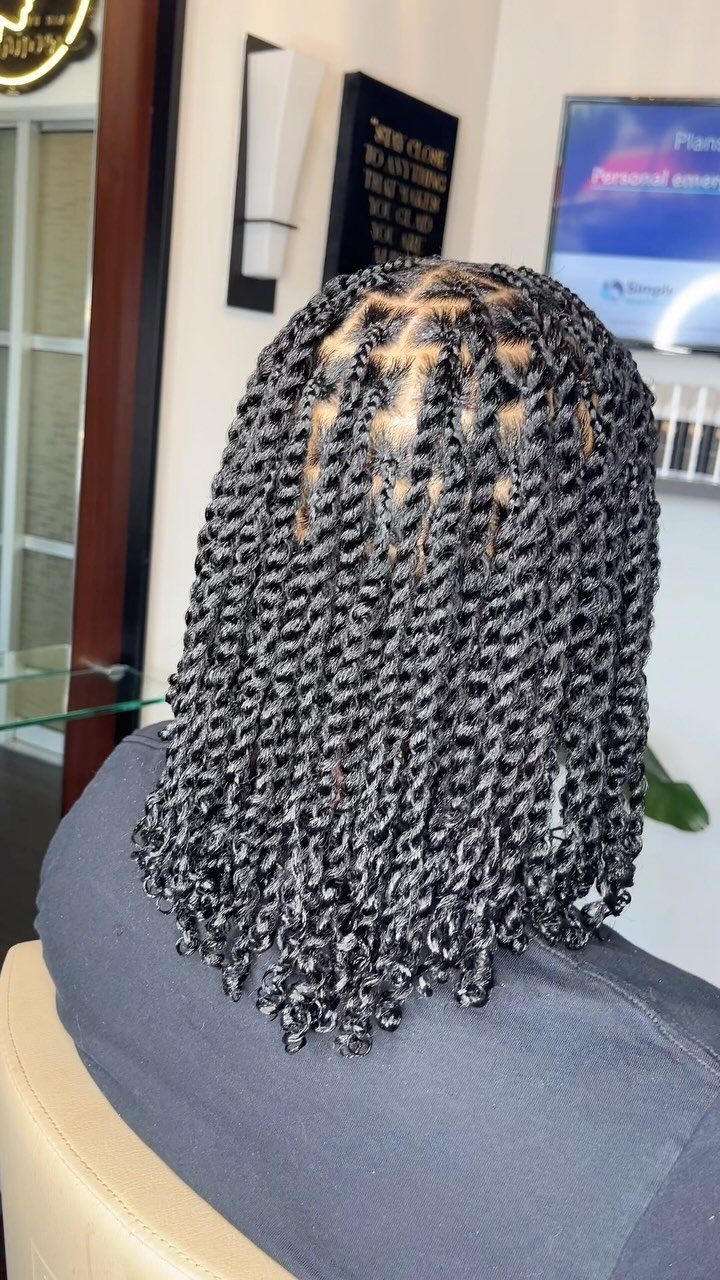
Shoulder length is a tidy middle ground: the twists reach the shoulder and stop, so they stay even and easy to keep in line. Uniform size matters most here, because any uneven twist shows right away.
Part in clean, equal sections and twist each one to the same thickness.
I would choose this for anyone who wants twists without the weight of long ones. Trim nothing yourself unless the ends are twisted tight; loose ends fray quickly and spoil the neat look.
Benefits of Two Strand Twists
2 strand twists are low-tension and low-maintenance, and that is what protects length: less daily handling means less breakage. Moisture retention works only if you start with thoroughly moisturized hair, so the prep matters as much as the twisting.
On natural-hair twists with no added hair, you can reach your own scalp and strands easily, which makes keeping both clean and moisturized simpler.
Doing them yourself with your natural hair saves money, since there is no synthetic hair to buy and no stylist to pay.
A full head can take as little as 30 minutes or as long as 3 hours, and the spread comes down to twist size, how thick your hair is, and how quickly you work.
Takedown is simple too, and an easy exit is rare for a protective style.
How to Maintain Twists
Most twists look best for about 2–3 weeks, so I’d plan around that window.
Washing your scalp with twists in is possible, but the water loosens the roots and frizz follows. Wash in sections and massage with the pads of your fingers, not your nails.
A spray bottle of water cut with a little conditioner keeps twists fresh between washes; aim it at the ends, where hair dries out first. This also revives flattened twists.
Go easy on scalp oil. Too much causes itchiness and buildup, and heavy products flatten the bases.
When the bases puff, refresh with light oil or water and re-twist only the loose sections instead of redoing everything. Leave the brush alone, since it pulls the twists apart and roughs up the pattern.
At night, cover your hair with a satin bonnet or rest it on a silk or satin pillowcase.
How to Install Twists
Start with hair that is washed, moisturized and detangled. Next, pick the twist thickness you want; your parting size follows from that choice.
A light swipe of edge control along the hairline and top gives you smoother roots. It also helps hold frizz off for the next few weeks.
Twist from the root down, wrapping 2 strands around each other. It is like a braid, but with 2 strands instead of 3.
Direction is your call: the twists can wrap forward or back. Take that version down carefully.
Frequently Asked Questions
What is the best hair for a 2 strand twist?
Twisting your own natural hair costs the least, since there are no packs of braiding hair to buy. Extensions are the better pick when you want added length or volume.
If you add extensions, pick a shade close to your own hair so the root doesn’t show a break, and in both cases start with hair that is clean, moisturized and fully detangled.
How long will two strand twists last?
Most twists look best for about 2–3 weeks. A satin bonnet or silk pillowcase at night, plus a light mist of water and conditioner on the ends, helps them stay fresh.
Small twists usually last the longest because the base stays snug, and thick ones start to slip at the root sooner, so expect to redo those edges earlier.
What are some good two strand twist hairstyles for older women?
Shoulder-length twists, a twisted bob and a low bun with one twist left out front are the easiest to wear.
Each stays tidy and light, so there is little weight pulling on the scalp. Of the 3 styles, the twisted bob weighs the least: short twists dry quickly after a wash and look finished without any pins.
Heavy twists can wear on the scalp, so keep any updos modest in size and choose a clip with a firm grip.






